Why should pipes be painted?
The main purpose of pipeline paint is to prevent pipeline corrosion, reduce pipeline friction, improve pipeline flow and efficiency, and beautify the surface of the pipeline. Brushing paint can form a protective film to prevent the pipeline from being eroded by corrosive substances, reduce the roughness of the pipeline surface, reduce friction, and improve the flow and efficiency of the pipeline. At the same time, brushing paint can also make the surface of the pipeline smooth and uniform, and enhance its aesthetics.
Why should pipeline coating thickness be controlled?
The thickness of the pipeline coating needs to meet certain requirements. On the one hand, the thickness of the coating needs to be sufficient to ensure that the coating can effectively prevent the surface of the pipeline from being corroded and resist the erosion of the external environment. On the other hand, an over-thick coating will increase the roughness of the pipe surface and reduce the inner diameter of the pipe, which may even affect the performance and service life of the pipe. Therefore, the thickness of the coating needs to be scientifically designed and controlled according to the specific situation in order to achieve better anti-corrosion effect and minimum negative impact. Generally speaking, the thickness of the coating should meet the design requirements, and appropriate quality inspection and control are required to ensure the rationality and consistency of the coating thickness.
How to measure pipe coating thickness?
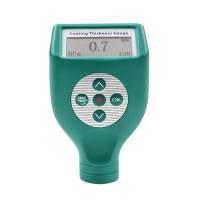
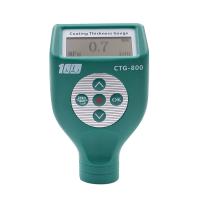
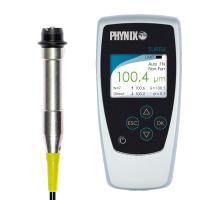
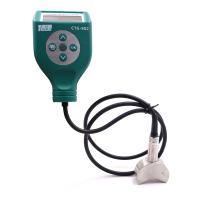
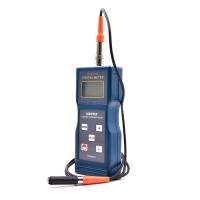
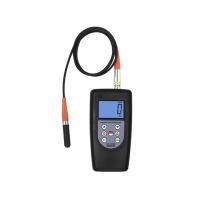
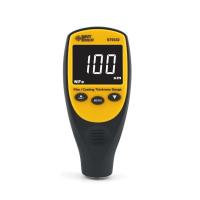
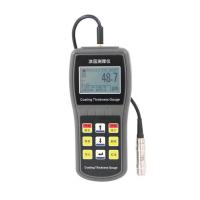
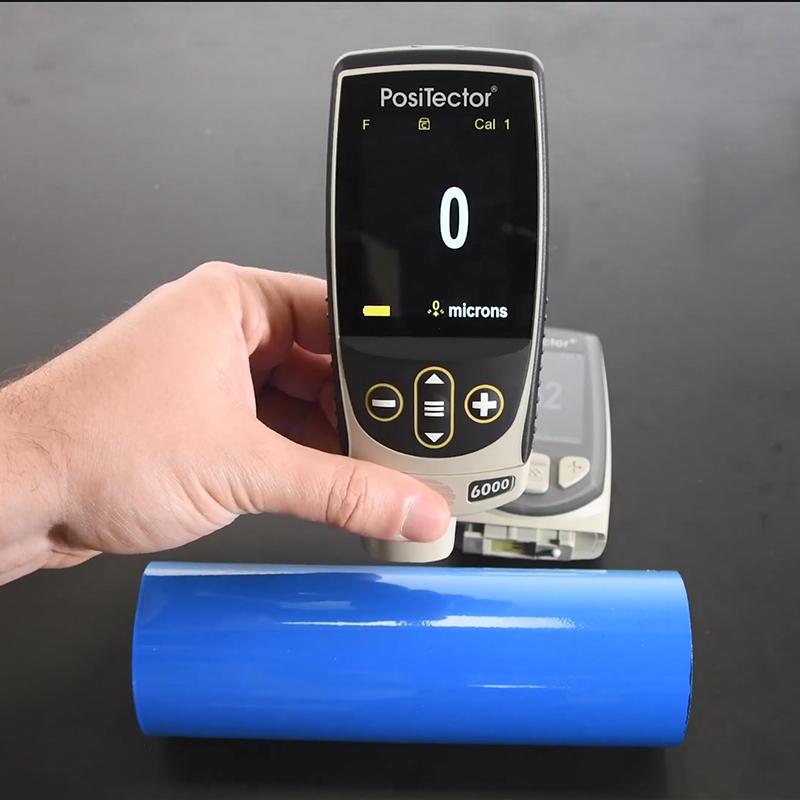
The magnetic induction coating Thickness Gauge is a commonly used coating thickness measuring instrument for measuring the thickness of pipeline coatings. Its measurement principle is to use the magnetic induction effect to measure the thickness of the coating through the action of a magnetic field. The steps for measuring pipeline coating thickness using a magnetic induction coating Thickness Gauge are as follows:
Choose a suitable magnetic induction coating Thickness Gauge, and check and calibrate it before use according to its instructions. At the same time, ensure that the surface of the pipe is clean, flat, and free from obvious unevenness and damage, so as not to affect the measurement results.
To determine the location of the measurement point, usually several different locations should be selected for measurement to obtain more accurate data.
Put the probe of the magnetic induction coating Thickness Gauge against the surface of the pipe, keep it vertical, and press the measurement key to measure. After the data display stabilizes, record the measurement. Repeat the above steps to measure all measurement points.
Integrate, compare and analyze all the measurement data to determine the average thickness and thickness distribution of the pipeline coating, and conduct evaluation and judgment to confirm whether the quality of the pipeline coating meets the requirements.
When using the magnetic induction coating Thickness Gauge, it is necessary to pay attention to the operating specifications and safety, and abide by the relevant measurement standards and requirements. At the same time, for different types and thicknesses of coatings, reasonable calibration and adjustment of the magnetic induction coating Thickness Gauge should be carried out according to the actual situation, so as to ensure the accuracy and reliability of the measurement results.