The melt index of ABS resin refers to the mass of ABS resin that flows out through the capillary in the molten state under certain conditions. Measuring the melt index of ABS resin can evaluate the melt flow performance and processing performance of ABS resin.
Specifically, the melt index of ABS resin can affect the processing performance and performance of ABS resin. A higher melt index means that the ABS resin has better fluidity in the molten state, which is beneficial to the processing processes such as extrusion and injection molding of plastics, and can improve production efficiency. At the same time, a high melt index also means that the ABS resin molecular chain has a strong ability to break, which can improve the impact resistance and tensile properties of the ABS resin.
Therefore, measuring the melt index of ABS resin can help manufacturers control production quality and improve product performance. During the processing and use of plastics, process parameters and material ratios can also be adjusted according to the melt index to improve production efficiency and product performance.
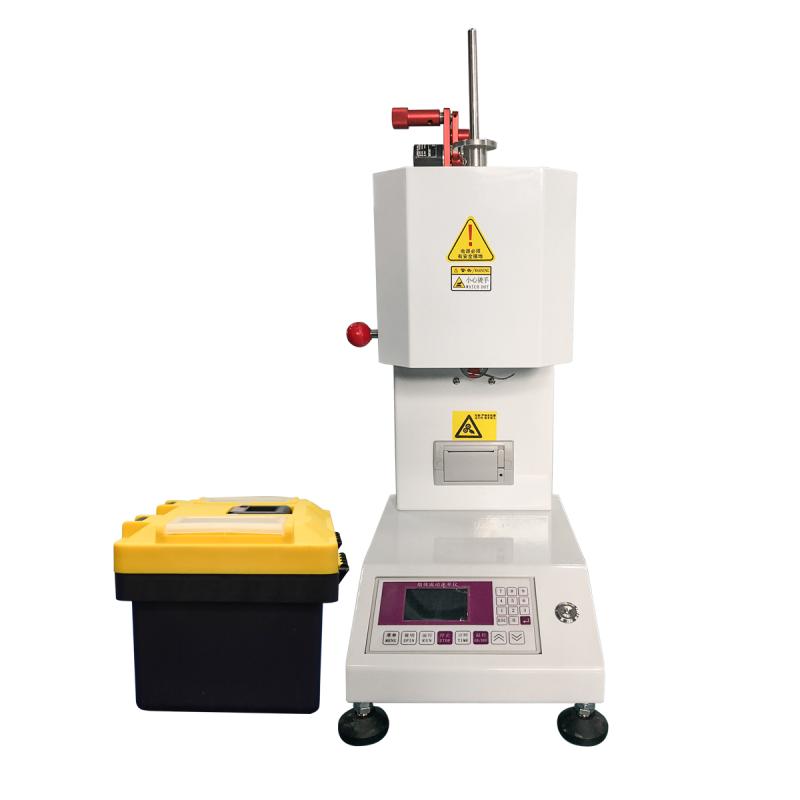
ABS resin Melt Flow Indexer is an instrument used to measure the melt index of ABS resin. The melt index of ABS resin refers to the mass of ABS resin that flows out through a capillary in a molten state under certain conditions, and is usually used to evaluate the melt flow performance and processing performance of ABS resin. Measuring the melt index of ABS resin can help manufacturers control production quality and improve product performance.
The working principle of the ABS resin Melt Flow Indexer is to heat the ABS resin sample to melt it, and then flow it out through a standard capillary under a certain pressure, measure the quality of the outflow, and calculate the melt index of the ABS resin accordingly.
The specific operation steps are as follows:
Step 1: Prepare the ABS resin sample and cut it into specified small pieces.
Step 2: Put the ABS resin sample into the melt indexer, and then heat the sample. The heating process needs to control the temperature and heating time to ensure that the sample can be completely melted.
Step 3: After waiting for the sample to melt, insert the sample into the capillary.
Step 4: Flow the molten ABS resin sample through the capillary under a certain pressure, and use a balance to weigh and record the mass of the flow out.
Step 5: Calculate the melt index of the ABS resin according to the quality of the outflow and the specified experimental conditions.
When performing measurements, it is necessary to control the experimental conditions, such as temperature, pressure, sample quality, etc., to ensure the accuracy and reliability of the measurement results. In addition, when using the melt indexer, it is also necessary to pay attention to safe operation to avoid accidents.