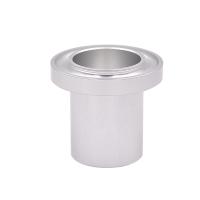
What is a Ford Viscosity cup?
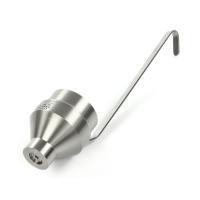
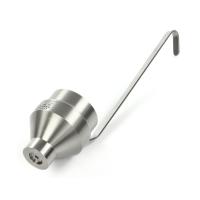
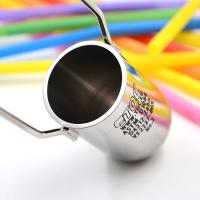
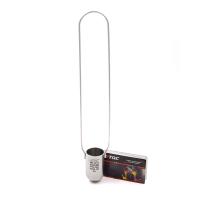
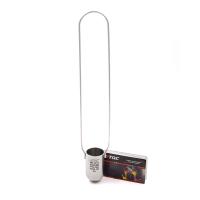
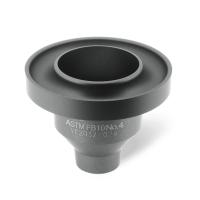
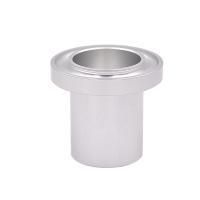
Ford Viscosity Cup is a device used to measure the viscosity of liquids, usually used to test the viscosity of liquid materials such as paints, Coatings, resins, glues, etc. Ford Viscosity Cup usually consists of a conical cup body and an outlet with a specific aperture. When the liquid in the cup reaches the outlet, it will start to flow out. The result of the measurement is the time for the liquid to flow out from the outlet. Since the aperture of the outlet is fixed, the viscosity level of the liquid can be calculated by the measurement time.
Different liquid viscosities require Ford Viscosity Cups of different pore sizes for measurement, so there are various types of Ford Viscosity Cups to choose from. Using Ford Viscosity Cups for viscosity testing is a relatively simple and economical method, so it is widely used in industrial production, mass control and scientific research.

Why measure paint viscosity?
The viscosity of a paint is a measure of its flowability and consistency. The measurement of paint viscosity is an important mass control indicator that helps manufacturers ensure the mass and conformity of paint, ensuring its Spreader performance at different temperatures and humidity conditions. Here are some important reasons for measuring paint viscosity:
Coating viscosity is a measure of Coating flowability and viscosity consistency, and viscosity measurement can help manufacturers ensure Coating uniformity and consistency, thereby ensuring stable film mass after Spreader.
Different types of Coatings are suitable for different surfaces and Spreader methods. Viscosity measurement can help determine whether Coatings are suitable for specific surfaces and Spreader methods so manufacturers can make appropriate adjustments.
Coating viscosity can affect its Spreader mass and surface mass, such as flowability, drip resistance, covering force, etc. Viscosity measurement can help manufacturers control the viscosity of Coatings to ensure that they achieve the desired Spreader mass and surface mass.
Viscosity testing is one way to ensure that coatings meet specifications. Manufacturers can use viscosity testing as a mass control step to ensure that products meet standards and specifications to ensure customer satisfaction.
Therefore, the measurement of paint viscosity is an important mass control step to ensure the mass and conformity of the coating, and to control the viscosity of the coating to ensure that the film mass after Spreader is stable, suitable for specific surfaces and Spreader methods, and meets the specifications.

How to measure?
Here are the steps for measuring paint viscosity using a Ford Viscosity Cup:
Stir the paint to be tested evenly to ensure uniformity and consistency of Coating.
Wipe the outside and inside of the Ford Viscosity Cup with a clean cloth and ensure that the temperature of the Coating container and Spreader equipment is stable so as not to affect the test results.
Place the clean and drying Ford Viscosity Cup vertically in the paint to be tested, noting that the liquid level should not exceed the highest point of the cup, otherwise it will affect the test results.
Start counting above the paint level and record the time required for the Flow Cup until the paint is completely out of the Ford Viscosity Cup.
Compare the time of the Flow Cup with the viscosity table to determine the viscosity level of the Coating.
If multiple measurements are required, clean the Ford Viscosity Cup and dry it to avoid cross-contamination between coatings.
Precautions
Please make sure that the inner and outer surfaces of the Ford Viscosity Cup are clean and free of impurities and contaminants before measurement.
When testing, it is necessary to strictly follow the specifications for the use of the selected Ford Viscosity Cup to ensure the accuracy and repeatability of the test.
During measurement, ensure that the environment temperature and humidity are stable so as not to affect the test results.
After measurement, clean Ford Viscosity Cup and dry it.
* The use of Ford Viscosity Cups to measure paint viscosity needs to be done in accordance with the specifications, and attention should be paid to cleaning and drying before and after the test to ensure the accuracy and repeatability of the test results.