Fluorescent color-changing materials refer to a class of materials that can exhibit different colors or fluorescence intensities as external conditions (such as temperature, pressure, humidity, pH, etc.) change. This material has the advantages of high sensitivity, fast response, and accurate response, so it is widely used in sensors, displays, safety signs and other fields.
The principle of fluorescent color-changing materials is that under the action of changes in external conditions, their molecular structure or charge state changes, resulting in changes in their absorption or emission spectra. This change can be detected by fluorescence spectrometer, ultraviolet-visible absorption spectrometer and other equipment, and the corresponding color difference data can be obtained. Based on these data, the properties and application range of materials can be further understood.
The main difficulties in the detection of fluorescent color-changing materials are as follows: First, the color of fluorescent materials will change with different light sources, lighting conditions and viewing angles, so accurate color measurement requires selection of appropriate light sources and lighting conditions. And the correct viewing angle and measurement method. Secondly, the fluorescence intensity and fluorescence lifetime of fluorescent materials will also be affected by many factors, such as temperature, humidity, ultraviolet radiation, etc., which requires that these influencing factors should be controlled during the measurement of fluorescent materials, so as to ensure the accuracy of measurement results and repeatability. In addition, the properties and application scenarios of fluorescent materials are relatively complex, and different detection methods and standards need to be adopted for different materials and application requirements. Therefore, these difficulties need to be fully considered in the detection of fluorescent color-changing materials, and appropriate methods and equipment should be used for accurate detection.
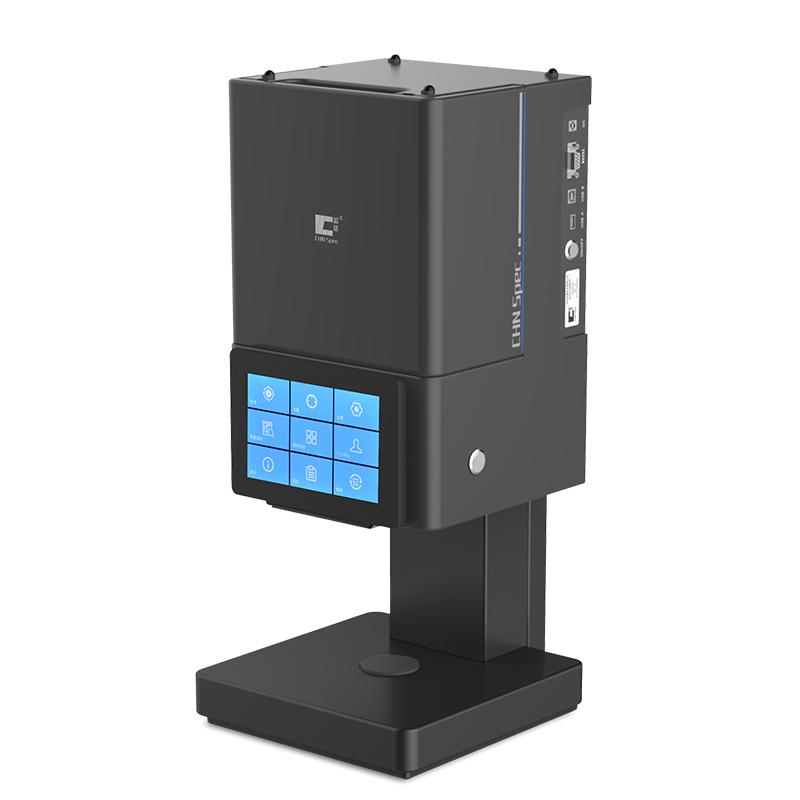
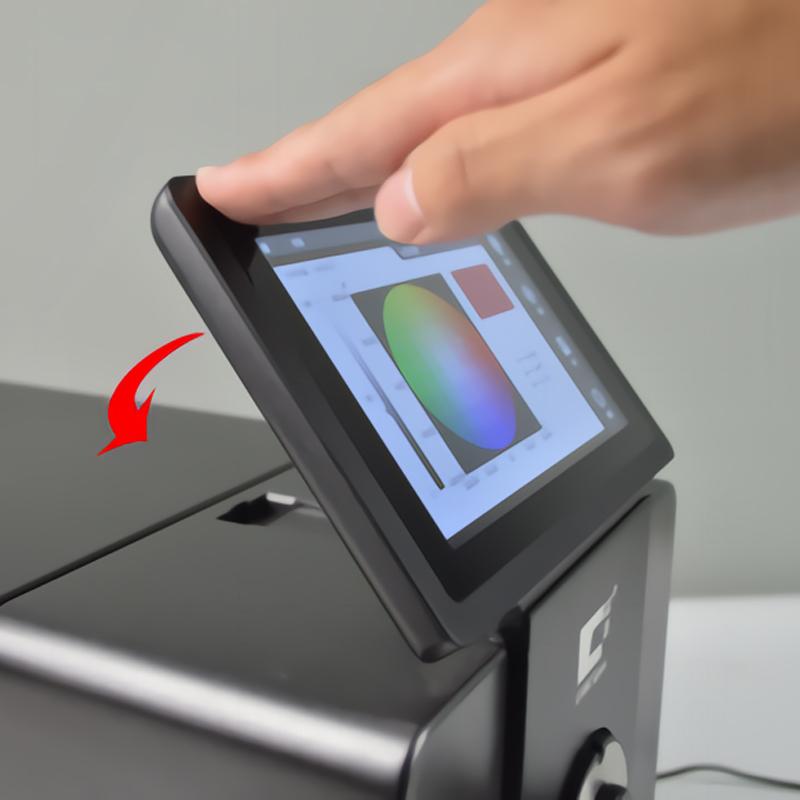
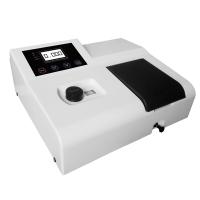
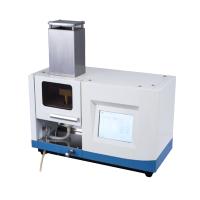
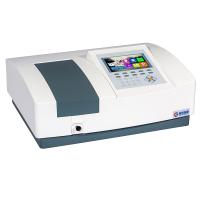
The detection of fluorescent color-changing materials usually requires the use of instruments such as fluorescence Spectrophotometer s or fluorescence microscopes. The fluorescence Spectrophotometer can measure the fluorescence intensity and emission spectrum of the fluorescent material at different wavelengths, as well as the fluorescence lifetime and other parameters, so as to judge the nature and quality of the fluorescent material. Fluorescence microscopy can observe the fluorescence characteristics and microstructure of fluorescent materials, as well as their changes under different conditions. In addition, in order to control the measurement conditions and influencing factors of fluorescent materials, strict control and standardization of the measurement environment, sample preparation and processing methods are required to ensure the reliability and accuracy of the measurement results. Specific detection methods and steps can be selected and adjusted according to different fluorescent materials and application requirements.

The following provides the specific steps for measuring with a fluorescence Spectrophotometer for reference by users of the Northern and Southern Tide:
Place the fluorochromic material sample in the sample cell.
Turn on the spectrofluorometer and warm it up to steady state.
In the spectral scanning mode, select the appropriate excitation wavelength and detection wavelength, and scan the fluorescence intensity.
Record the fluorescence intensity spectrum obtained after scanning, and calculate the fluorescence intensity values at different wavelengths.
By comparing the fluorescence intensity values of different samples, the color difference of different fluorescent color-changing materials can be obtained.
When performing fluorescence Spectrophotometer detection, light interference should be avoided as much as possible to avoid the influence of interference factors on the test results. At the same time, it is also necessary to select the appropriate excitation wavelength and detection wavelength to obtain accurate test results.