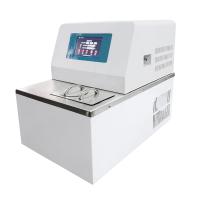
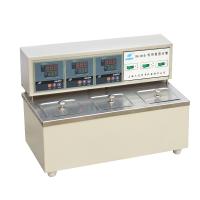
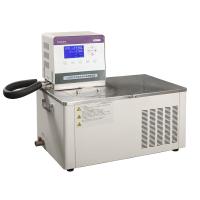
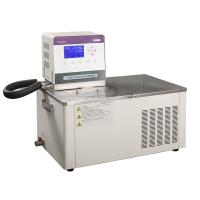
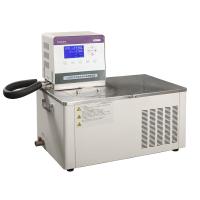
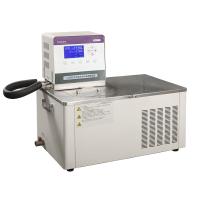
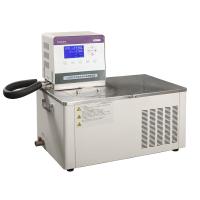
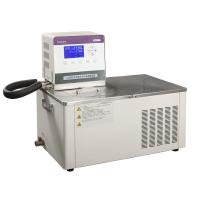
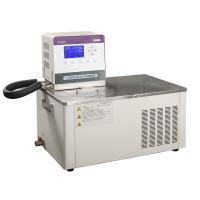
A thermostat is a device used to control and maintain a specific temperature, commonly used in laboratories, manufacturing, medical equipment, etc. It consists of a heating element, a sensor, and a controller that precisely controls temperature fluctuations within a specific range.
In the laboratory, thermostatic cells can be used to control the temperature of reagents, cell culture, biological reactions and other processes. It can ensure stability and repeatability during the experimental process, making the experimental results more accurate and reliable.
In the manufacturing industry, thermostatic grooves are often used to control the temperature of machines, equipment, materials to ensure the quality and performance of products. For example, in the electronics manufacturing industry, thermostatic grooves can be used to control the welding temperature to ensure the quality and connectivity of solder joints.
In the field of medical equipment, thermostatic tanks can be used to control the body temperature of the human body, maintain the temperature of operating rooms, Incubators, and drug preparation rooms.
Although thermostats have many uses and advantages, there are also some disadvantages. For example, it may take some time to heat up or cool down, so pre-planning is required when conducting processes with large temperature changes. In addition, thermostats often require electricity or other energy sources to work, so using it may incur some costs and energy waste.
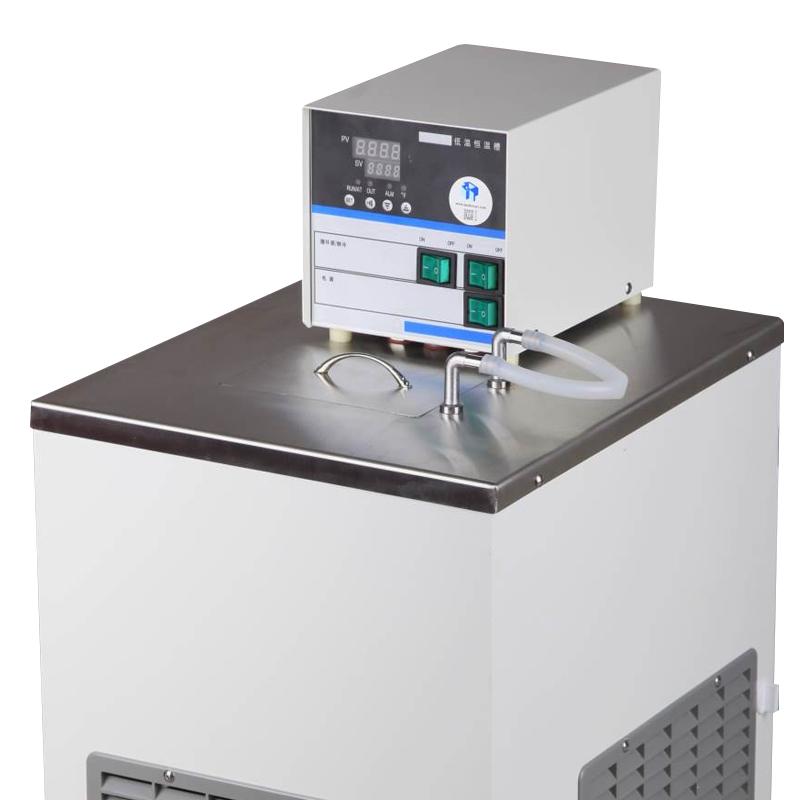
The thermostat works based on a controller that regulates the power supply of the heating element to the desired temperature.
Typically, a thermostatic tank consists of a temperature sensor, a controller and a heating element. The temperature sensor measures the temperature in the tank and feeds it back to the controller. The controller compares the measured temperature signal with the desired temperature, calculates the temperature difference, and then adjusts the power supply of the heating element to reach the desired temperature.
Heating elements are usually composed of resistance wires or heating tubes that heat the liquid or gas in the tank by converting electrical energy into heat. Once the desired temperature is reached, the controller automatically stops power to the heating element until the temperature drops below the set temperature, and the controller starts the heating element again to maintain the desired temperature.
During the working process, the thermostatic tank is usually equipped with some accessories, such as temperature display, transition cooling device, etc., to ensure that the temperature of the liquid or gas in the tank is within the required range, and to ensure the stability of the liquid or gas in the tank and reliability.
In general, thermostats maintain the desired constant temperature by measuring the temperature and automatically adjusting the power supply of the heating element. It is an important temperature control device widely used in laboratories, industry, medical equipment and other fields.
Thermostatic cells are widely used in viscosity measurement because temperature is one of the main factors affecting the viscosity of liquids. In viscosity measurement, it is usually necessary to place the sample at a stable temperature to ensure the accuracy and repeatability of the measurement results.
The thermostatic tank can provide a stable constant temperature environment and control the sample temperature within the required range. During measurement, the sample is injected into the viscometer and placed in the thermostatic tank, and the measurement is carried out after the sample temperature reaches a constant temperature. The thermostatic tank provides accurate temperature control, resulting in more accurate and reliable viscosity measurement results.

In viscosity measurement, measurements at different temperatures are often required to study the temperature sensitivity and temperature characteristics of the sample. Thermostatic grooves can easily perform measurements at different temperatures to obtain more complete and comprehensive viscosity data.
In conclusion, thermostatic cells play an important role in viscosity measurement, which can provide a stable constant temperature environment, control the temperature of the sample, and improve the accuracy and repeatability of viscosity measurement.