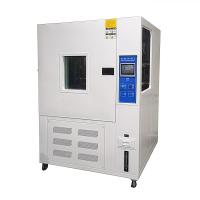
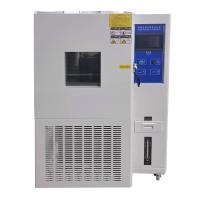
Humidity chambers are commonly used in materials science to study the effects of moisture on different materials, such as metals, polymers, and composites. Moisture can cause many materials to degrade or lose their properties, so it is important to test their stability under different humidity conditions. Humidity chambers can be used to test the corrosion resistance of metals and alloys. Corrosion is a major concern in many industries, and Humidity Chambers can simulate the environmental conditions that metals and alloys may be exposed to, such as high humidity and salt spray.
Humidity chambers can also be used to study the effects of humidity on the mechanical properties of materials, such as strength and elasticity. Moisture can cause many materials to weaken or become brittle, so it is important to test their properties under different humidity conditions.

Furthermore, Humidity Chambers can be used to study the effects of humidity on the electrical and optical properties of materials, such as conductivity and transparency. This information can be used to develop new materials that are more resistant to moisture and can maintain their properties over time.
Overall, Humidity Chambers are an essential tool in materials science for studying the effects of moisture on different materials and developing new materials that can withstand different environmental conditions. They help researchers and industry professionals to better understand the properties of materials and to develop more reliable and durable materials for various applications.