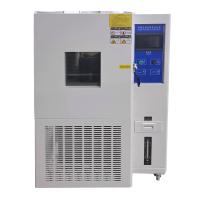
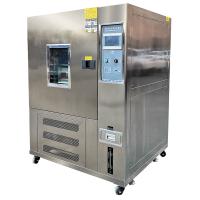
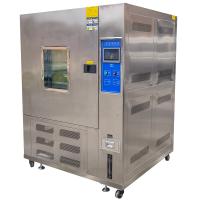
Humidity chambers are also used in climate research to simulate and study the effects of humidity on climate conditions. These chambers can be used to simulate different environmental conditions, such as high humidity and temperature, to study the effects on ecosystems, atmospheric processes, and climate change.

In particular, Humidity Chambers can be used to study the effects of humidity on plant growth and development, and on soil moisture and nutrient availability. This information can be used to understand the impacts of changing humidity levels on ecosystems and to develop strategies for adaptation and mitigation.
Humidity chambers can also be used to study the effects of humidity on atmospheric processes, such as cloud formation, precipitation, and atmospheric chemistry. These processes are critical to the global climate system and can be affected by changes in humidity levels.
Furthermore, Humidity Chambers can be used to study the effects of humidity on climate change, such as the impacts of changing humidity levels on sea level rise, temperature, and extreme weather events. This information can be used to improve climate models and to develop policies and strategies for climate adaptation and mitigation.
Overall, Humidity Chambers are an important tool in climate research for studying the effects of humidity on different environmental processes and for developing strategies to address the impacts of climate change. They help researchers and policymakers to better understand the complex interactions between humidity and climate and to develop more effective policies and strategies to address the challenges of climate change.