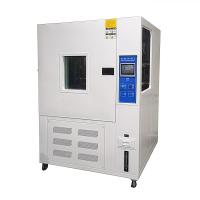
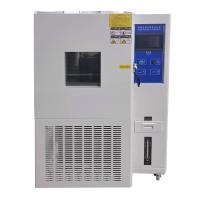
Humidity chambers are used in the automotive industry to test the effects of humidity on the performance and reliability of automotive components and systems. Humidity can affect the function and durability of these components, so it is important to test their stability under different humidity conditions.

In particular, Humidity Chambers can be used to test the moisture resistance of materials used in automotive engineering, such as plastics, metals, and coatings. Moisture can cause these materials to degrade or weaken, leading to failure.
Humidity chambers can also be used to test the effects of humidity on the electrical and electronic systems used in vehicles, such as sensors, control modules, and entertainment systems. Moisture can cause these systems to malfunction or fail, leading to safety hazards and reduced performance.
Furthermore, Humidity Chambers can be used to test the effects of humidity on the performance and durability of powertrain systems, such as engines and transmissions. Moisture can affect the lubrication and combustion processes, leading to reduced efficiency and durability.
Overall, Humidity Chambers are an important tool in the automotive industry for testing the effects of moisture on components and systems, and for developing more reliable and durable products that can withstand different environmental conditions. They help automotive engineers to better understand the properties of materials and systems used in vehicles, and to develop more efficient and reliable products for various applications in the automotive industry.