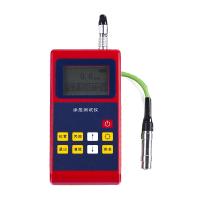
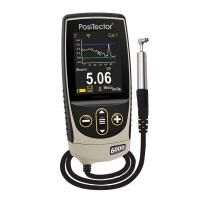
The purpose of coating thickness measurement is to ensure the quality, performance and durability of coatings. By measuring the coating thickness, it is possible to check whether the coating meets the design requirements, whether it is evenly distributed, and whether there are areas that are too thick or too thin. Coating thickness is very important for the protection performance, abrasion resistance, appearance and cost of the coating.
The following are some commonly used coating thickness measurement methods and corresponding steps:
Magnetic method:
Suitable for: Thickness measurement of non-magnetic coatings (e.g. paint, plastic) on magnetic substrates (e.g. steel).
step:
a. Turn on the magnetic meter and calibrate (if required).
b. Place the probe of the magnetometer on the coated surface.
c. Read the coating thickness displayed on the instrument.
d. Repeat measurement at as many locations as needed to ensure uniformity of coating thickness.

Vortex method:
Suitable for: Thickness measurement of non-conductive coatings (such as paint, plastic) on conductive substrates (such as aluminum, copper).
step:
a. Turn on the eddy current Thickness Gauge and calibrate (if required).
b. Place the eddy current probe on the coated surface.
c. Read the coating thickness displayed on the instrument.
d. Repeat measurement at as many locations as needed to ensure uniformity of coating thickness.
Ultrasonic method:
Applicable to: Thickness measurement of various coatings (such as paint, plastic, metal) on various substrates (such as metal, plastic).
step:
a. Turn on the ultrasonic Thickness Gauge and calibrate (if required).
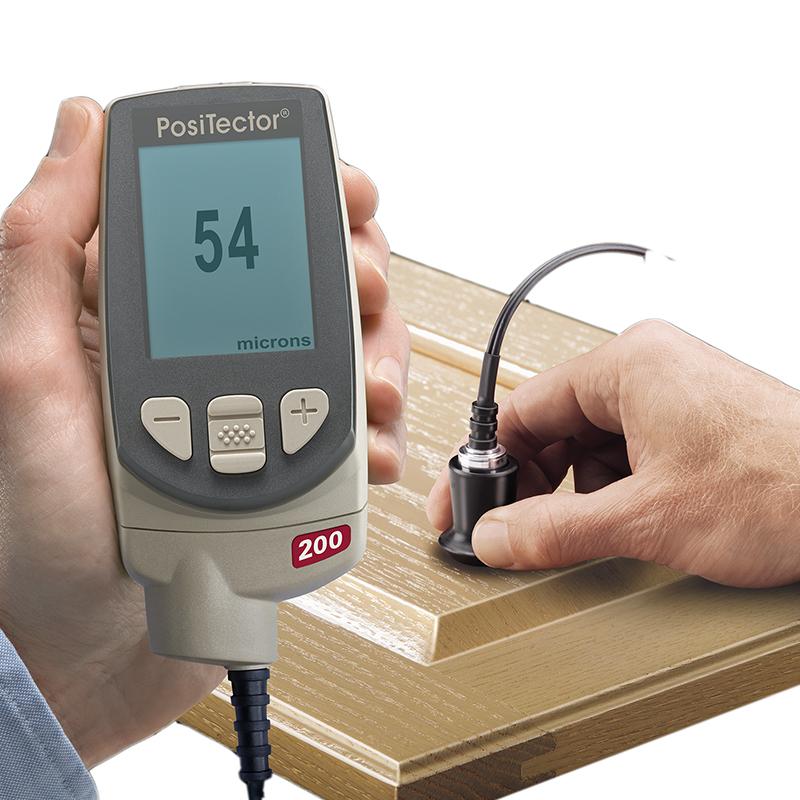
b. Apply couplant to the coating surface to ensure efficient transmission of sound waves between the coating and the transducer.
c. Place the ultrasonic probe on the coated surface.
d. Read the coating thickness displayed on the instrument.
e. Repeat measurement at as many locations as needed to ensure uniformity of coating thickness.
X-ray Fluorescence (XRF):
Applicable to: Thickness measurement of metal coatings on various substrates.
step:
a. Turn on the XRF Thickness Gauge and calibrate (if required).
b. Point the XRF probe at the coating surface.
c. Activate the X -ray source and wait for the instrument to collect enough data.
d. Read the coating thickness displayed on the instrument.
e. Repeat measurement at as many locations as needed to ensure uniformity of coating thickness.
Micrometer (microruler) method:
Ideal for: Coating thickness measurement with direct access to substrate and coating edges.
step:
a. Clean the coated surface and substrate edge to be tested.
b. Turn on the micrometer and calibrate (if required).
c. Place the micrometer rod on the edge of the substrate so that it is parallel to the coating surface.
d. Read the coating thickness displayed on the micrometer.
e. Repeat measurement at as many locations as needed to ensure uniformity of coating thickness.
Weight method:
Applicable to: powder coating, spray coating and other coating thickness measurement that can directly measure the coating weight.
step:
a. Measure the weight of the uncoated sample.
b. Apply the coating evenly to the sample surface.
c. Measure the weight of the coated sample.
d. Calculate coat weight (as-applied weight minus pre-coated weight).
e. Calculate coating thickness based on coating weight and known coating density.
When measuring coating thickness, the following points should be noted:
Choose the measurement method that suits your coating and substrate type.
Measurements are taken at multiple locations to obtain an accurate representation of the coating thickness distribution.
According to production specifications or design requirements, ensure that the coating thickness is within the allowable range.
Regularly calibrate and maintain measuring equipment to ensure measurement accuracy.