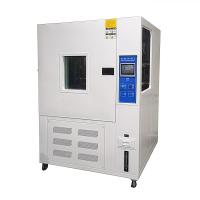
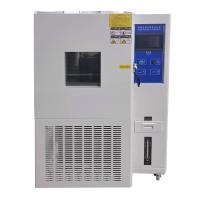
Humidity chambers are used in the solar industry for testing the durability and performance of solar cells and panels. Solar cells and panels are subjected to various environmental conditions, including humidity, temperature, and sunlight, which can affect their performance and lifespan.
Humidity chambers are used to simulate these environmental conditions, including high humidity, to determine how solar cells and panels will perform in different climate zones. The chambers are designed to provide controlled levels of humidity and temperature, which are critical for testing solar cells and panels under accelerated aging conditions.

Solar cells and panels can degrade over time due to exposure to moisture, UV radiation, and other environmental factors. By testing solar cells and panels in a Humidity Chamber, manufacturers can evaluate their resistance to degradation and identify any potential issues that may arise. This enables them to improve the design and performance of solar cells and panels and ensure that they meet the required performance standards.
Overall, Humidity Chambers play a crucial role in the solar industry by helping manufacturers to develop and test solar cells and panels that can withstand the harsh environmental conditions they will encounter during their lifetime.
In addition to testing the durability and performance of solar cells and panels, Humidity Chambers are also used in the manufacturing process of solar cells. The manufacturing process of solar cells involves several steps, including the deposition of thin films, such as silicon nitride, onto the surface of the cells.
The deposition process requires a controlled environment with specific humidity levels to ensure the thin films adhere correctly to the surface of the cells. Humidity chambers provide a controlled environment where manufacturers can deposit these thin films onto the surface of the cells under precise humidity conditions. This helps to ensure that the thin films adhere correctly to the cells and do not peel off or degrade over time.
Humidity chambers are also used in the testing of the long-term performance and reliability of solar cells and panels. Solar cells and panels are typically designed to last for several decades, and it is essential to ensure that they can withstand the environmental conditions they will encounter during their lifespan. Humidity chambers enable manufacturers to conduct accelerated aging tests to evaluate the long-term performance and reliability of solar cells and panels under different humidity conditions.
Overall, Humidity Chambers play a crucial role in the solar industry by helping manufacturers to develop and test solar cells and panels that can withstand the harsh environmental conditions they will encounter during their lifetime. They are used in the manufacturing process of solar cells and in the testing of their long-term performance and reliability.