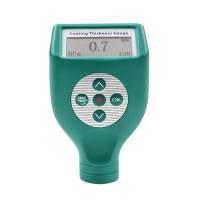
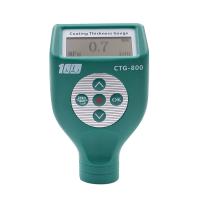
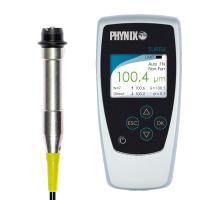
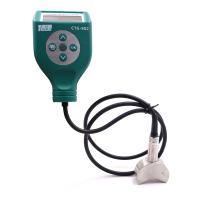
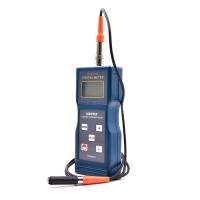
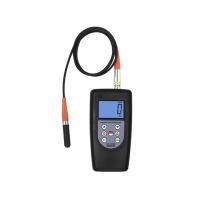
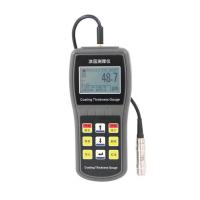
Coating Thickness Gauge is an instrument used to measure the thickness of coatings. Coating Thickness Gauges are mainly used in the measurement of various coatings, such as metal coatings, paint films, powder coatings, plastic coatings, etc., and can be widely used in industrial manufacturing, automobile maintenance, aerospace, construction and other fields. Coating Thickness Gauges can measure coating thickness by different principles, including magnetic induction method, eddy current method, X-ray fluorescence method, mass method, etc. Among them, magnetic induction method and eddy current method are usually used to measure the thickness of metal coatings, and X-ray fluorescence method and mass law are often used to measure the thickness of non-metallic coatings.
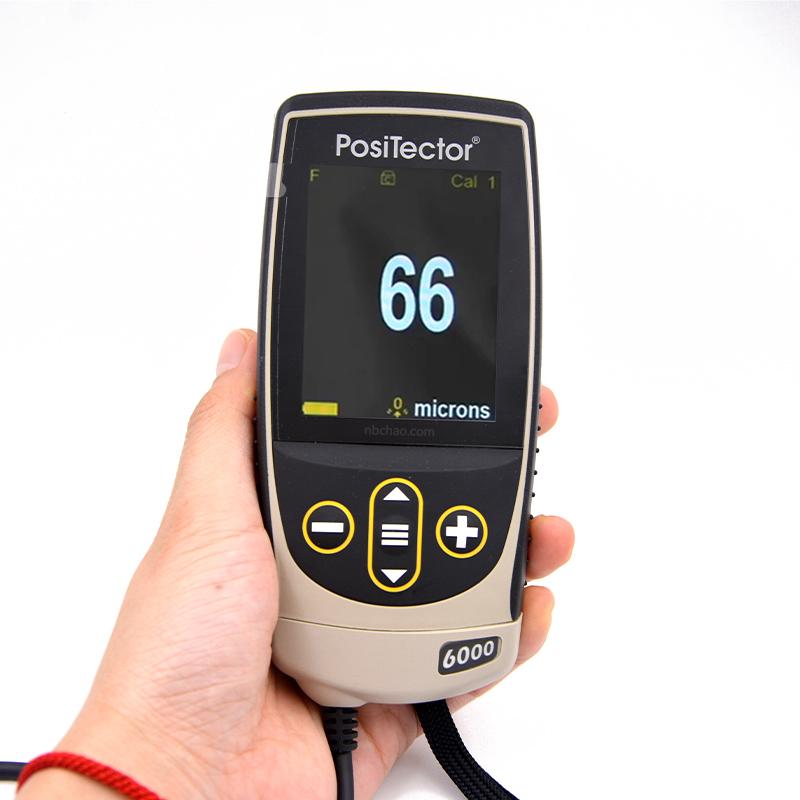
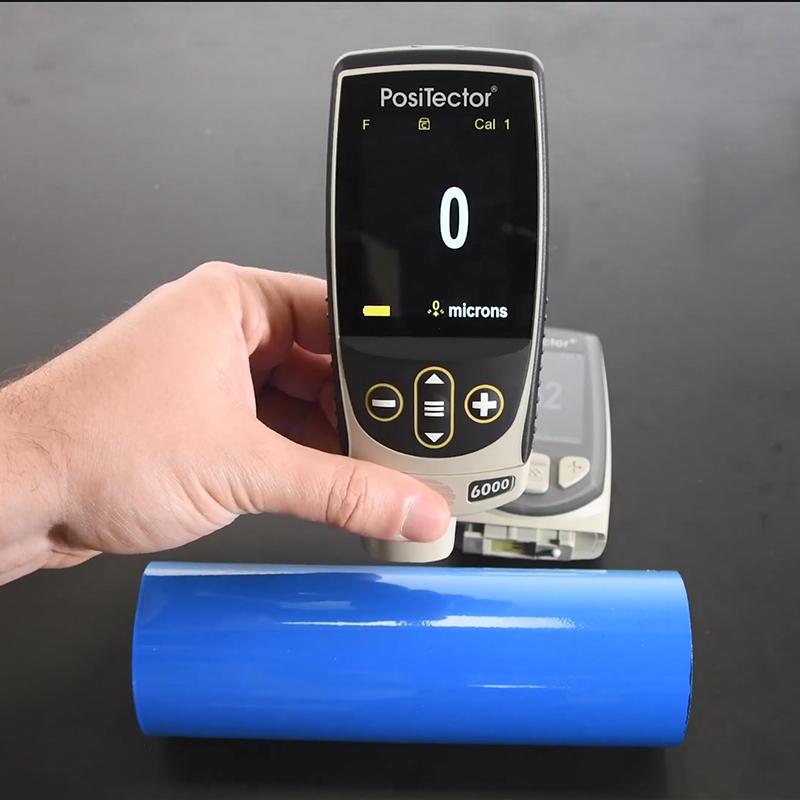
A coating Thickness Gauge usually consists of a probe, which is used to contact the coating surface and emits a signal, and a display, which is used to display the measurement results. In general, a coating Thickness Gauge requires a coated substrate on the coating surface for measurement. Coated substrates are typically standards of known thickness that are used to calibrate and verify the accuracy of coating Thickness Gauges.
Classification & Principle
Coating Thickness Gauges can be classified according to different working principles and measurement methods. The common classifications are as follows:
Magnetic Induction Coating Thickness Gauge: Using the magnetic field difference between the coating surface and the substrate, the coating thickness is measured by the principle of magnetic field induction.
Coating Ultrasonic Thickness Gauge: Using the propagation characteristics of ultrasonic waves between the coating and the substrate, the ultrasonic probe transmits and receives signals to measure the coating thickness.
Optical Coating Thickness Gauge: The coating thickness is measured by measuring parameters such as the time and angle of light propagation by using the characteristics of light reflected and transmitted by the coating surface.
Coating wear Tester: By applying a certain load and movement on the surface of the coating, measuring the depth and area of the coating being worn to evaluate the thickness and quality of the coating.
Coating Thickness Tester: Through the principle of electrochemical testing, the potential difference between the coating surface and the substrate is measured, and the coating thickness and quality are calculated.
Coating X-ray fluorescence Tester: Utilizing the different penetration capabilities of X-rays in different materials, measuring the X-ray penetration ratio of the coating and the substrate to measure the coating thickness.

Different types of coating Thickness Gauges are suitable for different types and properties of coating materials, and can be selected and applied according to actual needs to improve measurement accuracy and reliability. The following introduces the principles of several coating Thickness Gauges:
Magnetic induction coating Thickness Gauge: This type of Thickness Gauge uses the principle of magnetic field induction to measure the coating thickness. The difference in magnetic field between the coating and the substrate will generate an induced current, and the thickness and thickness of the coating can be calculated by measuring the magnitude and direction of the induced current.
Coating ultrasonic Thickness Gauge: This type of Thickness Gauge uses the propagation characteristics of ultrasonic waves between the coating and the substrate, and transmits and receives signals through the ultrasonic probe to measure the coating thickness. When ultrasonic waves pass through the boundary between the coating and the substrate, reflection and transmission will occur, and the thickness of the coating can be calculated by measuring parameters such as the time difference and amplitude of the reflection and transmission signals.
Optical coating Thickness Gauge: This type of Thickness Gauge uses the reflection and transmission characteristics of light between the coating and the substrate to measure the coating thickness by measuring parameters such as the time and angle of light propagation. Common optical coating Thickness Gauges include reflection type and transmission type. The reflection type Thickness Gauge mainly measures the characteristics of the reflected light on the coating surface, and the transmission type Thickness Gauge mainly measures the characteristics of the light passing through the coating.
Coating wear Tester: This type of Thickness Gauge measures the depth and area of the coating surface being worn by applying a certain load and movement, thereby evaluating the coating thickness and quality. Common coating wear Testers include cantilever beam method, scraper method, abrasion Tester, etc.
Coating X-ray fluorescence Tester: This type of Thickness Gauge uses the different penetration capabilities of X-rays in different materials to measure the X-ray penetration ratio of the coating and the substrate to measure the coating thickness. The Tester emits X-rays to irradiate the coating and the substrate, and measures parameters such as the intensity and frequency of the X-rays passing through the coating and the substrate to calculate the thickness of the coating.

Advantages and disadvantages
The advantage of a coating Thickness Gauge is its non-destructive and fast measurement characteristics, which can be measured without affecting the coating itself. At the same time, the coating Thickness Gauge has the advantages of high precision, easy operation, and intuitive display, which can provide important data support for coating quality control and coating wear analysis.
The development of coating Thickness Gauges also faces some challenges and limitations. For example, the measurement accuracy and stability of a coating Thickness Gauge are affected by various factors, such as the material, shape and size of the probe, the state of the coating surface, the temperature and humidity of the measurement environment, etc. Therefore, corresponding calibration and control are required in practical applications to ensure the accuracy and reliability of measurement results.
application
Coating Thickness Gauge is an indispensable tool in coating inspection and quality control, which can effectively improve coating quality and production efficiency, and reduce costs and risks. The continuous development and progress of the coating Thickness Gauge makes it play a greater role in a wider range of applications, such as quality inspection and supervision in industries such as environmental protection, food, and pharmaceuticals.
The application scenarios of coating Thickness Gauges are very extensive, involving many different industries and fields, including but not limited to the following aspects:
Metal processing and manufacturing: Coating Thickness Gauges can be used for the measurement and control of coatings in metal processing and manufacturing processes, such as automobile manufacturing, aerospace manufacturing, building steel structures, etc.
Coating and spraying: The coating Thickness Gauge can be used to measure and control the coating thickness during the coating and spraying process, such as automotive spraying, architectural coating, ship coating, etc.
Medical devices and food processing: Coating Thickness Gauges can be used to measure and control coatings in medical devices and food processing, such as surface treatment of medical equipment, food packaging coatings, etc.
Environmental protection and pollution control: Coating Thickness Gauges can be used in the fields of environmental protection and pollution control, such as air purifier filters, sewage treatment pipes, etc.
Aerospace and national defense: Coating Thickness Gauges are also widely used in the field of aerospace and national defense, such as spacecraft shell coating, military equipment coating, etc.
The application of coating Thickness Gauge can help enterprises and organizations improve production efficiency and product quality, reduce costs and risks. The role of coating Thickness Gauges in coating production and testing is becoming more and more important. With the continuous advancement of technology and the continuous expansion of applications, the performance and functions of coating Thickness Gauges will also be continuously improved and enriched. The development and application of the industry provide more reliable and effective technical support. With the continuous advancement of technology and the continuous expansion of applications, coating Thickness Gauges will play an increasingly important role, providing more reliable and effective technical support for the development and application of the coating industry.
Selection considerations
涂层测厚仪的选择需要According to实际需要进行综合考虑,包括测量范围、精度、测量原理、测量条件、数据处理等方面。不同的涂层类型和应用场景需要选择不同类型的涂层测厚仪,以满足不同的测量要求。
涂层测厚仪的选择和应用需要According to具体情况进行综合考虑和判断。以下是一些选择和应用涂层测厚仪的一般原则:
测量方法和探头:涂层测厚仪的测量方法和探头的选择要According to涂层类型、表面状态和测量要求进行选择。例如,对于非金属涂层和粗糙表面,选择磁感式涂层测厚仪;对于金属涂层和平滑表面,选择感应式涂层测厚仪。探头的形状和尺寸也要考虑到涂层厚度和表面形状。
测量范围和精度:涂层测厚仪的测量范围和精度要According to实际测量要求进行选择。一般来说,测量范围要覆盖实际应用的厚度范围,精度要达到要求的控制标准。
校准和控制:涂层测厚仪的测量精度和稳定性受到多种因素的影响,需要进行相应的校准和控制。涂层测厚仪的校准应该在规定的时间和频率内进行,确保测量结果的准确性和可靠性。
应用环境和条件:涂层测厚仪的应用环境和条件也要考虑到,例如测量温度、湿度、空气质量等因素对于测量结果的影响。

疑难杂症
涂层测厚仪的应用也面临一些挑战和限制。以下是一些常见的挑战和限制:
涂层测厚仪在测量复杂涂层时,如多层涂层或含有复杂几何形状的表面,可能会出现不准确的情况。
涂层测厚仪在测量涂层时,涂层表面的状态(如粗糙度、坑洞、凸起等)可能会影响测量的准确性。因此,对于表面状态较差的涂层,需要采取适当的表面处理措施,如研磨或抛光,进而保证测量结果的准确性。
涂层测厚仪在测量过程中,需要在稳定的环境下进行测量,以避免环境温度和湿度等因素对测量结果的影响。
涂层测厚仪的成本较高,对于某些中小型企业或个人用户来说,购买涂层测厚仪可能会增加投资成本。
涂层测厚仪需要经过专门的培训和实践才能使用。操作不当可能会导致测量结果的偏差。
除了上面的难题外,涂层测厚仪还有一些其他方面的注意事项,包括以下几点:
涂层测厚仪的测量精度是非常重要的,用户应该选择精度高、稳定性好的仪器,并按照使用说明进行正确的使用和维护,以确保测量精度和准确性。
涂层测厚仪的探头类型和尺寸应According to涂层材料和测量位置的不同进行选择,进而保证测量结果的准确性和可靠性。
涂层测厚仪的测量应符合相关的国际和行业标准,如ASTM、ISO等,以确保测量结果的可比性和一致性。
涂层测厚仪所得到的测量数据应及时、准确地处理和记录,以便进行后续分析和评估。
涂层测厚仪需要进行定期的维护和保养,包括清洁探头、校准、更换电池等,以确保仪器的正常使用和稳定性。

常见问题
以下是涂层测厚仪常见的问题和解答:
涂层测厚仪的测量范围和精度是多少?
不同类型的涂层测厚仪具有不同的测量范围和精度,需要According to实际需要进行选择。一般来说,磁感应涂层测厚仪的测量范围为0-2000um,精度为±(3%5%+1um);涂层超声波测厚仪的测量范围为0-50mm,精度为±0.1mm;涂层膜厚测试仪的测量范围为0-200um,精度为±(1~3)%F.S.等。
涂层测厚仪可以测量哪些涂层材料?
涂层测厚仪可以测量各种涂层材料,包括金属涂层、非金属涂层、有机涂层、无机涂层等。不同类型的涂层测厚仪适用于不同类型和性质的涂层材料,需要According to实际需要进行选择。
涂层测厚仪的使用注意事项有哪些?
涂层测厚仪在使用时以下事项提前您关注:
保持涂层测厚仪的探头和测试表面干净、干燥;
测量前需要进行校准,以确保测量结果准确可靠;
不同类型的涂层测厚仪适用于不同类型和性质的涂层材料,需要According to实际需要进行选择;
测量时需要保持探头与测试表面垂直,并按照涂层测厚仪的使用说明进行操作;
测量后及时清洁涂层测厚仪,避免长时间放置或受潮。
涂层测厚仪是否需要定期校准?
是的,涂层测厚仪需要定期进行校准,以确保测量结果准确可靠。一般来说,涂层测厚仪的校准周期为一年左右,也可以According to实际使用情况和要求进行适当调整。在校准时,需要使用标准试片进行比对校准,并按照涂层测厚仪的使用说明进行操作。
涂层测厚仪的测量结果如何判定?
涂层测厚仪的测量结果需要According to不同的涂层材料和应用要求进行判定。一般来说,可以According to涂层厚度标准进行比对,或者According to相关的规范和标准进行评估。对于一些特殊材料或应用,需要进行更加严格的判定和评估。
涂层测厚仪如何维护?
涂层测厚仪在使用后需要进行及时的清洁和维护,避免长时间放置或受潮。具体维护方法包括:
清洁涂层测厚仪的探头和测试表面,以确保准确的测量结果;
定期进行校准,进而保证测量结果的准确性和可靠性;
避免涂层测厚仪受到强烈的震动或撞击,以免损坏仪器;
保持涂层测厚仪干燥,避免受潮或受到强烈的阳光直射;
避免长时间放置或不使用,以免影响仪器的正常使用。
涂层测厚仪的价格是多少?
不同类型和品牌的涂层测厚仪价格不同,一般来说,涂层测厚仪的价格在几百到几千美元不等。价格受到多种因素的影响,包括测量范围、精度、品牌、型号等。在选择涂层测厚仪时,需要According to实际需要和预算进行选择。
涂层测厚仪的测量原理是什么?
涂层测厚仪的测量原理According to不同的类型和工作原理略有不同,主要包括磁感应法、涂层超声波法、涂层膜厚测试仪等。
磁感应法的测量原理是According to涂层材料的磁性特性进行测量。涂层测厚仪通过测量磁场的强度和变化,计算出涂层材料的厚度。
涂层超声波法的测量原理是利用超声波的穿透和反射特性进行测量。涂层测厚仪通过发射超声波,测量超声波从涂层表面反射回来的时间,According to声速和时间计算出涂层材料的厚度。
涂层膜厚测试仪的测量原理是利用薄膜材料的光学特性进行测量。涂层测厚仪通过测量透射或反射的光线强度,计算出涂层材料的厚度。
涂层测厚仪如何进行校准?
涂层测厚仪的校准非常重要,它关系到测试结果的准确性和可靠性。涂层测厚仪的校准可以通过以下步骤进行:
1)选取符合标准的校准板,According to实际需要和要求选择合适的校准板。
2) According to the initial setting of the thickness of the calibration plate, set the coating Thickness Gauge to the same thickness range as the calibration plate.
3) Place the calibration board on a flat test surface and make sure the calibration board is parallel to the test surface.
4) Stick the probe of the coating Thickness Gauge on the surface of the calibration plate for measurement.
5) Adjust according to the measurement result, if the measurement result is the same as the thickness of the calibration plate, it means that the coating Thickness Gauge has been calibrated successfully, otherwise it needs to be adjusted.
6) For coating materials of different types and thicknesses, multiple sets of calibration are required to avoid too much interference on the accuracy and reliability of the test results.
All in all, all in all, Beichao reminds you that you can refer to the above content when choosing and using a coating Thickness Gauge. I hope it will be helpful to you!