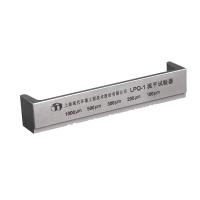
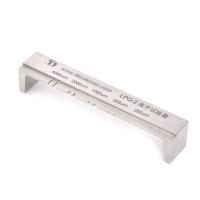
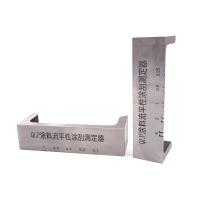
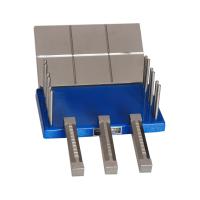
After brushing varnish or enamel on the surface, the brush strands left on it should completely disappear after a period of one to five years, and a very complete and smooth surface is formed, that is, the varnish needs to be a "leveling" varnish or a "leveling" lacquer "Sex can be thought of as:
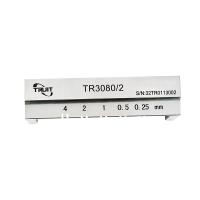
1) If the varnish or solid paint is "leveled" no later than 10 minutes after painting, it is qualified; (Related instruments: leveling meter)
2) If the varnish or lacquer is "leveled" after 10 to 15 minutes after brushing, it is considered be slow;
3) If the varnish does not "level" after 15 minutes after being painted, it is considered unqualified.
In accordance with OCT18159-40, all oil-based varnishes shall disappear no later than 10 minutes after debrushing.
When removing cloth paint materials by spraying, it is necessary to determine whether the surface of the sample can form a uniform , smooth, wrinkle-free (that is, the adjusted crust) removal film. Kiselev pointed out that the direct reason for the poor leveling of varnishes is the insufficient time for paint refining (not enough taxation). The leveling (or flattening) of varnishes and enamel depends first on its surface tension.
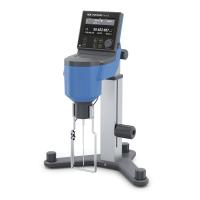
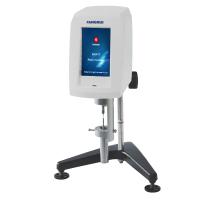
The lower the surface loading of the varnish, the better it will wet the surface and, other things being equal (viscosity, temperature, etc.) the varnish will spread out (“levelling”) more easily. (Related instrument: viscometer)
According to Deberger, in addition to viscosity and surface tension, the vapor pressure of the falling agent also affects the leveling of the varnish. When the vapor pressure is high, the volatilization time of the solvent is shorter than the leveling time of the varnish on the surface, so If uneven paint molds are produced, Delinberger also links the leveling property of the varnish with the fluidity of the varnish base material. If the solvent has evaporated and the fluidity of the varnish base material is still good, the clear leveling property will be Also very good.
If Dingsheng is added to reduce the surface tension, the leveling performance of the varnish can be improved.
The leveling of cellulose ester varnishes and pigmented paints can be improved by adding high-sinking-point solvents in the gelling process of general paint films. In order to improve the leveling properties of oil-based varnishes and magnetic depths, it is recommended to add some low molecular weight Acids, such as benzoic acid.
Gorlovsky and Kozulin pointed out that the color paint with good leveling property needs to have good stability (when the shear stress is not large) and relatively high fluidity, and it must also have such a structural viscosity: At this viscosity, before film formation begins, flow ceases due to the formation of the solvent by a process that occurs in the film itself.