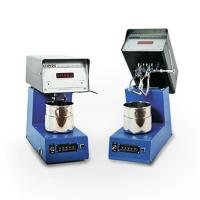
An emulsifier is a chemical substance capable of uniformly mixing two immiscible liquids, such as oil and water, to form an emulsion. Emulsifiers are divided into four types: anionic, cationic, nonionic and amphoteric. Their mechanism of action is mainly to form a thin film on the oil-water interface through molecular structure, thereby reducing the tension of the oil-water interface, making the oil-water disperse and form a stable emulsifier. milky liquid. Emulsifiers are widely used in cosmetics, medicine, pesticides, coatings, food, petroleum and other fields to improve various functions and performances.
Detection performance
The following are the main properties and testing methods of common emulsifiers, as shown in the table below:
| performance | Detection method |
|---|---|
| Exterior | Directly observe the appearance of the sample |
| density | Densitometer method |
| proportion | hydrometer method |
| Refractive index | refractometer method |
| Solubility | Observe the solubility of a substance in a particular solvent |
| toxicity | Acute Toxicity Test |
| pH value | Acid-base titration, pH meter method |
| the remains | Ash method, drying method |
| Emulsifying ability | Shock test, centrifugal test, specific gravity test, optical microscope observation |
| Dispersion properties | Centrifugal test, dynamic light scattering analysis |
| stability | Heat stability test, cold stability test, salt stability test, pH value stability test |
| Conductivity | Conductivity meter method |
| viscosity | viscometer method |
NBCHAO reminds you: Different types of emulsifiers have different properties and detection methods, so it is necessary to select an appropriate detection method based on the actual situation during specific detection.
Specific detection method
The detection method of the specific emulsifier is as follows:
Appearance inspection: directly observe the appearance of the sample, such as whether there is color, foreign matter, etc.
Density and specific gravity testing: Use a density meter or a specific gravity meter to measure the density or specific gravity of a sample.
Refractive Index Detection: Use a refractometer to measure the refractive index of a sample to assess its physical properties.
Solubility Assay: Observe the solubility of a sample in a specific solvent to assess its chemical properties.
Toxicity test: conduct acute toxicity test to evaluate its safety.
pH value detection: Use acid-base titration or pH meter method to measure the pH value of the sample.
Residue testing: Measure the residue content of a sample using the ash method or the drying method.
Emulsifying ability test: conduct shock test, centrifugal test, specific gravity test, optical microscope observation and other methods to evaluate its emulsifying performance.
Dispersion performance test: Centrifugal test, dynamic light scattering analysis and other methods are carried out to evaluate its dispersion performance.
Stability testing: conduct heat stability test, cold stability test, salt stability test, pH value stability test and other methods to evaluate its stability performance.
Conductivity detection: Use a conductivity meter to measure the conductivity of the sample.
Viscosity detection: Use a viscometer to measure the viscosity of the sample.
Beichao reminds you: Different emulsifiers may require different detection methods, which should be selected according to the actual situation. At the same time, care should be taken to select appropriate instruments and equipment during testing, and operate in accordance with standard operating procedures to ensure the accuracy and reliability of testing results.