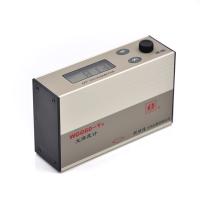
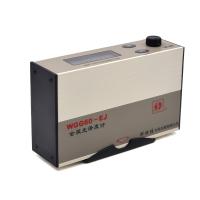
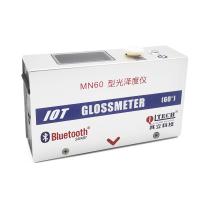
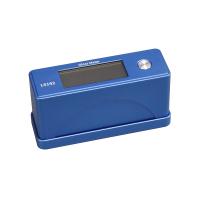
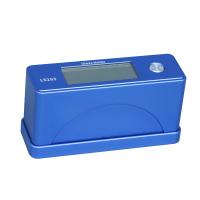
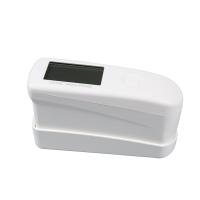
A matting agent is a coating additive that reduces the gloss of a coating and gives it a matted appearance. It is usually made of polymer materials, compatible with various resin systems, and can achieve good dispersion and stability in coatings. The amount of matting agent added in the paint is usually 1-5% of the total volume, which can be adjusted as needed. In practical applications, matting agents are widely used in various furniture, wood products, building materials, auto parts and other fields to achieve different appearance effects and texture requirements.
Detection performance
The following are the properties that may need to be tested for matting agents, as well as the corresponding testing methods:
| performance | Detection method |
|---|---|
| Particle size distribution | Laser particle size analyzer, electron microscope |
| specific surface area | Specific Surface Area Analyzer |
| chemical composition | Infrared Spectroscopy, Mass Spectrometry, NMR |
| stability | Centrifuge test, evaporation residue test |
| dispersion | Observation of suspension state, viscosity test |
| Durability | Exposure test, damp heat cycle test |
| transparency | Concentration determination, transmission spectrum |
| Coating properties | Surface tension, adhesion, hardness, flexibility and other test methods |
Detection method
Particle size distribution: The size of matting agent particles will affect its dispersion performance in the coating and the effect of light scattering. Therefore, it is necessary to use laser particle size analyzer or electron microscope to test the particle size of matting agent.
Specific surface area: The specific surface area of the matting agent determines its dispersion performance and matting effect in the coating, which can be tested with a specific surface area analyzer.
Chemical composition: The chemical composition of a matting agent directly affects its performance, and it can be detected by techniques such as infrared spectroscopy, mass spectrometry, and nuclear magnetic resonance.
Stability: The stability of the matting agent will affect its dispersion stability and service life in the coating, which can be tested by methods such as centrifugal test and evaporation residue test.
Dispersion: The dispersibility of the matting agent affects the transparency and appearance of the coating, which can be tested by observing the suspension state and viscosity test.
Durability: The matting agent needs to have certain durability during use, which can be tested by methods such as exposure test and damp heat cycle test.
Transparency: The transparency of the matting agent is a key factor affecting the appearance of the coating, which can be tested by methods such as concentration measurement and transmission spectroscopy.
Coating film properties: matting agents will have an impact on the surface tension, adhesion, hardness, flexibility and other aspects of the coating film, which can be evaluated by corresponding test methods.
Beichao reminds you: the specific test methods and instruments may vary due to different types of matting agents and application scenarios, and should be selected according to the actual situation.