Powder coating is a solvent-free and environmentally friendly coating. It is a powder formed by melting a mixture of resins, pigments, and fillers at high temperature. It is coated on the surface of an object by electrostatic adsorption or spraying, and forms a hard coating film after heating and curing. Because of its solvent-free, effective, energy-saving and other characteristics, powder coatings are widely used in various fields such as metal products, furniture, construction, and electronic appliances. Specific application fields include automobiles, motorcycles, bicycles, steel structures, agricultural machinery, petrochemical equipment, medical equipment, electrical appliances and electronics, aerospace, military industry, daily necessities, decorative materials, etc. Due to its advantages of environmental protection, energy saving, aesthetics, corrosion resistance, and wear resistance, powder coatings have been widely used in various fields and gradually replaced traditional coating processes.
Detection performance and instrument
| Performance name | Equipment used |
|---|---|
| Powder particle size | Particle size analyzer |
| flexibility | Flexometer |
| Adhesion | Adhesion Tester |
| wear resistance | Abrasion testing machine |
| Corrosion resistance | Salt spray Test Chamber, corrosion resistance testing machine |
| Gloss | Gloss meter |
Detection steps
The following are the detailed detection steps:
Powder particle size: Use a particle size analyzer to take a certain amount of powder samples, put them into the instrument, and test according to the instrument prompts to obtain the particle size distribution.
Flexibility: Use a flexibility meter to fix the coating film sample on the equipment, conduct a certain bending test, and evaluate its flexibility by observing the degree of deformation of the coating film.
Adhesion: Use an adhesion testing machine to paste the coating film sample on the board of the testing machine for tensile testing, and evaluate the adhesion between the coating and the substrate through the display results of the testing machine.
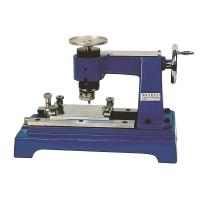
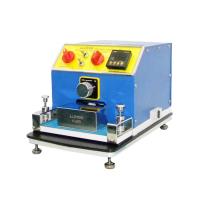
Abrasion resistance: Use an abrasion testing machine to fix the coating film sample on the equipment, conduct a certain abrasion test, and evaluate the abrasion resistance of the coating film by observing the degree of abrasion of the coating film.
Corrosion resistance: use a salt spray Test Chamber or a corrosion resistance testing machine, put the coating film sample into the test equipment, conduct a corrosion test under certain temperature and humidity conditions, and evaluate its corrosion resistance by observing the change of the coating film.
Gloss: Use a gloss meter to place the coating film sample on the equipment, test according to the equipment prompts, and obtain the gloss value of the coating to evaluate its appearance quality.
Rheological properties: Use a rheometer to put the coating sample into the equipment, and test according to the equipment prompts to obtain the rheological performance parameters of the coating, including viscosity, shear modulus, etc., to evaluate its coating performance.
Density: Using a density meter, put the paint sample into the equipment, test according to the equipment prompts, and get the density value of the paint to evaluate whether its quality and formula are correct.
Curing time: Use the curing time Tester to put the coating film sample into the equipment, test according to the equipment prompts, and obtain the curing time of the coating to evaluate its curing performance.
Corrosion resistance: use a salt spray Test Chamber or a corrosion resistance testing machine, put the coating film sample into the test equipment, conduct a corrosion test under certain temperature and humidity conditions, and evaluate its anti-corrosion performance by observing the change of the coating film.
Antibacterial property: Use an antibacterial Tester to put the paint sample into the equipment, test according to the equipment prompts, and obtain the antibacterial rate of the paint to evaluate its bactericidal performance.
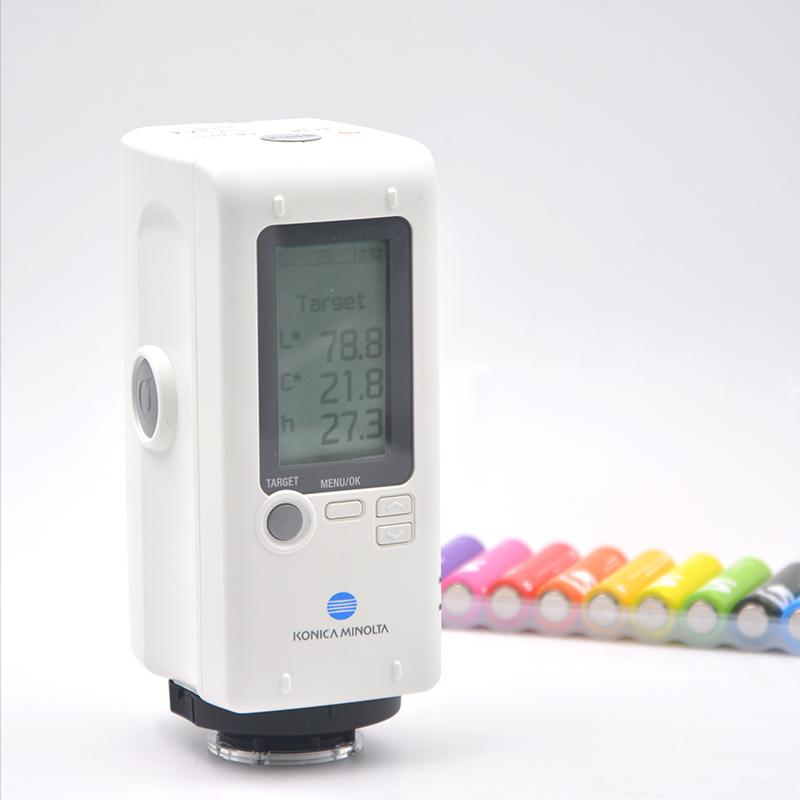
Color difference: Use a color difference meter to measure the color of the coating sample and compare it with the standard color to evaluate the degree of color difference of the coating.