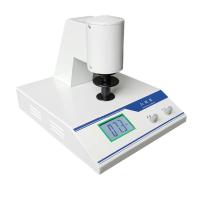
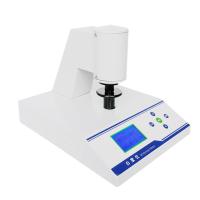
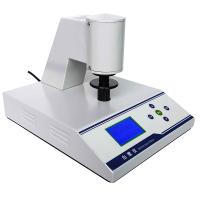
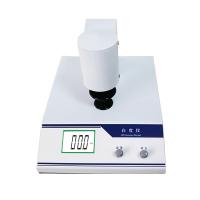
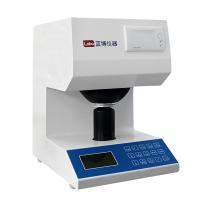
A desktop Whiteness Meter is an instrument used to measure the whiteness of a material surface, which usually needs to be placed on a countertop for use. A desktop Whiteness Meter can provide higher accuracy and stability, and is suitable for occasions that require continuous measurement for a long time.
Working principle
The working principle of a desktop Whiteness Meter is to determine the whiteness of the surface of an object by measuring the light reflected from the surface of the object. It usually uses optical technology and whiteness standard comparison to measure the whiteness of the surface of the object.
Application field
Desktop Whiteness Meters are widely used in papermaking, printing, coatings, plastics, textiles, cosmetics, food, medicine, building materials and other fields. It can be used to measure the whiteness of different material surfaces to ensure product quality and consistency.
core parameter
| Typical technical parameters | describe |
|---|---|
| Measuring range | The whiteness range that a desktop Whiteness Meter can measure |
| precision | Measurement Accuracy of Desktop Whiteness Meter |
| resolution | The smallest whiteness change that a desktop Whiteness Meter can detect |
| stability | Stability of Measurement Results of Desktop Whiteness Meter |
| response time | Desktop Whiteness Meter takes time from measurement to display results |
| Other features | Other features of the desktop Whiteness Meter, such as automatic calibration and data storage capabilities |
The above are some typical technical parameters of desktop Whiteness Meters. The different values of these parameters will affect the measurement effect and performance of desktop Whiteness Meters.