Salt spray test is a commonly used environmental test method for testing the corrosion resistance of metal and non-metal materials. It evaluates the corrosion resistance of materials by exposing them to a salt spray environment and observing the degree of surface corrosion. Usually, the salt spray solution composition of the salt spray test is sodium chloride (NaCl).
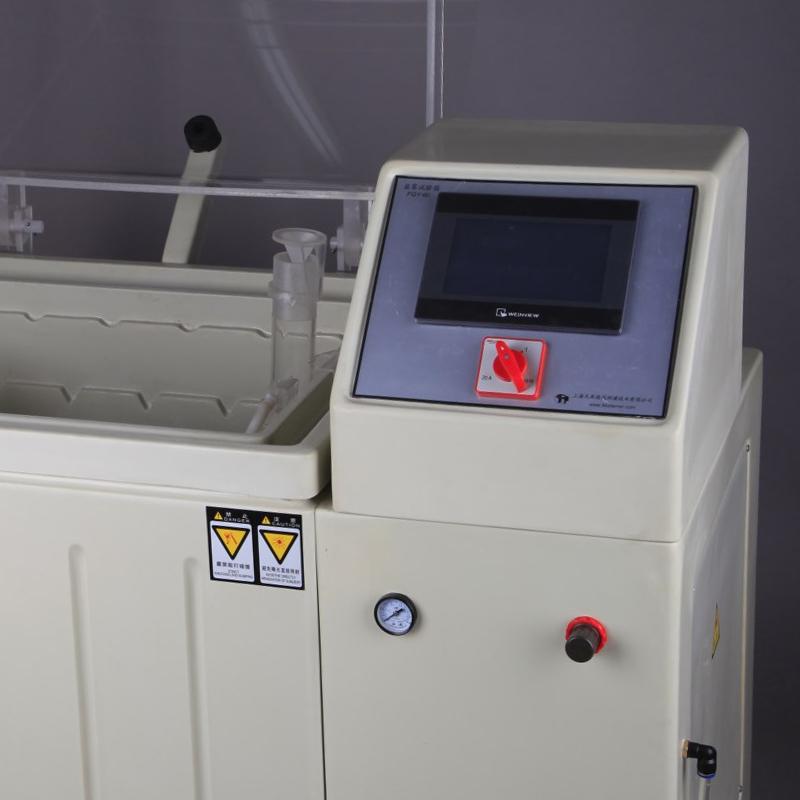
Introduction to different methods:
| experiment method | Salt spray solution composition | Test temperature | Test time |
|---|---|---|---|
| NSS test | Sodium chloride (NaCl) | 35°C | 24 hours, 48 hours, 72 hours, 96 hours and other different time periods |
| Main features: basic salt spray test method for evaluating the general performance of materials against corrosion, simulating corrosion in natural atmosphere | |||
| ACSS test | Sodium Chloride (NaCl) + Acetic Acid (CH3COOH) | 35°C | 24 hours, 48 hours, 72 hours, 96 hours and other different time periods |
| Main features: Acetic acid is added on the basis of NSS test, which can better simulate the corrosion conditions in urban and industrial environments | |||
| CASS test | Sodium Chloride (NaCl) + Acetic Acid (CH3COOH) + Copper Chloride (CuCl2) | 50℃ | 4 hours, 8 hours, 24 hours and other different time periods |
| Main features: Based on the ACSS test, copper chloride is added to accelerate the corrosion process. Used to evaluate the rapid performance of materials against corrosion, which can be used to screen materials or evaluate the effect of new protective coatings | |||
Although the three salt spray test methods are different, they are all common test methods for evaluating the corrosion resistance of materials. In practical application, the appropriate test method should be selected according to the specific test purpose and requirements.
