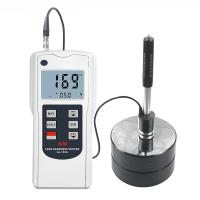
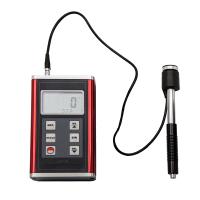
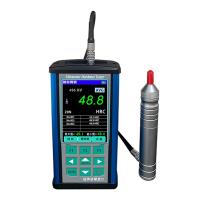
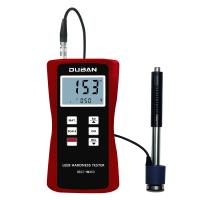
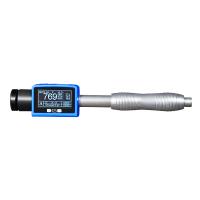
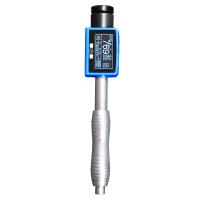
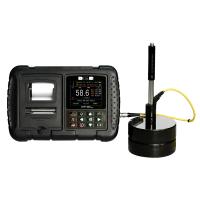
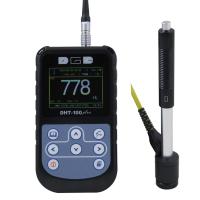
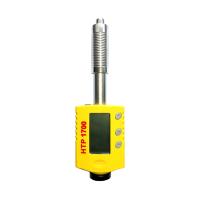
The Leeb Hardness Tester is a common metal hardness testing instrument, which is widely used in the hardness testing of metal materials. The Leeb Hardness Tester can use different hardness scales to express test results, and different hardness scales have different specifications and application ranges.
Different hardness scales use different Hardness Gauges and test parameters in the testing process. Therefore, in practical applications, the appropriate hardness scale should be selected according to the nature of the material and the purpose of the test.
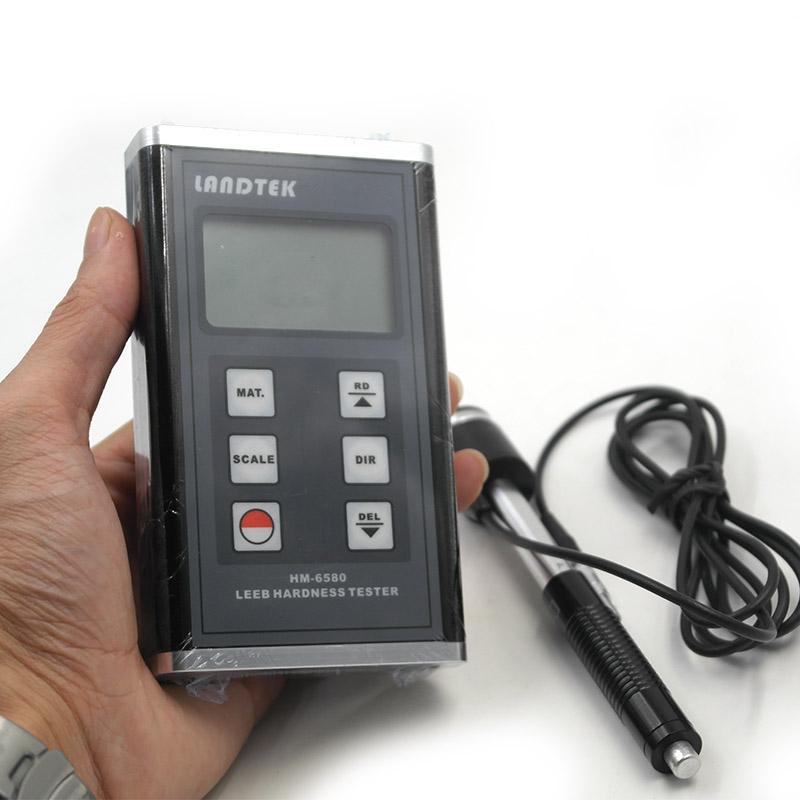
The following is the difference between different hardness standards of the Leeb Hardness Tester:
HL system: It is the earliest Leeb hardness system used to test steel materials. The Hardness Tester measures the elastic deformation depth of the steel surface under a certain drop weight and drop distance, and the unit is HL.
HB standard: This standard is used to test cast iron, steel and non-ferrous metal materials. The weight and drop distance of the Hardness Tester are slightly larger than HL, and the unit is HB.
HR system: There are many different versions of this system, including HRB, HRC and HRA. HRB is used to test the hardness of mild steel, copper, aluminum and other materials, HRC is used to test the hardness of cemented carbide, hardened steel and other materials, and HRA is used to test materials with higher hardness. The weight and drop distance of the Hardness Tester are the same as those of the HB system, and the unit is HR.
HV system: used to test the hardness of metal and non-metal materials, often used to measure the hardness of thin plates and surfaces. The Hardness Tester of this standard uses a diamond indenter and is tested under a small drop distance. The unit is HV.
HS standard: used to test the hardness of rubber, plastic, foam and other elastic materials. The Hardness Tester uses a conical indenter, and the unit is HS.
σb system: used to test the tensile strength of metal materials. This standard Hardness Tester measures the tensile strength of the sample by imprinting a specific geometric shape on the test sample, and then performing a tensile test at break, the unit is σb.
| Hardness scale | Applicable material | Drop weight (kgf) | Drop distance (mm) | main feature |
|---|---|---|---|---|
| HL | steel material | 6, 10, 12.5, 20, 30, 50 | 1.5, 2.5, 2.9, 4.2, 6, 8 | One of the earliest Leeb hardness scales, used to test steel materials |
| HB | Cast iron, steel and non-ferrous metal materials | 10, 20, 30, 50, 100, 150 | 2.5, 2.5, 2.5, 2.5, 2.5, 2.5 | For testing the hardness of cast iron, steel and non-ferrous metal materials |
| HRB | Mild steel, copper, aluminum and other materials | 60, 100, 150 | 1.27, 1.5875, 2.54 | Used to test the hardness of mild steel, copper, aluminum and other materials |
| HRC | Cemented carbide, hardened steel and other materials | 60, 100, 150 | 1.27, 1.5875, 2.54 | Used to test the hardness of cemented carbide, hardened steel and other materials |
| HRA | Harder materials | 60, 100, 150 | 1.5875, 2.5, 5 | For testing materials with higher hardness |
| HV | metal and non-metal materials | 10, 20, 30, 50, 100, 150 | 0.01, 0.02, 0.025, 0.05, 0.1, 0.2 | For measuring sheet and surface hardness |
| HS | Rubber, plastic, foam and other elastic materials | - | 0.05, 0.1, 0.2 | For testing the hardness of elastic materials |
| σb | metallic material | - | - | Measure the tensile strength of a test specimen by imprinting a specific geometric shape on the test specimen and then performing a tensile test at break |
Although different hardness standards use different Hardness Gauges and test parameters in the testing process, they are all common metal hardness testing methods, and the appropriate hardness standard should be selected according to the test requirements and material characteristics.