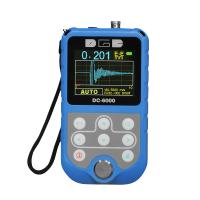
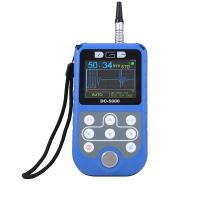
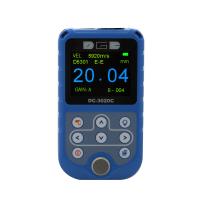
A Thickness Gauge is an instrument used to measure the thickness of materials, usually used in the measurement of metals, plastics, glass and other materials. It can quickly and accurately measure the thickness of materials by non-contact or contact. Thickness gauges are widely used in manufacturing, aerospace industry, automotive industry, power industry and other fields.

The working principle of a Thickness Gauge varies according to different types of measurement principles. For example, ultrasonic Thickness Gauges use the property of ultrasonic waves propagating inside a material to measure thickness; electromagnetic induction Thickness Gauges use electromagnetic induction to measure the thickness of a material. Regardless of the principle used, Thickness Gauges can calculate the thickness of a material by measuring parameters such as the time and strength of the signal.
The following are the general parameters of the Thickness Gauge:
| Technical parameters | describe |
|---|---|
| resolution | The resolution of a measuring instrument, usually in micrometers or millimeters |
| precision | The difference between the measurement result and the actual thickness |
| scope | The maximum and minimum thickness range that a measuring instrument can measure |
| Probe size | The size of the sensor used to detect the thickness of the material |
| working environment | The working environment of the measuring instrument, such as temperature, humidity, etc |
| power supply | Measuring the power supply type and battery life of the instrument |
These parameters are very important for choosing the right Thickness Gauge, as they determine the accuracy and reliability of the measurement. In practical applications, depending on different materials and measurement requirements, other parameters need to be considered, such as measurement speed, data storage and transmission functions.