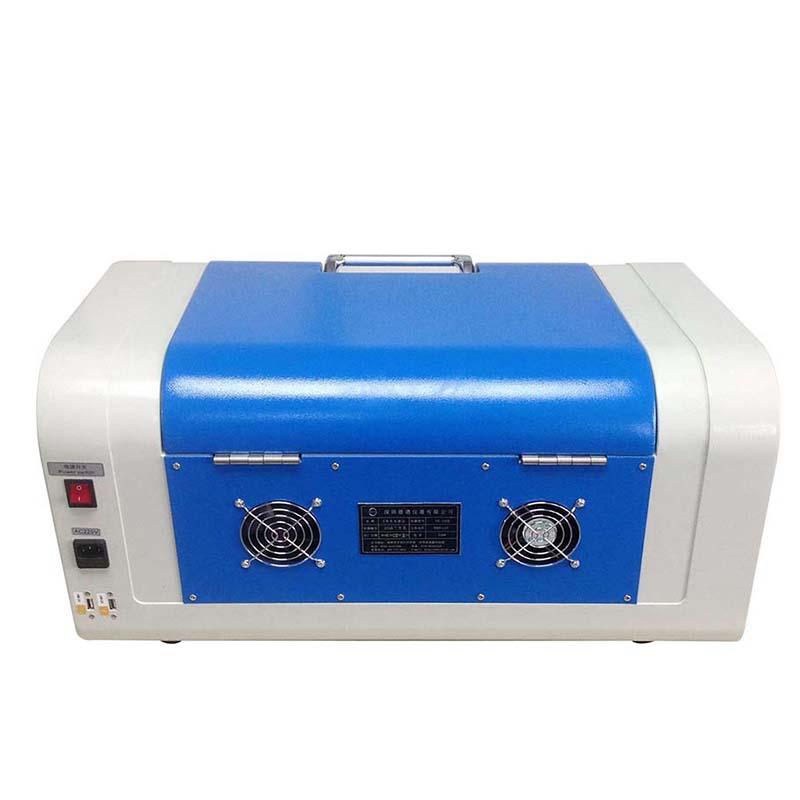
Fluorescence spectrometers and infrared spectrometers are common spectroscopic instruments. They differ in terms of usage principles, measurement ranges, and application fields. The specific differences are as follows:
The principle of use is different:
Fluorescence spectrometers obtain information by measuring the fluorescence emitted by a sample absorbing external excitation light, while infrared spectrometers obtain information by measuring the absorption of infrared light by a sample.
The measuring ranges are different:
Fluorescence spectrometers are mainly used to measure the spectrum of fluorescent molecules, generally applicable to the visible to ultraviolet region, that is, the wavelength range of 200-800 nanometers. The infrared spectrometer is suitable for the infrared region, generally covering the wave number range of 4000-400 cm^-1.
Different fields of application:
Fluorescence spectrometers are mainly used in chemistry, biology, materials science and other fields, such as protein structure research, photocatalysis, detection of fluorescent markers, etc. Infrared spectrometers are mainly used in the fields of chemistry, biology, materials, and pharmaceuticals, such as compound structure analysis, polymer material detection, and drug quality inspection.
Different resolutions:
The resolution of the fluorescence spectrometer is relatively low, generally around 0.1-1 nanometer, while the resolution of the infrared spectrometer is relatively high, which can reach about 0.001 nanometer.
Sample preparation varies:
The sample of a fluorescence spectrometer is generally a liquid or a solution of a solid sample, which needs to be exposed to external excitation light to emit a fluorescent signal; while the sample of an infrared spectrometer can be a liquid, solid or gas sample, and the sample usually needs to be made into a thin film or granular to facilitate the absorption and transmission of the sample under infrared light.
Therefore, there are certain differences between fluorescence spectrometers and infrared spectrometers in terms of operating principles, measurement ranges, and application fields, and it is necessary to choose a suitable instrument according to actual needs.