The main purpose of the UV aging test for wires and cables is to evaluate their weather resistance and durability to determine their service life and performance stability in outdoor environments. Factors such as ultraviolet radiation, temperature changes, and humidity changes in outdoor environments will have adverse effects on the materials of wires and cables, such as causing deterioration, discoloration, hardening, and cracking of materials.
The UV aging test can more accurately predict the performance of wires and cables in outdoor environments by simulating the exposure of wires and cables under actual use conditions. The ultraviolet radiation source in the test can simulate the ultraviolet rays in sunlight, while the temperature and humidity changes simulate the temperature difference between day and night and the humid environment.
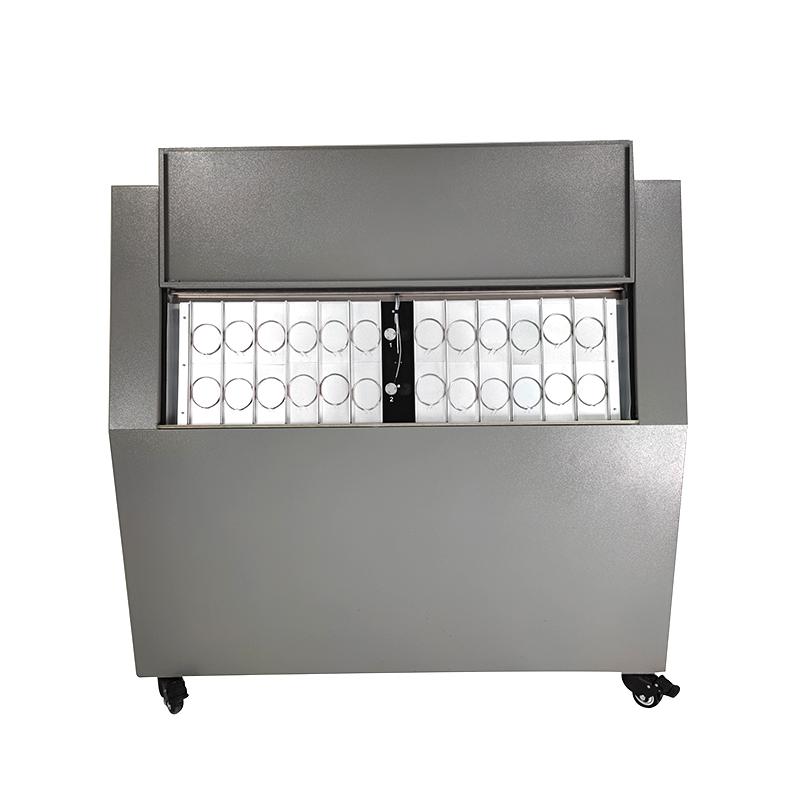
Through the ultraviolet aging test, the anti-ultraviolet performance, weather resistance, heat resistance, oxidation resistance, etc. of wire and cable materials can be evaluated to determine their reliability and service life in the outdoor environment. This is of great significance to ensure that wires and cables can work safely and reliably under various climatic conditions, and it also helps to formulate appropriate product specifications and ensure product quality.
Guideline
When conducting UV aging tests on wires and cables, the following relevant standards can be referred to:
IEC 60216-2: Electrical insulating materials - Thermal endurance properties - Part 2: Determination of thermal endurance properties of electrical insulating materials - Aging ovens and lines
Thermal resistance of electrical insulating materials: Part 2 - Determination of thermal resistance of electrical insulating materials - Aging chambers and devices
ASTM G155: Standard Practice for Operating Xenon Arc Light Apparatus for Exposure of Non-Metallic Materials
Standard Practice for Operation of Xenon Arc Light Apparatus for Exposure of Nonmetallic Materials
ASTM D2565: Standard Practice for Xenon-Arc Exposure of Plastics Intended for Outdoor Applications
Standard Method for Exposure of Plastic Materials to Xenon Arc Light for Outdoor Applications
These standards provide guidance and specifications for UV weathering testing, including requirements for equipment operation, specimen preparation, test conditions, and duration. Depending on specific applications and requirements, country or region specific standards or industry standards can also be referred to.
In practice, it is very important to ensure the correct selection and application of standards, as well as to follow the correct test procedures and conditions. This ensures the accuracy and comparability of trials and leads to reliable conclusions and assessments.
Specific application cases
The following are some specific application cases of UV aging test for wires and cables:
Construction wires and cables: For construction wires and cables installed outdoors, UV aging tests can evaluate their durability and stability under environmental conditions such as sunlight, high temperature and humidity changes.
Solar cables: The cables used in solar power generation systems need to have good weather resistance and durability. The UV aging test can evaluate their performance under sunlight exposure, such as UV resistance and heat resistance.
Automotive wire and cable: In the automotive industry, wire and cable need to withstand environmental conditions such as extreme temperature changes, ultraviolet radiation, and humidity. UV aging tests can evaluate their durability and reliability under these conditions.
Communication cables: For communication cables installed outdoors, the UV aging test can evaluate their performance stability under long-term exposure to sunlight, including UV resistance, electrical insulation performance and mechanical strength, etc.
These cases are only part of the application scenarios of the UV aging test of wires and cables, and the actual application can be more customized and expanded according to different industries and specific needs. In a variety of applications, UV aging testing helps to evaluate the durability and reliability of wire and cable materials and structures in outdoor environments.
operation method
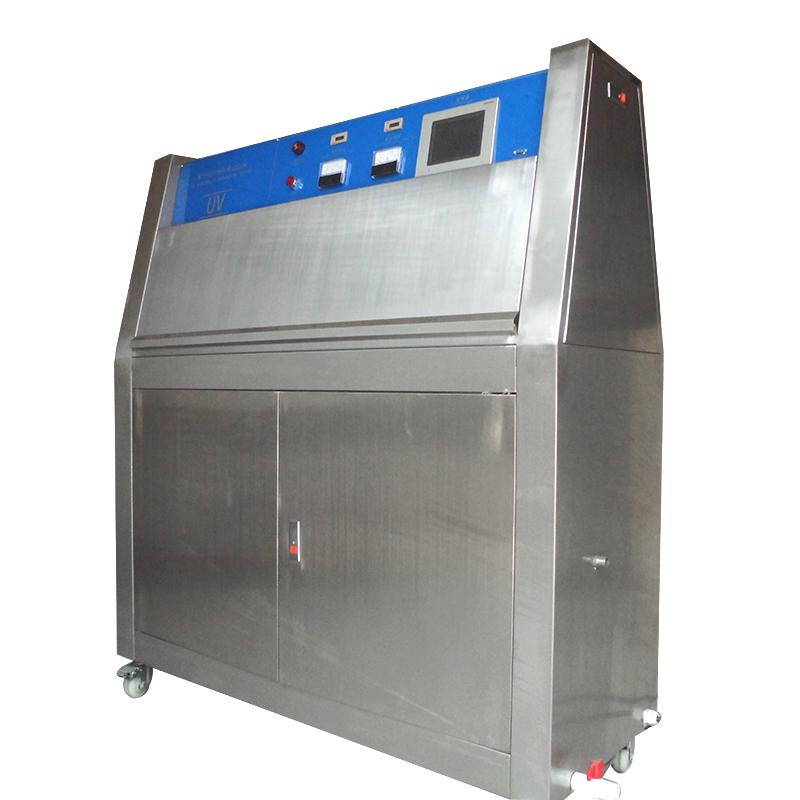
The following are the steps and precautions for using the UV aging Test Chamber to test the aging resistance of wires and cables in general:
Sample preparation: According to standards or requirements, select wire and cable samples of appropriate size for testing. Ensure that samples comply with relevant specifications and requirements.
Test condition setting: According to the required test conditions and standard requirements, set the parameters of the UV aging Test Chamber, including radiation intensity, temperature, humidity, etc. Pay attention to the correct setting according to the standard or requirement.
Sample placement: Place the wire and cable samples on the sample holder in the Test Chamber to ensure that the samples are in a proper position and avoid mutual interference between samples.
Test run: Start the UV aging Test Chamber, and expose the samples to UV radiation under the set conditions. According to the standard requirements, set the appropriate test time, usually hundreds to thousands of hours.
Regular observation: Regularly observe the changes of samples, including appearance, color, surface quality, etc. Document any visible changes or damage.
End of test and evaluation: After the test is completed, samples are removed for evaluation and testing. The physical and electrical properties of wires and cables can be tested to determine their aging resistance.
When carrying out UV aging test, the following matters need to be paid attention to:
Make sure that the UV aging Test Chamber equipment is working properly, and operate in accordance with the operation manual and safety requirements.
Check and record the temperature, humidity, radiation intensity and other parameters of the Test Chamber to ensure its stability and accuracy.
Ensure that the selection, preparation and placement of samples comply with standards and requirements.
Regularly inspect and maintain Test Chamber equipment to ensure proper operation and accuracy.
Pay attention to observe and record any changes in the sample during the test for subsequent evaluation and analysis.
The above are general operation instructions and precautions. For specific test procedures and requirements, refer to relevant standards, methods or procedures, and follow the correct test procedures.
