The main purpose of UV aging test for road asphalt is to evaluate its weather resistance and performance stability to determine its service life and performance in outdoor environments. The UV aging test can simulate the effect of ultraviolet radiation in sunlight on road asphalt.
Assessing Weatherability: Road asphalt is exposed to the outdoor environment and can be affected by factors such as ultraviolet light, temperature changes, humidity, atmospheric chemicals, and more. UV aging tests can simulate these factors to evaluate the weather resistance of road asphalt under actual use conditions.
Evaluate performance stability: UV radiation can adversely affect the chemical composition and physical properties of road asphalt, such as color changes, hardening, aging, cracking and deformation, etc. Through the UV aging test, the performance stability of road asphalt can be evaluated to understand whether it will undergo performance degradation, damage or failure in long-term use.
Guide material selection and formula optimization: Through the results of UV aging test, we can understand the performance changes of road asphalt under ultraviolet radiation, so as to guide the selection of road asphalt materials, formula optimization and improvement, so as to improve its weather resistance and performance stability.
Ensure quality control: By conducting UV aging tests, the quality of road asphalt can be controlled and verified to ensure that it complies with relevant quality standards and specifications.
Prediction of service life and maintenance cycle: Through UV aging tests and related evaluations, the service life and maintenance cycle of road asphalt can be predicted, providing a basis for road planning, maintenance and repair.
The UV aging test can provide important information about the weather resistance and performance stability of road asphalt in the exposed environment, helping to ensure that road asphalt can maintain its function and performance under various climatic conditions for a long time, and provide a safe and smooth road driving experience.
Industry Standard
The UV aging test of road asphalt usually needs to refer to the following industry standards:
ASTM D4799: Standard test method for evaluating the weatherability of road asphalt, including UV aging tests.
AASHTO T245: Standard test method for the weatherability of road asphalt issued by the American Association of Interstate Highway Traffic Officials (AASHTO), which includes a UV aging test.
EN 12607-5: European standard for testing road bitumen and bituminous mixtures published by the European Organization for Standardization (CEN), which deals with UV aging tests.
JIS K 7350-4: Japanese Industrial Standards (JIS) standards for testing bitumen and bituminous mixtures for road use, including UV aging tests.
AS 2341.13: Australian Standard for the testing of road bituminous materials and bituminous mixtures published by the Standards Australian Institute (SAI Global), which deals with UV aging tests.
Note that exact standard requirements may vary depending on region, industry, and specific product needs. Therefore, before carrying out the UV aging test of road asphalt, the applicable standards and specifications should be carefully read and followed to ensure the accuracy and comparability of the test. In addition, different countries and regions may have specific highway department standards and specifications, and applicable requirements should also be considered in the test.
Applications
The following are some specific application cases of road asphalt UV aging test:
Weather resistance evaluation: UV aging test can be used to evaluate the weather resistance of road asphalt, including changes in color change, hardness change, surface cracks, deformation, etc. This helps determine the stability and durability of road asphalts after long-term exposure to UV radiation and other environmental factors.
Color stability: The UV aging test can simulate the ultraviolet radiation in sunlight to evaluate the color stability of road asphalt. By observing the degree of color change, it can be judged whether the color of road asphalt will fade or turn yellow under different environmental conditions.
Changes in physical properties: UV aging tests can detect changes in physical properties of road asphalt, such as hardness, bending properties, crack resistance, etc. This helps to assess whether road asphalt becomes brittle, prone to cracking or deforms when exposed to UV radiation.
Changes in chemical composition: The UV aging test can detect changes in the chemical composition of road asphalt, such as polymer content, changes in asphalt quality, etc. By analyzing the changes in chemical composition, the chemical stability and durability of road asphalt under ultraviolet radiation can be understood.
Maintenance cycle evaluation: Through UV aging test and related evaluation, the service life and maintenance cycle of road asphalt can be predicted. This helps to formulate a reasonable maintenance plan, carry out road repairs and updates in a timely manner, and improve the durability and safety of the road.
These application examples demonstrate the important role of UV aging testing in evaluating the weatherability and performance stability of road asphalt. By understanding the performance changes of road asphalt under ultraviolet radiation, corresponding measures can be taken to improve the quality and life of the road and ensure the reliability and safety of the road.
Test Methods
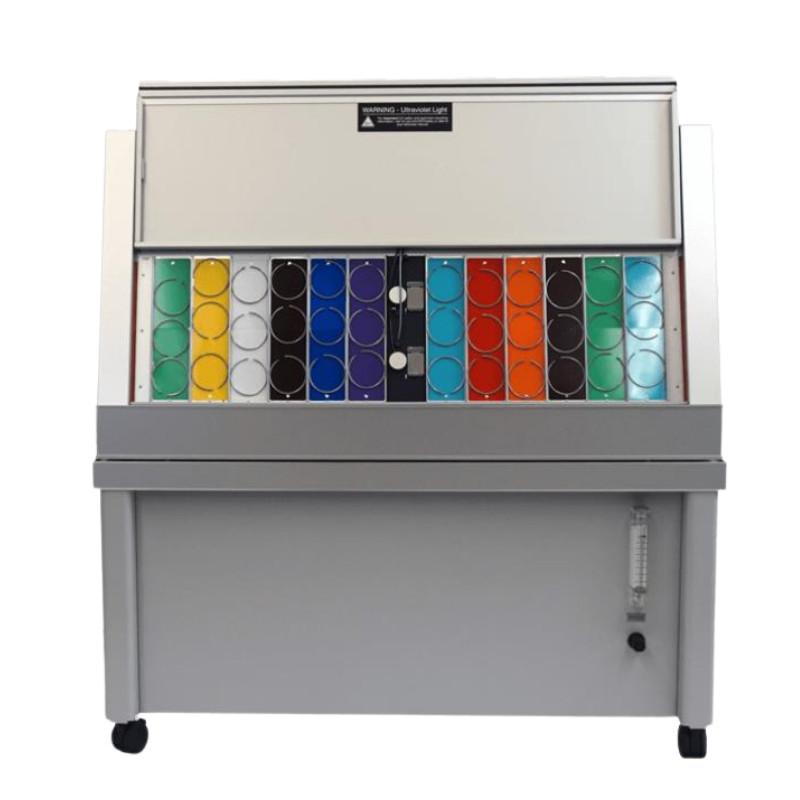
The following are the steps and precautions for testing the aging resistance of asphalt pavement using a UV aging Test Chamber in general:
Sample preparation: Select appropriate asphalt samples for testing as required. Asphalt coupons may be used or asphalt may be applied to test panels.
Test condition setting: According to the required test conditions and standard requirements, set the parameters of the UV aging Test Chamber, including radiation intensity, temperature, humidity, etc. Ensure that the Test Chamber settings comply with relevant specifications and requirements.
Sample placement: Place the asphalt sample on the sample holder in the Test Chamber to ensure that the sample is flat, free of air bubbles and wrinkles, and avoid mutual interference between samples.
Test run: Start the UV aging Test Chamber, and expose the samples to UV radiation under the set conditions. According to the standard requirements, set the appropriate test time, usually hundreds to thousands of hours.
Regular observation: Regularly observe the changes of asphalt samples, including color changes, hardness changes, surface cracks, deformation, etc. Document any visible changes or damage.
End of Test and Evaluation: After the test is completed, samples are removed for evaluation and testing. The physical and chemical properties of asphalt samples can be tested to determine their aging resistance.
When carrying out UV aging test, the following matters need to be paid attention to:
Make sure that the UV aging Test Chamber equipment is working properly, and operate in accordance with the operation manual and safety requirements.
Check and record the temperature, humidity, radiation intensity and other parameters of the Test Chamber to ensure its stability and accuracy.
Ensure that the selection, preparation and placement of samples comply with standards and requirements.
Regularly inspect and maintain Test Chamber equipment to ensure proper operation and accuracy.
Pay attention to observe and record any changes in the sample during the test for subsequent evaluation and analysis.
Please note that the exact test method and operation steps may vary according to the standard and specific test requirements, so you should carefully read the relevant standard and follow the correct test procedure before conducting the UV aging test.
