The main purpose of UV aging test for vehicle rubber materials is to evaluate its weather resistance and performance stability, so as to determine its service life and performance in outdoor environments. The UV aging test can simulate the effect of ultraviolet radiation in sunlight on vehicle rubber materials. Can work from:
Evaluate weather resistance: Vehicle rubber materials are often exposed to outdoor environments during vehicle use, affected by factors such as ultraviolet light, temperature changes, humidity and atmospheric chemicals. The UV aging test can simulate these factors to evaluate the weather resistance of rubber materials under actual use conditions, including aging resistance, crack resistance and hardening resistance.
Evaluate performance stability: UV radiation can adversely affect the chemical composition and physical properties of vehicle rubber materials, such as changes in hardness, reduction in elasticity, cracks and deformation, etc. Through the UV aging test, the performance stability of the rubber material can be evaluated to understand whether it will undergo performance degradation, damage or failure during long-term use.
Guide material selection and formula optimization: Through the results of UV aging test, we can understand the performance changes of vehicle rubber materials under ultraviolet radiation, so as to guide the selection of rubber materials, formula optimization and improvement to improve their weather resistance and performance stability.
Quality control and product certification: UV aging test can be used as part of the quality control of vehicle rubber materials to verify whether the product meets the relevant quality standards and certification requirements.
Extend service life and reduce maintenance cost: By evaluating the weather resistance and performance stability of vehicle rubber materials, its service life and maintenance cycle can be determined, thereby prolonging the service life of rubber materials, reducing the frequency of maintenance and replacement, and reducing maintenance costs.
The UV aging test can provide important information about the weather resistance and performance stability of vehicle rubber materials in exposed environments, helping to ensure that rubber materials can maintain their functions and performance under various climatic conditions for a long time, and provide reliable and safe vehicle use experience
Industry Standard
The UV aging test of vehicle rubber materials usually needs to refer to the following industry standards:
ASTM D1149: A standard test method issued by the American Society for Testing and Materials (ASTM) for evaluating the oxidation resistance and weather resistance of rubber materials, including UV aging tests.
ISO 4892-3: The standard for UV radiation aging test of coatings and varnishes issued by the International Organization for Standardization (ISO), Part 3 of which is applicable to the UV aging test of rubber materials.
JIS K 6259: Japanese Industrial Standards (JIS) standards for weather resistance tests of rubber or elastomeric materials, including ultraviolet radiation aging tests.
GB/T 7762: Standards on rubber aging test methods issued by CHINA National Standardization Administration Committee, which involves the requirements and methods of ultraviolet aging tests.
These standards provide guidance and specifications for UV aging tests on vehicle rubber materials, including requirements for test equipment, test methods, test conditions and duration. Depending on the specific application and requirements, reference may also be made to other specific industry standards or internal company specifications.
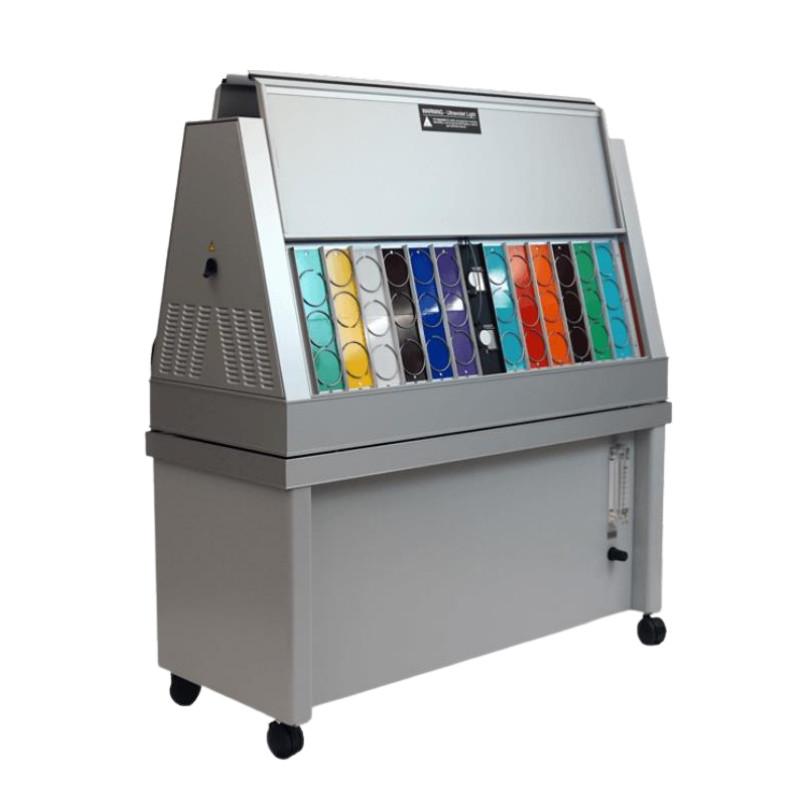
application
The following are some specific application cases of UV aging test for vehicle rubber materials:
Tires: UV aging tests are performed on rubber materials of vehicle tires to evaluate their weather resistance, elastic recovery and crack resistance. This helps to determine the service life and performance stability of the tire, ensuring its reliability and safety in different climatic conditions.
Seals and O-rings: UV aging tests are carried out on the rubber materials of vehicle seals and O-rings to evaluate their weather resistance and sealing performance. This helps ensure that seals and O-rings retain their resilience, leak-tightness and water-tight properties over time.
Rubber sealing strip: UV aging test is carried out on vehicle rubber sealing strip to evaluate its weather resistance and anti-aging performance. This helps to ensure that the rubber seals can effectively prevent the penetration of water, dust and noise and maintain the sealing effect in all weather conditions.
Rubber pipes: UV aging tests are carried out on vehicle rubber pipes to evaluate their weather resistance, corrosion resistance and aging resistance. This helps ensure that the rubber tubing maintains its elasticity, stretch resistance and durability under varying environmental conditions, preventing leaks and failures.
Rubber gaskets: UV aging tests are performed on vehicle rubber gaskets to evaluate their weather resistance and sealing performance. This helps ensure that the rubber gasket retains its elasticity, water resistance and anti-aging properties over time, effectively sealing the various components of the vehicle.
These application examples demonstrate the important role of UV aging testing in evaluating the weather resistance and performance stability of vehicle rubber materials. By understanding the performance changes of rubber materials under ultraviolet radiation, appropriate rubber material selection, design and maintenance strategies can be developed to ensure that vehicle rubber materials have the required performance and reliability under various climatic conditions.
experiment method
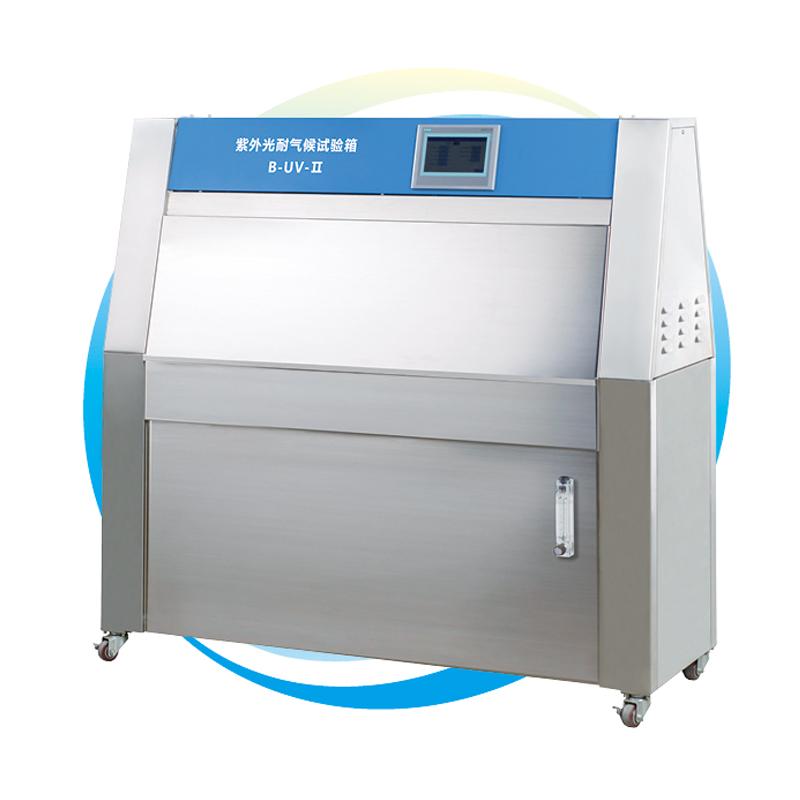
Steps and precautions for testing the aging resistance of vehicle rubber materials using a UV aging Test Chamber:
Sample preparation: Select appropriate vehicle rubber material samples for testing as required. Samples in the form of rubber sheets, rubber seals, rubber tubing, etc. can be used.
Test condition setting: According to the required test conditions and standard requirements, set the parameters of the UV aging Test Chamber, including radiation intensity, temperature, humidity, etc. Ensure that the Test Chamber settings comply with relevant specifications and requirements.
Sample placement: Place the vehicle rubber material sample on the sample holder in the Test Chamber to ensure that the sample is flat, free of bubbles and wrinkles, and avoid mutual interference between samples.
Test run: Start the UV aging Test Chamber and let the samples be exposed to UV radiation and other environmental factors under the set conditions. According to the standard requirements, set the appropriate test time, usually hundreds to thousands of hours.
Regular observation: Regularly observe the changes of the rubber material samples of the vehicle, including color changes, hardness changes, surface cracks, peeling, etc. Document any visible changes or damage.
End of Test and Evaluation: After the test is completed, samples are removed for evaluation and testing. The physical and chemical properties of vehicle rubber material samples can be tested to determine their aging resistance.
Precautions
When carrying out UV aging test, the following matters need to be paid attention to:
Make sure that the UV aging Test Chamber equipment is working properly, and operate in accordance with the operation manual and safety requirements.
Check and record the temperature, humidity, radiation intensity and other parameters of the Test Chamber to ensure its stability and accuracy.
Ensure that the selection, preparation and placement of samples comply with standards and requirements.
Regularly inspect and maintain Test Chamber equipment to ensure proper operation and accuracy.
Pay attention to observe and record any changes in the sample during the test for subsequent evaluation and analysis.
Make sure that the parameters such as radiation intensity, temperature and humidity in the UV aging Test Chamber can be stably controlled and consistent with the selected test standards or requirements. Control of these parameters is critical to obtaining reliable test results.
According to the test requirements, determine the time point and frequency of observation and sampling. Typically, the sampling period should cover the entire duration of the test in order to fully evaluate the change in properties of the rubber material.
When observing and evaluating samples, pay attention to record changes in appearance, color, hardness, surface cracks, peeling, and changes in physical properties, etc. These changes can provide important information about the aging resistance of rubber materials.
In addition to observing changes in appearance, some physical performance tests can also be carried out, such as hardness tests, tensile tests, breaking strength tests, etc., to comprehensively evaluate the performance changes of rubber materials.
During the test, it is recommended to set up a control sample, that is, a sample of rubber material that has not been exposed to UV radiation. This allows changes in exposed and control samples to be compared for a more accurate assessment of aging performance.
According to the test results and selected standards or requirements, evaluate the aging resistance of rubber materials. Compare the physical properties and appearance characteristics of the samples, judge whether they meet the requirements, and provide reference opinions.
Finally, prepare a test report based on the test results, and record the test parameters, observation results, physical performance test data and conclusions in detail. This report can be used as the basis for quality control and quality certification.
Overall, the UV aging Test Chamber is a commonly used testing tool for evaluating the aging resistance of vehicle rubber materials. By controlling the test parameters, observing the sample changes and evaluating the test results, it is possible to obtain information on the performance changes of rubber materials under ultraviolet radiation, which provides important references for product design, material selection and quality control.
