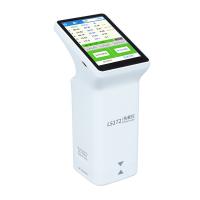
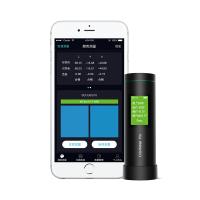
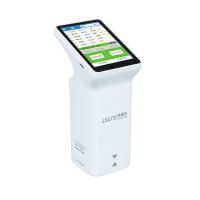
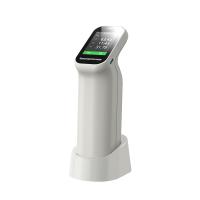
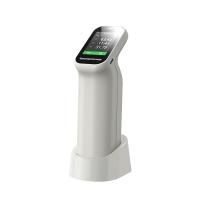
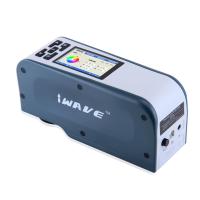
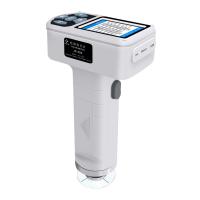
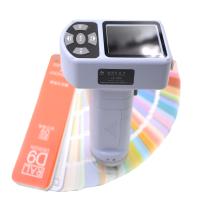
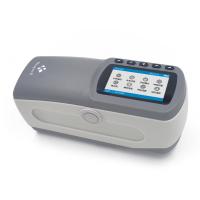
Colorimeters are widely used in industries such as textiles, printing and dyeing services, plastics, inks and paints. According to its appearance characteristics, it can be roughly divided into the following types: desktop Colorimeter, portable Colorimeter, and hand-held Colorimeter. Different types and brands of Colorimeters have different scopes of application, but the application of all Colorimeters is based on the following inspection standards.
GB 7973: Determination of Diffuse Reflection Factor of Pulp, Paper and Cardboard (d/o)
GB 7974: Determination of whiteness of paper and board (d/o)
GB 7975: Determination of color of paper and board (d/o)
ISO2470: Method for determination of diffuse reflectance factor of blue light of paper and board (ISO whiteness)
GB 3979: Measurement method of object color
GB 8940.2: Determination of pulp brightness
GB 2913: Test method for whiteness of plastics
GB 1840: Determination method of industrial potato starch
GB 13025: General test method for salt industry, determination of whiteness
Textile Industry Standard: Method for Determination of Whiteness of Chemical Fiber Pulp
GB T/5950: Method for measuring whiteness of building materials and non-metallic mineral products
GB 8425: Method for instrumental evaluation of whiteness of textiles
GB 9338: Method for Determination of Whiteness of Fluorescent Whitening Agents
GB 9984.1: Determination of Whiteness of Industrial Sodium Tripolyphosphate
GB 13176.1: Determination of whiteness of washing powder
GB/T 13835.7: Test method for whiteness of rabbit hair fiber
GB4739: Method for Determination of Chromaticity of Ceramic Pigments for Daily Use
GB 6689: Determination of color difference of dyes, instrument method
GB 8424: Determination method of textile color and color difference
GB 11186.1: Method for measuring the color of coating film
GB 11942: Chromaticity measurement method for colored building materials
GB 13531.2: Determination of tristimulus value and color difference △E* of cosmetics
GB 1543: Determination of opacity of paper
ISO 2471: Method for determination of opacity of paper and board
GB10339: Determination of light scattering coefficient and light absorption coefficient of paper and pulp
GB 12911: Determination of Ink Absorption of Paper and Board
GB 2409: Test method for yellowness index of plastics
The relevant detection parameter symbols of the Colorimeter indicate:
Automatically compare the color difference between the sample and the inspected product, and output three sets of data of L, a, b and four sets of color difference data of △E, △L, △a, △b after colorimetry.
△E is the size of the total color difference,
△L+ means whiter, △L- means darker
△a+ means reddish, △a- means greenish
△b+ means yellowish, △b- means blue