Viscosity coefficient and surface tension are two important parameters of liquid properties, which describe the behavior and properties of liquids under different conditions.
Viscosity coefficient: The viscosity coefficient is a physical quantity that describes the amount of viscous resistance inside a liquid, and measures the viscosity or fluidity of the liquid. The larger the viscosity coefficient, the thicker the liquid and the more difficult it is to flow. The viscosity coefficient is usually expressed as the ratio of the force per unit area to the velocity difference per unit time (shear rate). The unit is usually Pascal seconds (Pa · s) or milliPa · s (mPa · s). The viscosity coefficient of high-viscosity liquids (such as colloids and pastes) is larger, while the viscosity coefficient of low-viscosity liquids (such as water and alcohol) is smaller.
Surface tension: Surface tension is the property of liquid surface shrinkage caused by intermolecular interaction forces occurring on the liquid surface. Surface tension causes the liquid surface to exhibit as small a surface area as possible, forming an elastic film to the outside world. Surface tension has an important effect on the stability of the liquid surface and the shape of the droplet. Surface tension is usually expressed as a force per unit length in Newtons/meter (N/m) or dyn/cm (dyn/cm).
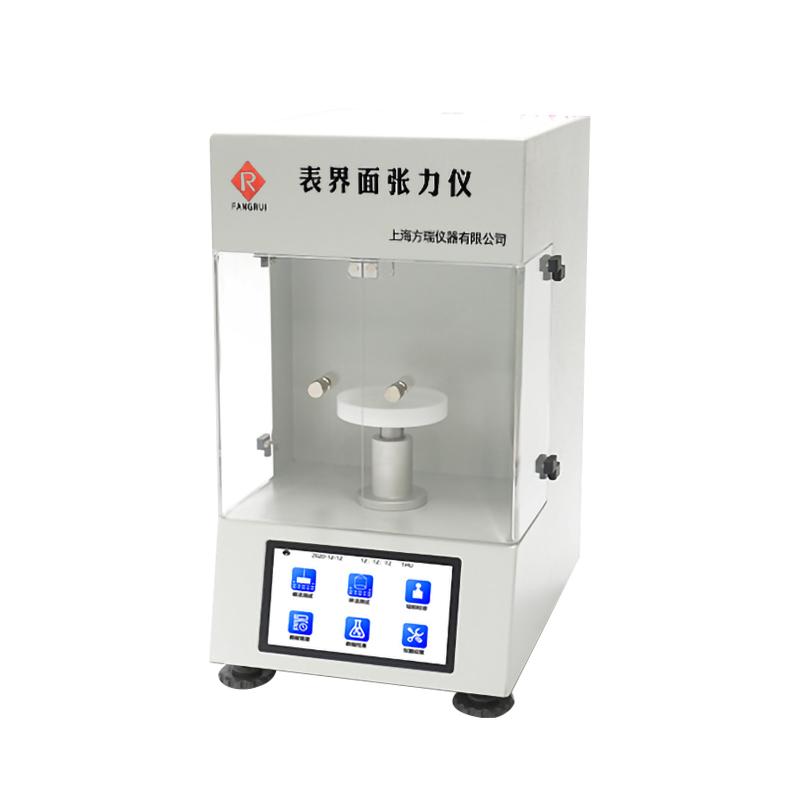
There is no direct mathematical relationship between the viscosity coefficient and surface tension. They are different aspects that describe the properties of liquids. However, they are all affected by the interaction between the molecules of liquids. For example, liquids with strong intermolecular attraction usually have higher viscosity and higher surface tension. However, the composition, temperature, pressure and other conditions of the liquid can all have an impact on the viscosity coefficient and surface tension, so the specific values and trends need to be determined according to the specific liquid system and conditions.
