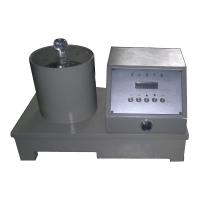
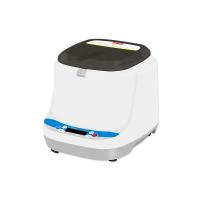
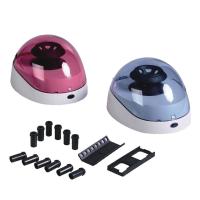
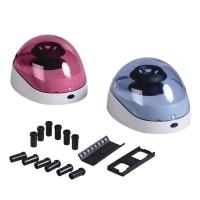
A centrifuge is a commonly used laboratory equipment used to separate solid particles or liquid components from a mixture.
According to its structure and working principle, centrifuges can be divided into many types, common centrifuges include:
Benchtop centrifuges: Benchtop centrifuges are usually smaller and suitable for small sample processing and routine laboratory work.
Large-capacity centrifuges: Large-capacity centrifuges have large centrifugal capacities and are suitable for handling large sample sizes or high-speed centrifuges.
Microcentrifuges: Microcentrifuges are suitable for processing trace samples and generally have a smaller centrifuge capacity and higher rotational speed.
Ultracentrifuge: Ultracentrifuges can achieve higher centrifugal speeds and greater centrifugal force, and are suitable for handling samples with special needs.
Cryogenic centrifuges: Cryogenic centrifuges have cooling systems that allow centrifugation at low temperatures and are suitable for applications that are sensitive to sample temperature.
Transparent centrifuge: The centrifuge cavity of the transparent centrifuge is made of transparent material, which can observe the centrifugation process of the sample in real time.
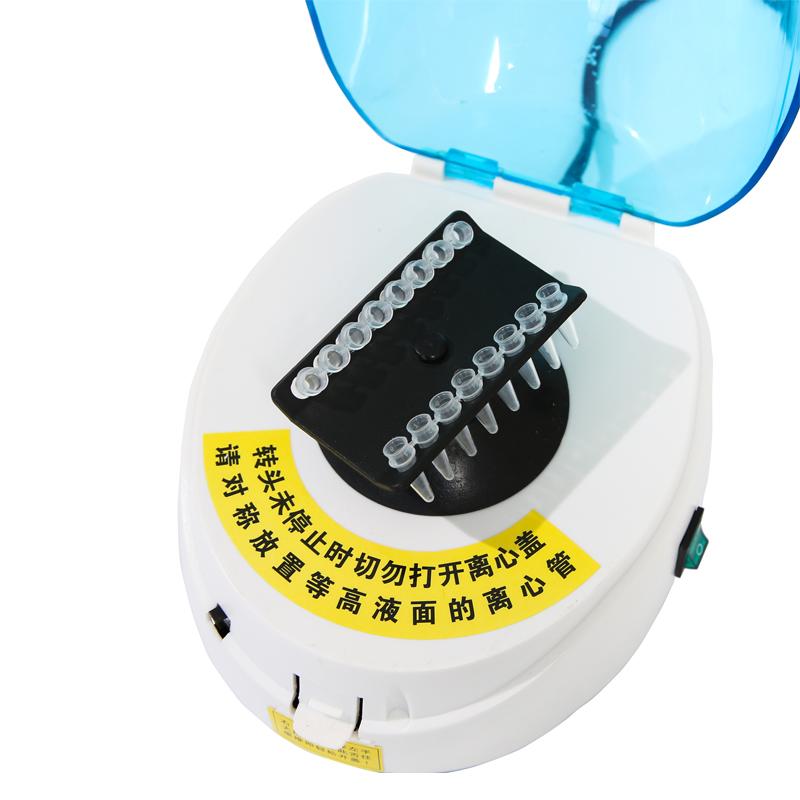
When using the centrifuge, you need to pay attention to the following matters:
Safe Operation: Before using the centrifuge, make sure the instrument is in a stable state and operate in accordance with the operating manual and safety procedures. Avoid exceeding the maximum capacity and speed limits of the centrifuge to avoid safety accidents.
Sample Balance: To maintain the balance of the centrifuge, the samples should be placed evenly in the centrifuge rotor and ensure that the amount and mass of the samples in each centrifuge tube are similar.
Rotor selection: According to the nature of the sample and centrifugal requirements, select the appropriate centrifugal rotor. Different rotors are suitable for different centrifugal capacity and centrifugal force requirements.
Temperature Control: For samples that need to be kept cold, use a cryogenic centrifuge with a cooling system, or use a cooling device to cool the centrifuge.
Cleaning and Maintenance: Regularly clean the interior and rotor of the centrifuge to avoid contamination and cross-contamination. Be careful not to use solvents or cleaners that damage the surface of the centrifuge.
Uniform acceleration deceleration: Avoid sudden acceleration or deceleration to prevent sample spillage or centrifuge tube rupture.
Observe the centrifugation results: After centrifugation, pay attention to observe the separation of the samples in the centrifuge tube to avoid misreading or misinterpreting the centrifugation results.
Most importantly, carefully read and follow the relevant operating manuals and safety guidelines when using the centrifuge to ensure safe operation and accurate experimental results.