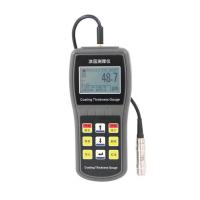
Ultrasonic thickness measurement technology is a commonly used coating thickness measurement method, which is used to measure the thickness of coatings. The uncertainty of the measurement results depends on many factors, including the accuracy of the measuring instrument, the technical level of the operator, and the characteristics of the measured object.

Here are some factors that may affect the uncertainty of ultrasonic coating thickness measurement:
Instrument Accuracy: The accuracy of an ultrasonic Thickness Gauge is an important factor in determining the accuracy of measurement results. Different models and brands of instruments may have different accuracy specifications. Therefore, when selecting and using an instrument, you should consult its technical specifications and accuracy requirements, and ensure that the appropriate instrument is selected.
Operator skill level: The training and skill level of the operator have an important impact on the accuracy of the measurement results. Skilled operators should have correct measurement skills and operating procedures, and be able to correctly interpret and record measurement results.
Surface Conditions: Conditions on the surface of the coating under test may affect the propagation and reflection of ultrasonic signals. For example, the roughness, geometry, presence of air bubbles, defects or foreign objects on the coating surface may all affect the measurement results. Therefore, ensure that the surface of the coating under test is cleaned and properly handled before measurement.
Material Properties: The material properties of the object under test may also affect the measurement results. Different types of coating materials have different acoustic propagation speeds and acoustic impedances, which may require correction or adjustment during the measurement.
To sum up, the uncertainty of ultrasonic coating thickness measurement is a problem that considers a combination of factors. In order to obtain accurate measurement results, it is recommended to follow relevant standards and guidelines and perform appropriate quality control and calibration when selecting instruments, training operators and performing actual measurements. In specific applications, uncertainty assessment and appropriate adjustment may also be required on a case-by-case basis.