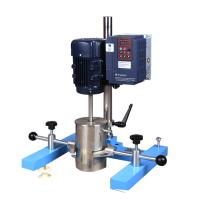
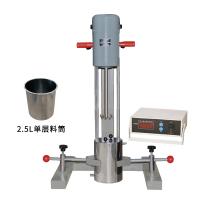
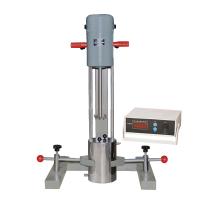
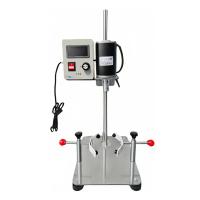
Choosing the right disperser requires considering the following key factors:
Application requirements: First of all, it is necessary to clarify the required dispersion tasks and application scenarios. Determine the type of material to be dispersed, viscosity range, processing capacity, particle size requirements, etc., in order to choose a suitable dispersion model.
Equipment Features: Consider the characteristics of different dispersers, such as speed range, power requirements, stirring blade type, cooling or heating functions, etc. Ensure that the equipment has the function and performance to meet the dispersing task.
Process conditions: consider the installation space, equipment layout, supporting equipment requirements and other process conditions of the disperser. Ensure that the disperser can adapt to the existing process environment.
Degree of automation: According to the production scale and requirements, consider whether it is necessary to have automatic control systems, data recording and monitoring functions.
Quality and reliability: Select suppliers and brands with good reputation and reliability to ensure the quality of equipment and the reliability of after-sales services.
Economy: Considering economic factors such as equipment price, performance, maintenance cost and expected return, choose a disperser with reasonable cost performance.
When choosing a disperser, it is recommended to communicate and consult fully with the supplier, and provide detailed application requirements and process requirements, so that they can provide you with professional suggestions and customized solutions. In addition, you can refer to the evaluations and cases of other users to understand the use experience and effect of different disperser models. Finally, choosing a suitable disperser needs to comprehensively consider the above factors, and evaluate and make decisions according to specific application needs.