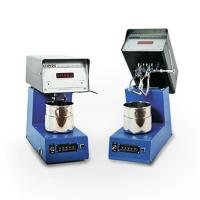
Emulsifiers and dispersers are two commonly used mixing equipment, and they have some differences in principle and application:
Principle: The emulsifier mainly mixes two or more insoluble liquids to form an emulsion mixture through high-speed stirring and shearing. The emulsifier usually uses a rotating blade or rotor/stator combination with strong shearing force to shear, disperse and mix the liquids with each other. The disperser is mainly used to uniformly disperse solid particles or powders into a liquid medium to form a homogeneous mixture. The disperser shears, breaks and uniformly disperses the particles into the liquid by rotating the blade or other type of agitator head.
Application field: Emulsifiers are widely used in food, pharmaceutical, cosmetics and other industries to prepare emulsions, creams, emulsions, etc. It can emulsify oil and water with each other, making it into fine particles suspended in the aqueous phase. Dispersers are mainly used in coatings, inks, chemicals, pigments and other industries to disperse solid particles into liquid media to achieve homogeneous mixing, uniform dispersion and improve product quality.
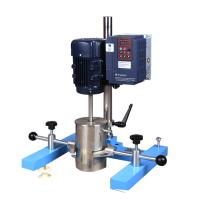
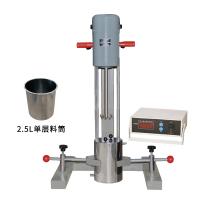
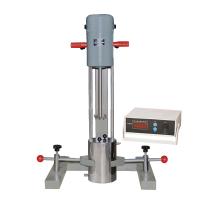
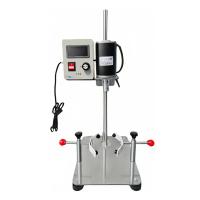
Equipment construction: An emulsifier usually consists of a container or tank body in which a high-speed rotating blade or rotor/stator combination is mounted. It may also be equipped with a cooling or heating system to control the temperature during the emulsification process. A disperser usually consists of a rotating blade or agitator head and a container for dispersing solid particles into a liquid.
Mixing effect: The main purpose of the emulsifier is to mix two or more insoluble liquids and form a uniform emulsion mixture. The main purpose of the disperser is to uniformly disperse solid particles into the liquid to form a uniformly dispersed mixture.
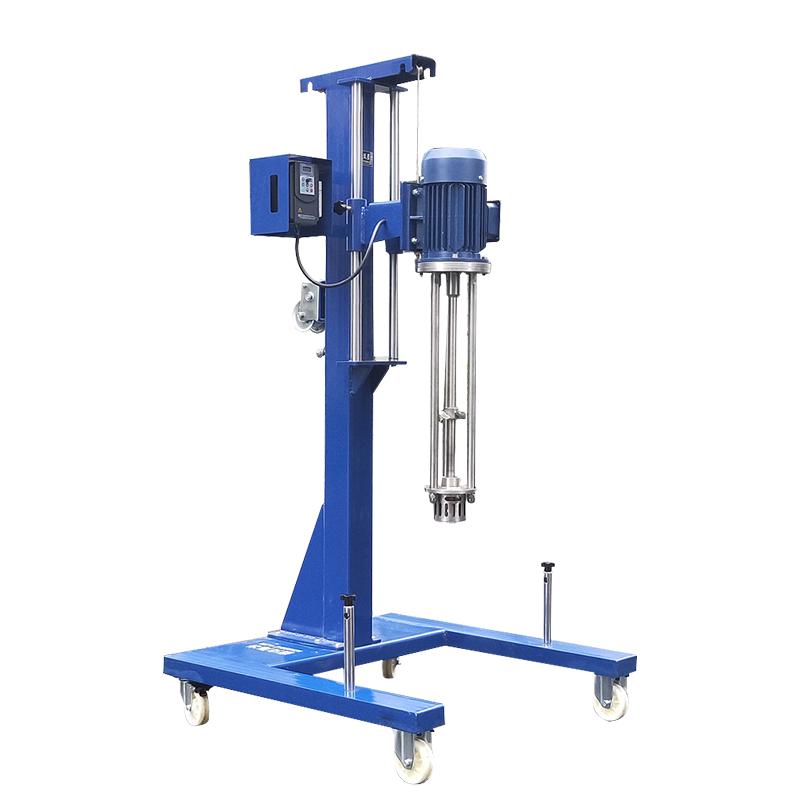
Emulsifier
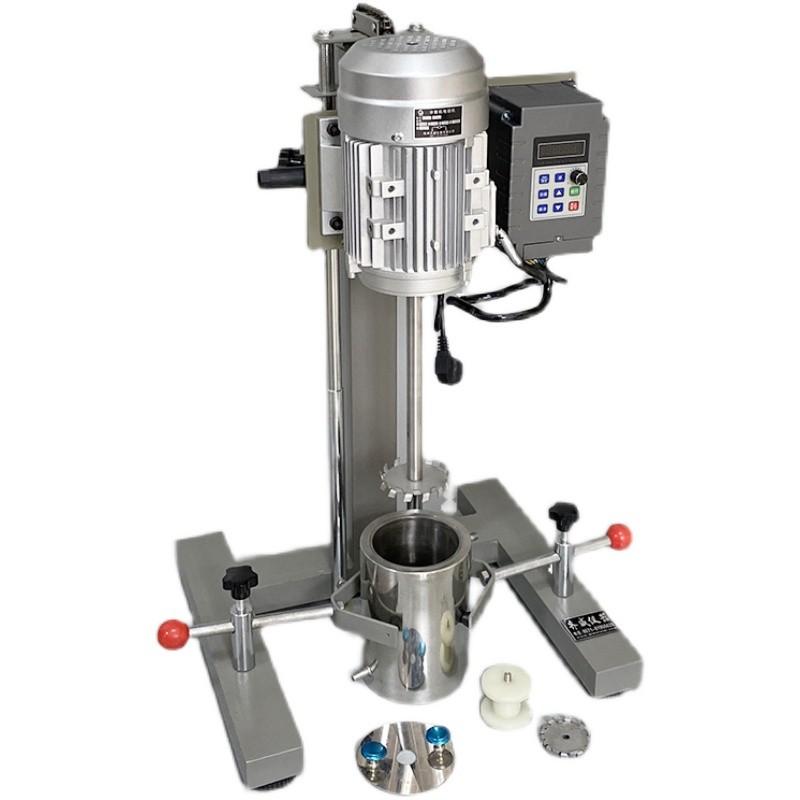
Disperser
NBChao reminds you: Emulsifiers and dispersers can have some overlapping applications in some cases, and the specific choice of equipment depends on the required mixing effect and product characteristics. In practical applications, the appropriate equipment can be selected according to specific needs and process requirements.