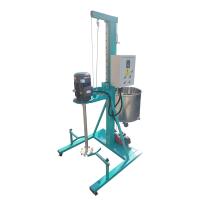
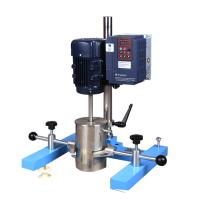
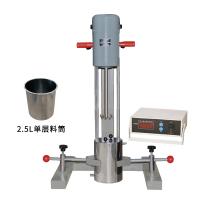
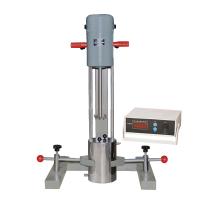
Bubbles may be generated during the working process of the disperser, and the causes can include the following aspects:
Liquid characteristics: There are dissolved gases or bubbles in the liquid, such as dissolved air in the water. When the liquid is subjected to vigorous stirring and shear force during high-speed stirring or dispersion, the dissolved gases will escape the liquid to form bubbles.
Solid additives: If solid additives, such as solid pigments or powders, are added during the dispersion process, these solid particles may collide and stir violently with the liquid, resulting in the creation of air bubbles.
Agitator Design: The design and shape of the agitator may also have an impact on the generation of air bubbles. Improper agitator design or shape may cause uneven mixing of the liquid, forming air bubbles.
Stirring speed: Stirring too fast may introduce a lot of air into the liquid, resulting in the creation of air bubbles.

Solution
To reduce or avoid the generation of bubbles, the following measures can be taken:
Reduce dissolved gases in liquids: Stir or heat the liquid well in advance to cause the gas to escape the liquid.
Control the stirring speed: choose the appropriate stirring speed according to the specific situation to avoid the introduction of bubbles caused by stirring too fast.
Reasonable design of agitator: choose the appropriate agitator shape and size to ensure uniform mixing and avoid dead ends and uneven flow of liquid.
Use the appropriate dispersant: Adding the right amount of dispersant can help reduce aggregation between particles and reduce the generation of air bubbles.
Pretreatment of solid additives: Pretreatment of solid pigments or powders, such as wet grinding or suspension treatment, can reduce the generation of air bubbles.
It is necessary to comprehensively consider and adjust the operating parameters according to the specific process and material characteristics to reduce or control the generation of air bubbles in the disperser.