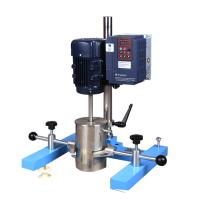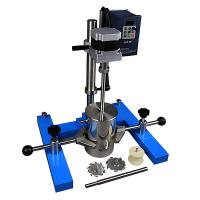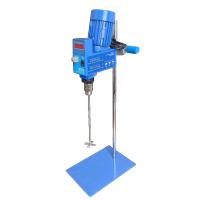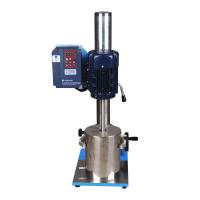
Dispersers and mixers may encounter some common faults during use. Here are some common faults and how to deal with them:
Motor starts difficult or cannot start:
Check whether the power supply is normal.
Check whether the motor connection is good, repair or replace the motor cable.
Check the motor protection device, such as whether the overload protector is triggered, and reset or replace it in time.
Check whether the motor itself is faulty and needs to be repaired or replaced.
The speed of the disperser or mixer is unstable:
Check whether the transmission parts, such as belts, chains, etc., are worn and loose, and adjust or replace them in time.
Check whether the motor is working properly, if there is a problem with the motor, it needs to be repaired or replaced.
Check whether the equipment is placed smoothly to avoid vibration or unstable working environment.
Excessive equipment noise:
Check whether the equipment is installed correctly, such as whether the fastening bolts are loose and whether the equipment is placed smoothly.
Check whether the transmission parts of the equipment are well lubricated, such as adding lubricant or replacing lubricant.
Check the equipment for foreign objects or damaged parts causing noise, and clean or replace damaged parts in time.
Equipment leakage:
Check whether the equipment seals are in good condition, such as whether the seals and gaskets are worn or aged and need to be replaced.
Check whether the piping connection of the equipment is tight. If it is loose or leaking, it is necessary to reconnect or replace the seal.
Check whether the hydraulic system of the equipment is working normally, such as whether there is oil leakage in the hydraulic pipeline, which needs to be repaired or replaced.
The equipment cannot properly stir or disperse the material:
Check that the mixer or disperser pan of the mixer or disperser is properly installed, worn or damaged, and needs to be repaired or replaced.
Check whether the material exceeds the rated capacity of the equipment, if it needs to be processed in batches.
Check the viscosity or particle size of the material, whether it is beyond the working range of the equipment, and adjust the process parameters if necessary.
For the above faults, if they cannot be solved by themselves, it is recommended to contact the equipment manufacturer or professional maintenance personnel in time for maintenance and maintenance to ensure the normal operation and safety performance of the equipment.