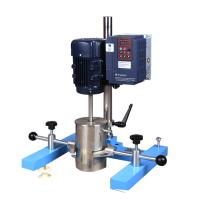
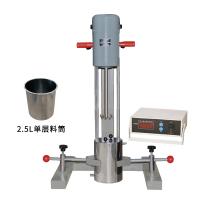
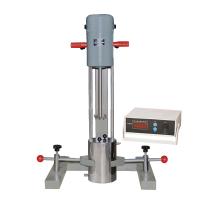
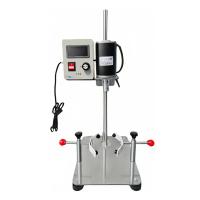
There is no definite critical point or specific value between the shear force and the rotational speed of the disperser. The generation of shear forces mainly depends on the design, configuration, and tools and materials used in the disperser.

In general, higher rotational speeds can produce greater shear forces because at high speeds, liquid or powdered materials experience stronger shear and impact between blades or abrasive media. However, the magnitude of shear forces is also affected by other factors, including:
Design and structure of the disperser: Different types of dispersers have different designs and structures, so the way and strength of the shear force are generated will also be different.
Disperser configuration and tool selection: Using different types of tools and configurations, such as blades of different shapes, sizes and materials, grinding media, etc., can affect the generation of shear forces.
Material characteristics: The viscosity, rheological properties, and the size and concentration of solid particles contained in the material will also affect the shear force.
Therefore, to determine the specific value of the shear force formed by the speed of the disperser, it is necessary to consider the above factors, and refer to the technical specifications of the disperser and the relevant information provided by the manufacturer. In addition, in practical applications, according to specific material and process requirements, tests and adjustments are required to find the most suitable speed and operating conditions.