The rheological properties of asphalt refer to the deformation properties of asphalt at different temperatures and shear stresses. Measuring the rheological properties of asphalt is very important for pavement design and construction. By measuring parameters such as viscosity, elastic modulus, rheological index of asphalt, we can understand the deformation behavior and flow properties of asphalt under different temperature and load conditions. These data can help engineers to choose the appropriate asphalt type and formulation to ensure that the pavement has good deformation resistance, durability and parking and driving comfort. In addition, measuring the rheological properties of asphalt also helps to evaluate the effect of additives, optimize the performance of pavement materials, and ensure the safety and reliability of the road.
Influencing factors
There are many factors that affect the rheological properties of asphalt, the following are some of the main influencing factors:
Temperature:
Temperature is one of the most important factors affecting the rheological properties of asphalt. As the temperature increases, the viscosity of asphalt decreases and the fluidity increases. At lower temperatures, asphalt has higher viscosity and poor fluidity, while at higher temperatures, asphalt has lower viscosity and better fluidity.
Shear rate:
Shear rate refers to the rate at which shear stress is applied to asphalt. Changes in shear rate affect the viscosity and fluidity of asphalt. Typically, higher shear rates lead to an increase in asphalt viscosity, while lower shear rates reduce asphalt viscosity.
Additives:
Additives can change the rheological properties of asphalt. For example, polymer additives can increase the elastic modulus and shear strength of asphalt and improve its durability. Modifiers can change the temperature sensitivity of asphalt to maintain proper rheological properties over a wider temperature range.
Asphalt composition:
The composition of bitumen also affects its rheological properties. Bitumens from different sources and processing methods have different chemical compositions and molecular structures, resulting in different rheological properties. For example, bitumens containing higher levels of aromatic compounds generally have higher viscosity and lower fluidity.
Load:
The load of asphalt in practical application will also affect its rheological properties. Greater stress and deformation will cause the deformation behavior of asphalt to change, thereby affecting its rheological properties.
These factors interact to jointly determine the rheological properties of asphalt. In engineering practice, it is necessary to select suitable asphalt types and additives according to specific needs and application environments to achieve the required rheological properties.

How to detect?
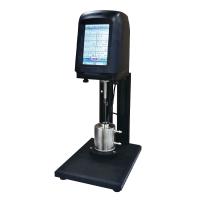
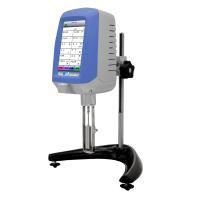
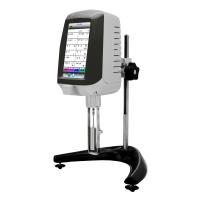
Rheometers are one of the commonly used instruments for measuring the rheological properties of asphalt. Rheometers can provide more comprehensive rheological performance data and can simulate the behavior of asphalt at different strain rates.
A rheometer works by applying a constant shear stress or deformation rate and then measuring the stress response and deformation characteristics of asphalt. By changing the shear stress or deformation rate, the stress-strain relationship of asphalt can be obtained to evaluate its viscosity, elastic modulus, rheological index and other rheological performance parameters.
When using a rheometer to measure the rheological properties of asphalt, the following steps are usually required:
Prepare samples: Take representative samples from the asphalt mixture, and prepare and adjust samples according to instrument requirements.
Set experimental conditions: set experimental conditions such as test temperature and strain rate as needed.
Test: Place the sample in a rheometer and select the appropriate test mode and parameters according to the instrument's operating guidelines. The rheometer applies a constant shear stress or deformation rate and measures the stress response and deformation characteristics of the asphalt.
Record data: Record the measured stress-strain data, and perform data processing and analysis as needed.
Rheometers usually provide a variety of test modes and parameters, and different test methods can be selected according to specific needs. At the same time, different rheometers may have different operating procedures and setting methods, so when testing, they should be operated according to the instructions for the specific instrument. The use of rheometers can provide more detailed and comprehensive data on asphalt rheological performance, so it is widely used in research and engineering applications.