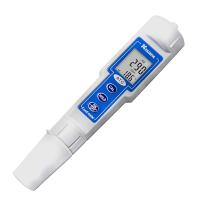
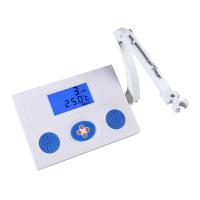
Conductivity Meter and Ion Meter are instruments used to measure water quality parameters, and they have obvious differences in measurement principles, measurement objects and application fields.
Measurement principle
Conductivity meter: A conductivity meter evaluates the conductivity of ions in a solution by measuring the conductivity in the solution. It measures the conductivity of the ions in the solution to the current, converting the conductivity into a conductivity value. Conductivity meters do not directly measure the concentration of specific ion species, but focus on the overall ionic conductivity of the solution.

Ionometer: An Ion Meter evaluates the ion content in a solution by measuring the concentration of a specific ion species in the solution. Ionometers use specific ion-selective electrodes (such as sodium electrodes, chlorine electrodes, etc.) to chemically react with the target ion in the solution, and measure the potential difference to determine the concentration of the target ion.
Measuring object
Conductivity meter: Conductivity meter is suitable for measuring the conductivity of ions in liquids (aqueous solutions) or solutions. It can evaluate parameters such as the ion content of the solution, the concentration of dissolved substances, and the purity of the solution.
Ion meter: Ion meter is specially used to measure the concentration of specific ion species, such as sodium ion, chloride ion, potassium ion, etc. It can provide the concentration value of specific ions for analyzing and monitoring changes in ion content.
Application field
Conductivity meters: Conductivity meters are widely used in water quality analysis, environmental monitoring, industrial process control and other fields to evaluate ionic conductivity and dissolved substance concentration in liquid solutions.
Ion meter: Ion meter is mainly used in environmental monitoring, water quality analysis, soil detection, chemical experiments and other fields to measure and analyze the concentration of specific ions, such as sodium ion concentration in water, chloride ion concentration in soil, etc.
In conclusion, there are differences between conductivity meters and Ion Meters in measurement principles, measurement objects and application fields. Conductivity meters focus on the overall ionic conductivity of solutions, while Ion Meters are used to measure the concentration of specific ion species. Choosing the right instrument depends on the specific measurement needs and application scenarios.