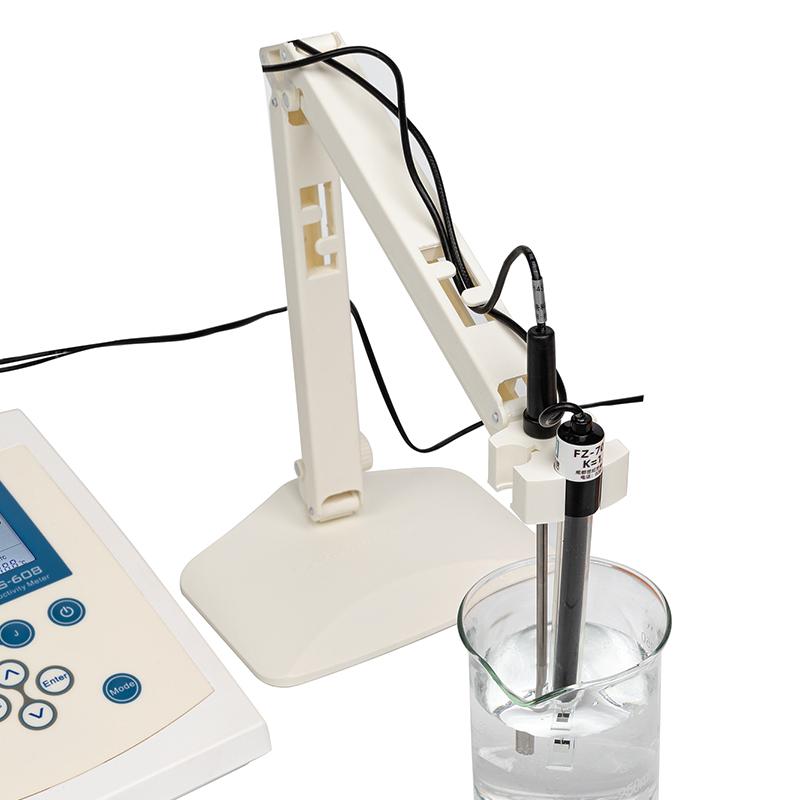
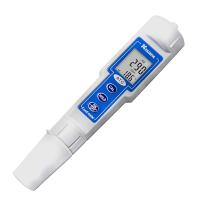
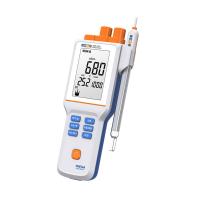
Conductivity meters use different types of electrodes for conductivity measurements. Here are a few common conductivity meter electrode types:
Glass electrode: Glass electrode is a commonly used conductivity meter electrode type suitable for general water quality measurement. It has good chemical resistance and stability, and can work in a wide pH range.
Carbon electrodes: Carbon electrodes are another common type of conductivity meter electrode suitable for low conductivity sample measurements. Carbon electrodes are commonly used for pure water, ultrapure water, and other solutions with low ionic concentrations.
Stainless steel electrodes: Stainless steel electrodes are suitable for some special industrial environments and applications, such as sewage treatment, chemical industry, etc. Stainless steel electrodes have good corrosion resistance and durability, and are suitable for handling samples containing chemicals.
Titanium Electrodes: Titanium electrodes are the type of conductivity meter electrodes used for special applications, such as seawater measurement and sample measurement containing strongly oxidizing substances. Titanium electrodes have corrosion resistance and chemical stability.
In addition, there are other electrodes of special materials that can be used for specific applications. For example, gold electrodes are used for high-precision measurements and special liquid measurements, platinum electrodes are used for high temperature and corrosive sample measurements, etc.
Which electrode type to choose should be determined according to application requirements, sample characteristics and instrument specifications. When purchasing a conductivity meter, you can usually choose an instrument with the corresponding electrode type according to actual needs, or buy different types of electrodes according to specific application requirements to replace and adapt to different measurement needs.