Gelatinized starch viscosity is measured because the gelatinization process leads to changes in the physical properties of starch, including changes in molecular structure and viscosity. In the food industry and other industrial fields, gelatinized starch viscosity is an important quality indicator that has a direct impact on product quality and processability. Such as:
Gelatinization characteristics: Starch is gelatinized during heating, that is, it changes from solid to colloidal to form a paste. The gelatinized starch has a high viscosity, which is crucial for thickening, gelling and other processes in food processing.
Stability: The viscosity of starch after gelatinization is closely related to its stability. The higher the viscosity, the better its stability, which can better maintain the quality and taste of the product.
Texture: The viscosity of starch after gelatinization can affect the texture and taste of the product. Starches of different viscosities can be used to prepare foods with different tastes, such as thick sauces, softness of cakes, etc.
Storage stability: The viscosity of starch after gelatinization is also related to the storage stability of the product. High viscosity starch helps prevent delamination and precipitation, extending the shelf life of the product.
Processability: In food processing and industrial production, the viscosity after starch gelatinization will affect the fluidity, viscosity and processability of the product, thereby affecting production efficiency and product quality.
![Starch viscosity detection scheme after gelatinization [with special Viscometer] Figure 1](http://img.nbchao.com/upload/editor/image/20230803/1691045362673038459.jpg)
So how to test the viscosity value of gelatinized starch?
Testing the viscosity of gelatinized starch is usually done with a Rotational Viscometer. The following is a common test method:
Prepare the sample: Take a certain amount of gelatinized starch sample and dilute it to a specific concentration. Make sure the sample is well stirred to eliminate possible inhomogeneities.
Preheat: Preheat the Rotational Viscometer to the test temperature and wait for a while before testing to ensure stable temperature.
Set up the viscometer: Place the preheated Rotational Viscometer in the sample container and set the appropriate test parameters such as rotational speed and test time according to the equipment instructions.
Test: Start the Rotational Viscometer and let it rotate in the sample for a certain amount of time. The length of the test time depends on the nature of the sample and the degree of precision required.
Record Results: After the test is complete, the Rotational Viscometer will provide a viscosity value indicating the viscosity of the sample. Record the results, usually in cps (centiPa seconds).
It should be noted that when testing the viscosity of gelatinized starch, constant temperature and humidity should be maintained, as these factors can affect the test results. At the same time, it should be ensured that the instrument is calibrated accurately before testing to ensure reliable test data.
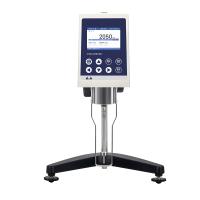
NBCLab technology is recommended: special viscometer for gelatinized starch
FDV-C simple starch viscosity measuring instrument, in line with the national standard GB/T 12098-89. Function: Measure starch viscosity value at a single point temperature. Rotate speed 30, 75, 100, 150 rpm 4 gears. Configuration: one special starch F1 rotor, 10ml sample volume, one host, measuring cylinder (SSR system with PT100 temperature probe).
Optional: special constant temperature sink CH-1006N, micro printer quotation.
![Starch viscosity detection scheme after gelatinization [with special Viscometer] Figure 2](http://img.nbchao.com/upload/editor/image/20230803/1691045477208003836.png)