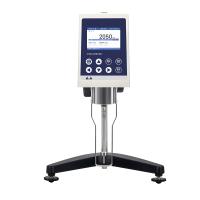
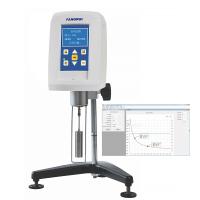
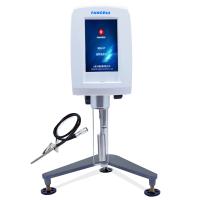
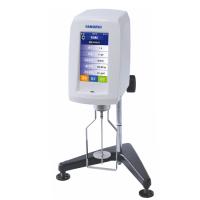
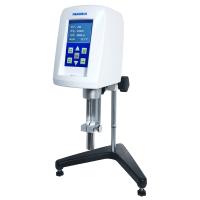
A Rotational Viscometer is a common experimental instrument used to measure the viscosity of a liquid, i.e. how viscous it is. It determines viscosity by measuring the resistance of a liquid to flow on a rotating cylinder or disc. These instruments are widely used in laboratories, production lines, and quality control.

The working principle of a Rotational Viscometer is based on Newtonian fluid mechanics, which uses a rotor (usually a rotating cylinder or disc) to rotate in a liquid, measuring the relationship between the shear stress of the liquid and the shear rate. According to Newtonian fluid mechanics, viscosity is the ratio of shear stress to shear rate. In a Rotational Viscometer, shear stress is generated by the resistance of the liquid to the rotating rotor, while the shear rate is determined by the rotational speed of the rotating rotor.
This technical issue has sorted out the selection guidelines and viscosity range purchase suggestions for domestic rotary viscometers. First, let's look at the significance of viscosity measurement.
Why do you need to measure viscosity?
By measuring viscosity, the rheological behavior of objects can be obtained, which has important guiding value for predicting the process control, transportability and operability of products during use. Rheological properties are often related to other properties of the product, such as color, density, stability, solids content and molecular weight changes. Viscosity measurement is a sensitive and convenient detection method for detecting these properties.
Viscometer Selection Guide and Configuration Instructions
1. Determine the measurement range of the viscometer
The viscometer is divided into four models: LV (low viscosity), RV medium viscosity), HA and HB (high viscosity) according to the range. The viscosity measurement range of each model is determined by the available rotors. Among them, the LV type is standard with 4 rotors; the three models of RV/HA/HB are standard with 6 rotors R2~ R7, and R1 is optional). If the viscosity measurement accessories are added, the range will be expanded, and the measurement range will be determined by the optional accessories.
2. Temperature control, very important for accurate measurement of viscosity
A) Medium temperature range (-20C~ 95C), choose a constant temperature bath to control the temperature.
B) High temperature range (100C~ 250C), choose NKY-25 electric heater for temperature control.
3. Determine whether to choose viscosity measurement accessories according to the characteristics of the sample
A) Sample supply: 8-13mL, choose SSR small sample adapter
B) If the sample viscosity is lower than 15cP, use ULR ultra-low viscosity adapter.
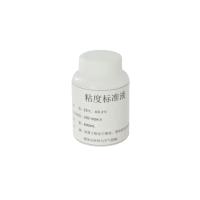
4. Viscosity standard solution
Used to check whether the viscometer is in normal condition, it is recommended to use it regularly
5. Determine the model according to the application scope and purpose of the machine
A) For laboratory quality control - basic viscometer
B) For Product Research & Development - Touch Screen Viscometer
C) It is used to compare the data of upstream and downstream suppliers - selected according to the actual measurement conditions
Viscosity range purchase suggestion