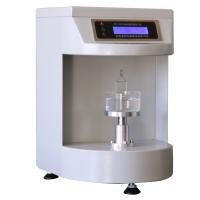
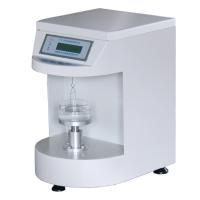
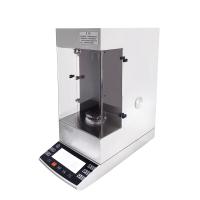
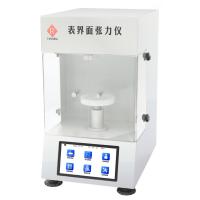
The surface tension and interfacial tension of liquids are important parameters to measure the properties of liquids and have a wide range of significance in scientific research and industrial applications. In order to accurately measure these parameters, the interfacial tensiometer has become an indispensable instrument. Through different measurement methods, the interfacial tensiometer helps us spy into the microscopic world of liquids and reveal the mystery of liquid properties.
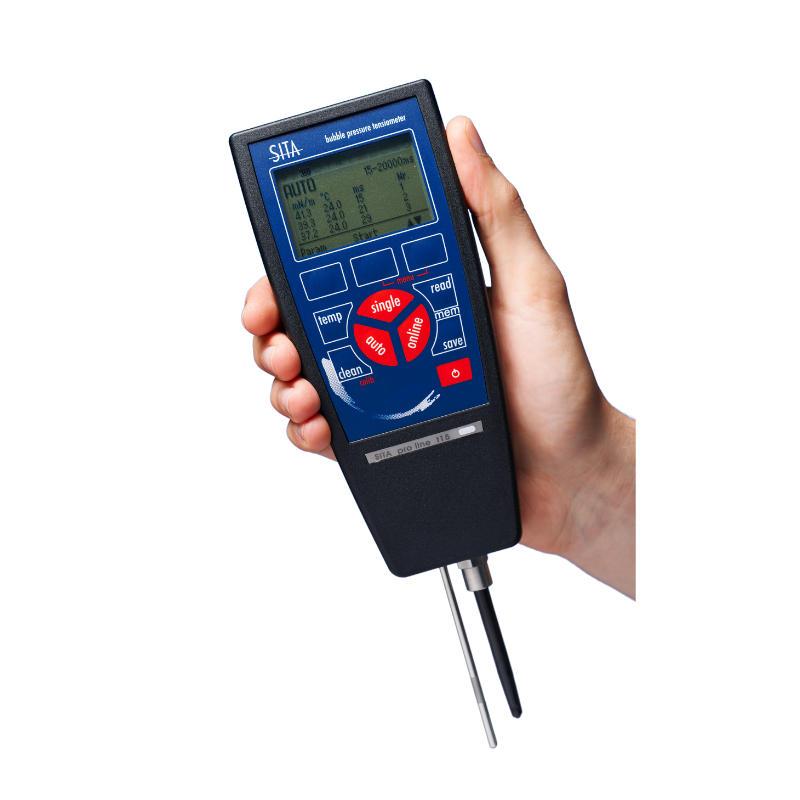
An interfacial tensiometer is a physical instrument specially used to test the surface and interfacial tension of liquids. Its working principle is based on different measurement methods, including the platinum ring method, the platinum plate method, the most atmospheric bubble method, the suspended drop method and the rotating drop method. These methods can provide accurate measurement results in different situations and help us gain insight into the properties of liquids.
Platinum Ring Surface Tensiometer: This method measures the surface tension of a liquid by dipping a platinum ring in it and then gradually raising the ring. While this method is suitable in some cases, its accuracy may be affected for higher viscosity liquids and samples with faster surfactants.
Platinum Plate Method Surface Tensiometer: Use a platinum plate to immerse a liquid and calculate the surface tension of the liquid by measuring its immersion depth. However, this method requires attention to factors such as sensor accuracy, platinum plate design, and buoyancy correction.
Most Atmospheric Bubble Method Surface Tensiometer: Calculate the relationship between additional pressure and surface tension by observing the process of bubble formation and detachment, so as to obtain the surface tension value of the liquid. This method is suitable for analyzing samples with fast surfactant reaction or for on-site estimation.
Suspended drop surface tensIon Meter: Calculate the relationship between the size, weight and density of the liquid and the surface tension by observing the process of the droplet dripping from the pipe mouth. This method has application prospects in the measurement of surface tension of special environments, high temperature conditions and high viscosity samples.
Rotating drop method surface tensIon Meter: This method is used to measure ultra-low interfacial tension, and calculate the interfacial tension value of two liquids by observing the phenomenon that the liquid stops dripping in an insoluble liquid. However, this method can only resolve orders of magnitude and cannot obtain absolute values.
To sum up, interfacial tensiometers play an important role in scientific research, industrial production and teaching. Through different testing methods, we are able to gain a deeper understanding of liquid properties and reveal their microscopic properties. Whether exploring uncharted territory or optimizing industrial processes, interfacial tensiometers offer us a unique way to peek into the properties of liquids.