Introduction
The GB/T 9275 standard provides a method for measuring the hardness of paint films, the Buchholz indentation test. This article will describe in detail the principle of this test method, the required materials and equipment, the main points of operation, the representation of results and the importance of application in the Coating industry.
1. principle of indentation test
The Buchholz indentation test is a method of measuring the hardness of a paint film by applying pressure to a paint film by applying a mass indenter and then measuring the length or area of the indentation. Hardness is usually expressed as indentation resistance (H), which is calculated as H = 100/L, where L is the length of the indentation (in millimeters).
2. Materials and equipment
In order to perform the Buchholz indentation test, the following materials and instruments are required:
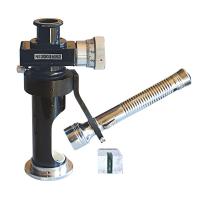
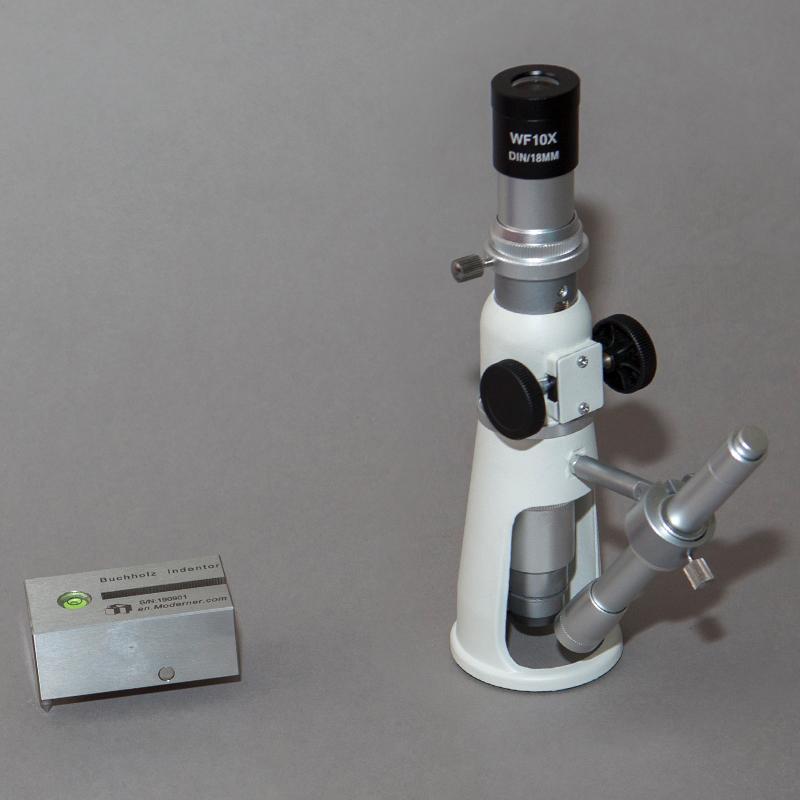
Buchholz indentation Tester: Used to apply a certain mass of indenter and measure indentation length.
Substrate: Glass plate is usually used as the substrate, and the paint film will be placed on the tested side of the Glass plate.
3. Operation points
When performing the Buchholz indentation test, you need to pay attention to the following points:
Carefully place the indentation Tester on the paint film to ensure that the indenter is in contact with the paint film surface.
Use the stopwatch to time for 30 seconds, then remove the indentation Tester to get the indentation.
Microscope accurate measurement of indentation length. This length will be used to calculate the Buchholz indentation hardness of the film.
4. Presentation of results
The results of the Buchholz indentation test indicate the resistance of the coating to indentation by the length of the indentation formed. The hardness value (H) is calculated by the formula H = 100/L, where L is the length of the indentation in millimeters. The higher the hardness value, the harder the paint film.
5. Importance of application
The Buchholz indentation test has important applications in the Coating industry. Knowing the hardness of the paint film helps manufacturers evaluate the performance of their Coating products. This is critical to ensuring the durability of Coatings in a variety of applications, especially where harder coatings are required, such as industrial equipment surfaces and building exterior-walls.
In addition, hardness testing can also be used to research and develop new Coating formulations to improve the hardness performance of coatings. By understanding the hardness of different Coating materials under different conditions, manufacturers can optimize according to the needs of specific applications.
Conclusion
GB/T 9275-88 Paints and varnishes Buchholz indentation test is an important Coating performance test method for determining the hardness of paint films. Key information about paint film hardness can be obtained by measuring the length of the paint film to the indentation formed under a certain pressure. The application of this test method in the Coating industry helps manufacturers ensure the performance of their products and provides basic data for product improvement. Therefore, the Buchholz indentation test has an important position and a wide range of applications in the Coating industry.