In the complex world of microscopes, eyepieces and eyepieces are hard-to-find components that work together to allow us to gain insight into tiny biological and material structures. This article describes the functions, types of eyepieces and barrels, and their role in microscopy.

The role of the eyepiece:
The eyepiece is usually located at the top of the microscope, and its function is to further enlarge the enlarged image of the objective lens, so that the human eye can clearly observe the specimen. The eyepiece is divided into two working modes: monocular and binocular.
Monocular eyepiece: This is a traditional way of working an eyepiece, but it is rarely used these days. It has only one lens and the observer views the specimen with one eye.
Binocular eyepieces: Binocular eyepieces are the more common way of working. It has two lenses, called field glasses and eyepieces. This design allows the observer to view the specimen with both eyes, simulating the natural viewing environment and reducing eye strain.
Modern eyepieces usually use compound lenses to correct optical defects such as magnification chromatic aberration, brilliance and aberration. The design of field mirrors and eyepieces enables observers to obtain high-quality microscopic images.
Type of lens barrel:
The barrel is the bottom part of the microscope, usually attached to the objective lens, and can be divided into three types: monocular, binocular, and trinocular.
Monocular lens barrel: This type of lens barrel has been less used. It only allows the observer to observe the specimen with one eye and is less suitable for applications that require in-depth observation and recording of microstructures.
Binocular tube: The binocular tube is the most common type. It allows both eyes to observe the specimen at the same time, providing a more natural and comfortable viewing experience. Usually, the binocular tube has an adjustable pupil distance and telescopic range to accommodate different observers.
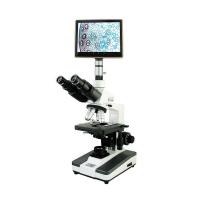
Triple-eyed tube: Triple-eyed tube is commonly used for photomicrography needs. It allows the observer to view the specimen with two eyes, while also having an additional optical channel that connects to the camera for high-quality photomicrographs and videos.
Importance of lens barrel and eyepiece:
The lens barrel and eyepiece are an important part of the microscope, and their design and quality directly affect the effect and comfort of observation. Binocular tubes and high-quality eyepieces allow observers to observe specimens more easily, reduce eye strain, and obtain higher-quality microscopic images. At the same time, triocular tubes facilitate photomicrography, allowing scientists to record and share their findings.
In conclusion, the barrel and eyepiece play a vital role in the microscope, and their precise design and working methods provide a better viewing experience and high-quality microscopic observations. These key components allow scientists to delve deeper into the microscopic world and reveal its mysteries. The barrel and eyepiece, together, form the window to the microscopic world.