Introduction
In the Coating industry, fineness is a key quality characteristic used to determine the size and dispersion of particles such as pigment and volume pigment in Coatings. Accurate measurement of fineness is essential to ensure Coating performance and mass. This article will describe how to use Grindometer to measure Coating fineness, including measurement range, required instruments and materials, measurement method, result representation, and reference standards.
1. Scope and description
Fineness is expressed in microns (μm), which is used to describe the size and dispersion of particles in Coatings. Different Coatings require fineness measurement in different Particle size ranges. This method uses Grindometer to determine the fineness of Coatings, which is suitable for the fineness determination of Paints and paint slurry.
2. Instruments and materials
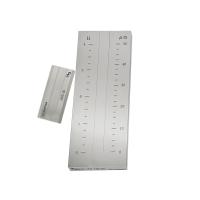
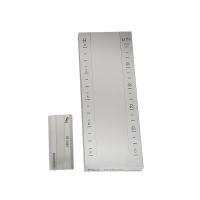
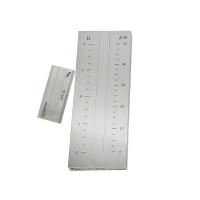
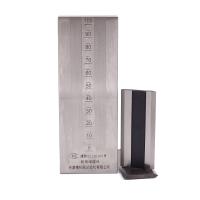
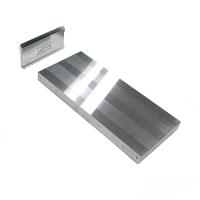
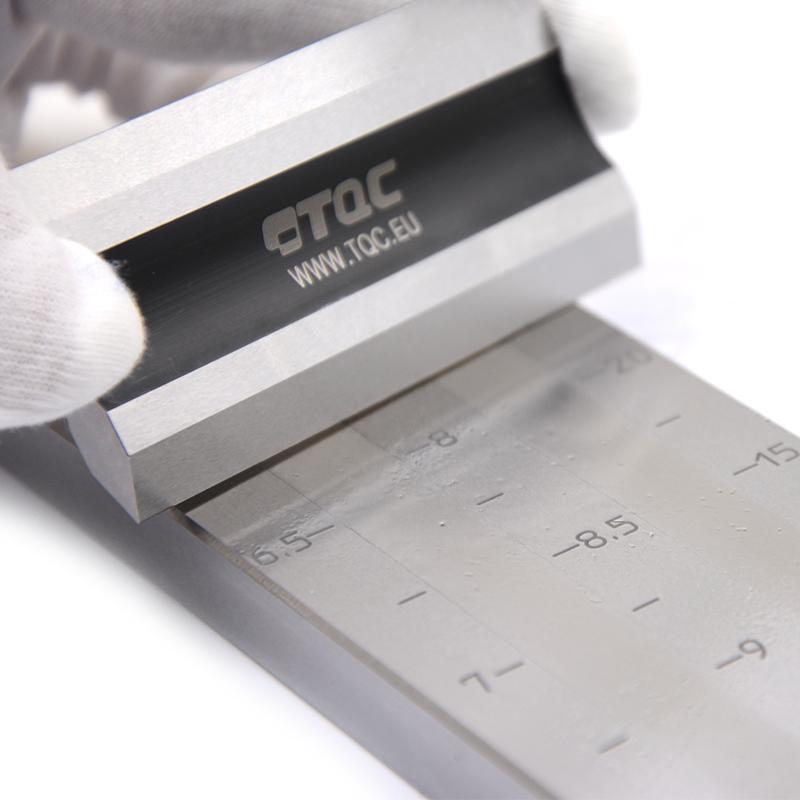
(1) Fineness of Grind Gauge: Fineness of Grind Gauge has different ranges, including 0-25μm, 0-50μm, 0-100μm and 0-150μm, as well as single-channe and double-channel specifications. Choose the appropriate Fineness of Gauge according to the fineness range of the Coating.
(2) Small paint knife or glass stirring stick: used to fully stir the sample evenly.
3. Determination method
(1) Select the appropriate Grindometer: Select the appropriate Grindometer according to the fineness range of the Coating. Generally, 0-50μm Grindometer is suitable for Coatings with fineness below 30μm.
(2) Prepare Grindometer: Before use, Grindometer needs to be cleaned with solvent and wiped with a soft rag.
(3) Prepare the sample: use a small paint knife or glass stirring stick to fully stir the sample to ensure that there is no obvious particle aggregation in the sample.
(4) Drop sample: Drop 2-3 drops of sample in the deepest part of the groove of Grindometer to ensure that the sample fills the groove and is slightly redundant.
(5) Scraper measurement: Double hand-held drawdown blade, transverse to the upper end of Grindometer baseplate, ensure that the drawdown blade and the baseplate surface are in vertical contact. Then, scrape evenly from top to bottom within 3 seconds to ensure that the sample is filled with grooves and no excess Coating is left on the plate.
(6) Observation fineness: After the drawdown blade is pulled, the viewing angle and the groove plane are formed into a 15-30 ° angle to observe whether the particles in the groove are uniformly exposed to the light. Note the degree and be accurate to the minimum Graduation. If there are individual particles exposed on the Miscellaneous grading line, there should be no more than 3 particles.
(7) Repeability measurement: Parallel measurement is performed 3 times, and the arithmetic mean of the two close readings is taken as the fineness value of the Coating. The error of the two readings should not be greater than the minimum Graduation of the instrument.
4. Presentation of results
The fineness of the Coating is expressed in the depth of the groove of the Grindometer where the particles are uniformly exposed (μm). The fineness value should be no more than 3 particles in the range of adjacent indexing lines.
5. Reference standard
National standard GB/T 1724 "Determination of Coating Fineness".
Conclusion
Fineness of Coatings is an important quality characteristic that reflects the size and dispersion of particles in Coatings. By using Grindometer, it is possible to accurately measure the fineness of Coatings and ensure that Coatings meet the required specifications. Fineness data is critical to the production and application of Coatings and helps manufacturers and users evaluate the performance and quality of Coatings. Therefore, in the Coatings industry, fineness measurement is an indispensable quality control step that helps ensure the conformity and Reliability of Coatings.