Introduction
In the Coating industry and related fields, the surface Gloss of Coatings is a very important quality characteristic. Gloss reflects the smoothness and reflection ability of the coating surface, and different application scenarios require different levels of Gloss Coatings. In order to ensure the Coating mass, the surface Gloss of the coating needs to be measured. This article will introduce how to use a Gloss meter to measure the surface Gloss of Coating coatings, including the measurement range, required instruments and materials, measurement methods, representation of results, and reference standards.

1. Scope and description
Surface Gloss is a characteristic of the surface of an object, which reflects the reflection ability of the surface of the object to light. Coatings are divided into different Gloss levels, including luminous, semi-luminous and matte, and their Gloss values are usually expressed in Gloss units (GU). Gloss values for luminous Coatings are higher than 40 GU, Gloss values for semi-luminous Coatings are between 20 GU and 40 GU, and Gloss values for matte Coatings are lower than 10 GU. These Gloss levels are divided according to the different needs of Coatings for Gloss in practical applications.
This method is suitable for the determination of surface Gloss of Paints, but not for Paints containing metal pigments. The measurement principle is to use a Gloss meter to compare the Gloss of the sample with the gloss standard plate according to the principle of light reflection, so as to obtain the surface Gloss value of the coating.
2. Instruments and materials
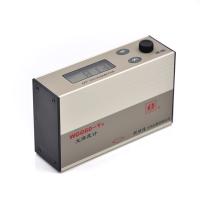
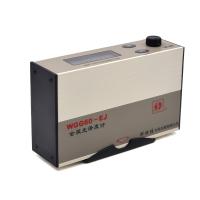
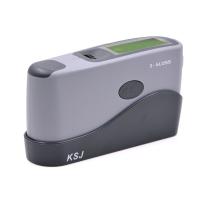
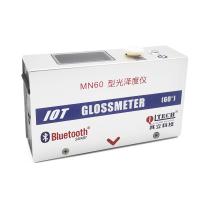
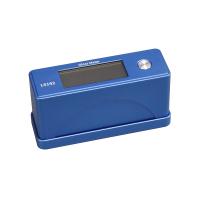
(1) Gloss meter: The Gloss meter consists of a Light source part and a receiving part. After the rays of light emitted by the Light source are processed by the lens, they are irradiated to the coating surface at a certain angle, and then the received part collects the reflected rays of light and converts them into Gloss values through Photocell, photovoltaic cell. Gloss meters usually have different geometric angles, including 20 °, 60 ° and 85 °.
(2) Standard boards: Standard boards usually include high Gloss and low Gloss. High Gloss standard boards use highly polished black Glass boards or transparent Glass boards coated with black paint to calibrate Gloss meters. Low Gloss standard boards are mainly used to check whether the instrument is working properly and cannot be used for calibration.
3. Determination method
Before the measurement, the Gloss meter needs to be calibrated, and then the Gloss measurement of the coating surface is carried out according to the following steps:
Calibrate Gloss Meter to ensure proper operation of the instrument.
Place the Gloss meter on the specimen surface and choose the appropriate measurement angle (20 °, 60 ° or 85 °) as needed.
Measurement of three readings at different locations, recording their average value as the surface Gloss of the sample.
4. Presentation of results
Surface Gloss values are expressed in Gloss units (GU). Based on the angle used in the measurement, Gloss values at different angles can be obtained.
5. Reference standard
National standard GB/T 9754 "Paints and clear lacquers, Paints without metallic pigment film of 20 °, 60 ° and 85 ° specular gloss determination".
Conclusion
The surface Gloss of a Coating coating is an important parameter for evaluating its quality and suitability. By using a Gloss meter, the surface Gloss of a coating can be accurately measured and compared to the standard to ensure that the coating meets the required Gloss requirements. Gloss data are of great significance for the production and application of Coatings, they help manufacturers and users to evaluate the performance and Appearance mass of Coatings. Therefore, in the Coating industry, the measurement of surface Gloss is an indispensable quality control step, helping to ensure the conformity and Reliability of Coatings.