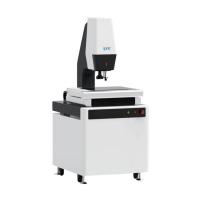
Impact strength testing is a test method used to assess the ability of a coating film to withstand rapid deformation. This test method measures the impact strength of a coating film by causing a heavy object to fall along the conduit onto a hemispherical indenter placed on the sample, causing the sample to deform. This article will introduce the principle, method and application of impact strength testing in the paint industry.
Principles of Impact Strength Testing
The impact strength test is designed to assess the performance of the coating film when subjected to rapid deformation. In this test, a heavy hammer gradually rises and falls freely from a certain height, hitting the coating sample on the base. This hitting process results in deformation of the sample, which the coating film must be able to withstand without causing cracking. There are usually two types of shocks in the test:
Positive impact
The coating film is impacted from above to below, usually caused by the free fall of a heavy hammer.
Counter shock
The coating film is subjected to a shock from below to above, which is more challenging than a positive shock because it causes the coating film to stretch rather than compress. Counter-shock is usually stricter because the stretch deformation is more challenging than the compressive deformation.
The impact strength of the coating film is affected by many factors, including the thickness of the baseplate, the thickness of the coating film, the surface treatment, etc. Therefore, in order to obtain comparable test results, standardization is required.
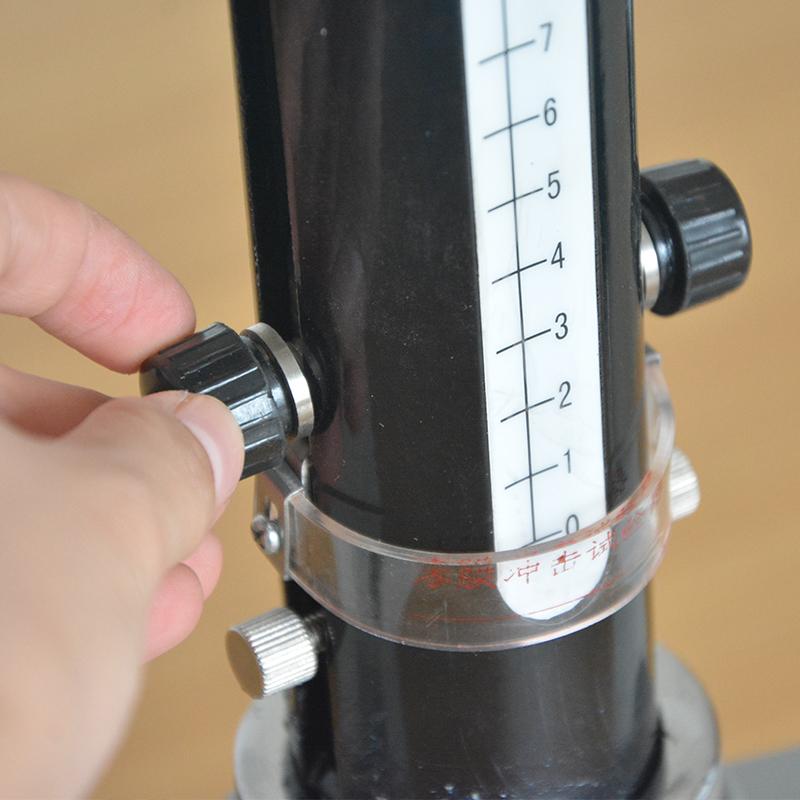
Impact strength testing instrument
Impact strength testing is usually performed using impact testing instruments. Different countries and standards may have instruments of different specifications, but they work similarly. Here are some common instrument specifications:
Heavy hammer mass: usually about 1000 grams (g).
The depth of the punch into the groove: usually about 2.0 millimeters (mm).
Slip simple scale: usually about 50.0 cm (cm), the division is 1 cm.
Maximum impact value: The maximum value for the most commonly used instruments is 18.08 Newton m (N m).
Impact test instruments usually have variable specifications, and test parameters can be changed according to the requirements of different standards.
Application of impact strength
Impact strength testing has important applications in the coatings industry:
Quality Control: Manufacturers can use impact strength testing to ensure that their coating products do not crack when subjected to rapid deformation, providing high-quality coating solutions.
Flexibility Assessment: The impact strength test reflects the flexibility of the coating and its ability to adhere to the substrate.
Paint Selection: Impact strength test results help manufacturers choose paint types and formulations for different applications.
Coating film durability: By understanding the impact strength of the coating film, its durability and life in actual use can be predicted.
It is important to note that the results of impact strength testing are affected by a number of factors, including the testing environment, film thickness and substrate material. Therefore, when testing, it should be carried out under controlled temperature and humidity conditions to ensure the accuracy of the test results.
Summarize
Impact strength testing is an important test method for evaluating the performance of coating films under rapid deformation. It is widely used in the coating industry to help manufacturers ensure product quality, evaluate coating film performance, and select coatings suitable for different applications. The principle of impact strength testing is simple and easy to operate. It is one of the difficult or missing tools in coating engineering.