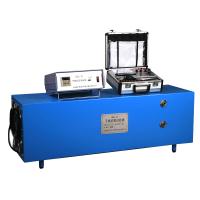
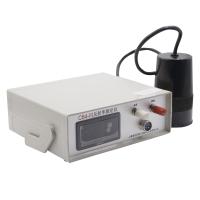
Coating has a wide range of applications in construction, industry and decoration. In order to ensure the smooth progress of the painting process and the superior performance of the final film, Coating construction performance testing must be carried out. This detection includes a series of indicators such as hiding power, usage, leveling, drying time and sanding.
1. Coating hiding power
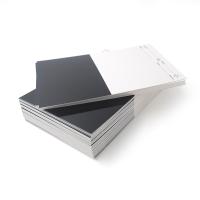
Coating hiding power refers to the ability of a Coating film to cover the base color after uniform coating. The strength of hiding power is affected by many factors, including refractive index, ability to absorb rays of light, crystallinity and dispersion. According to GB/T 1727 standard, hiding power can be determined by brushing method or lame plating method. Coatings with high hiding power can paint more surfaces under the same construction conditions, so hiding power is an important parameter to measure Coating performance.
2. Spreading rate
Spreading rate refers to the amount of Coating required to obtain a certain thickness of paint film per unit area. It can be expressed in the form of "g/m2" or "m2/L". GB/T 1758 specifies the determination method of Coating usage, usually by measuring Coating Density, thickness of brushed paint film and Coating usage to calculate spreading rate. Theoretical spreading rate can be used to calculate Coating usage and construction cost, and is an important parameter in the Coating construction process.
3. Leveling
Coating leveling refers to the ability of the wet paint film to flow after Coating application to eliminate coating marks and form a smooth paint film surface within a certain period of time. Leveling is related to factors such as the viscosity of the Coating, surface tension and solvent used. JB/T 3998 specifies a method for determining Coating levelling, which is assessed by observing the surface state of the film within a specified time. Excellent leveling helps to obtain a smooth and uniform film.
4. Drying time
Drying time refers to the process of Coating gradually drying from a liquid state to a solid paint film. This process usually includes three stages: surface drying, hard drying and through drying. GB/T 1728 specifies the drying time measurement method for paint film and putty film. Accurate determination of drying time helps to rationally arrange construction progress and ensure film mass.
5. Sanding
Sanding refers to the degree of difficulty in producing a smooth matte surface after the coating or putty layer has been treated with sandpaper or Miscellaneous Abrasive material. For primers and putties, sanding is an important performance indicator. GB 1770 specifies the sanding test method for primer and putty films, which is usually evaluated by observing the surface state of the paint film after a specified number of sandings.
To sum up, Coating construction performance testing is an important step to ensure the efficiency and film mass of the painting process. Different performance parameters can help manufacturers and constructors choose the right Coating and ensure the smooth progress of the painting process. Following relevant standards and test methods is the key to ensuring Coating performance and mass. Through accurate performance testing, Coatings can be guaranteed to have excellent performance and Reliability in different Applications.