Introduction
Color is ubiquitous in modern society, it not only endows objects with beauty, but also conveys information and emotion. In the Coating industry, Color is one of the key characteristics of products, which not only reflects the composition and purity of the Coating, but also directly affects the film formation performance and scope of use of the product. This article will delve into the importance of Color in the Coating industry and two commonly used Color determination methods: Standard Color Gradation and LOVIBOND Colorimetry.
The Importance of Color
Color plays a vital role in the Coatings industry, here are its key roles:
Indicator of composition and purity: Color depth can comprehensively reflect the composition and purity of Coating products. Usually, the lighter the Color, the less impurities and impure substances in Coating, and the higher the quality. Therefore, Color has become one of the important basis for quality control.
Affect Product Appearance: The Color of Coating directly affects the Appearance of the final product. In today's fierce market competition, Appearance is crucial to the attractiveness of consumers. The choice of Color can make the product more attractive and improve market competitiveness.
Film formation performance and use: Coatings of different Colors may have different film formation performance. For example, Color deep varnishes are generally not suitable for making coatings that require a high degree of transparency, but are suitable for making Paints with darker Colors. Therefore, Color selection must consider the end use of the product.
Raw materials and work in progress control: Color determination is not only suitable for finished product Coatings, but also can be used to monitor raw materials and work in progress Color. This helps Manufacturers detect potential problems early and take appropriate measures to ensure product mass.
Color determination method
In the Coating industry, there are two main methods of Color Determination: Standard Colorimetry and LOVIBOND Colorimetry.
1. Standard Color Level Method
The standard color level method is a traditional color measurement method. Its principle is to use the absorption of light by Coating to produce a difference in the depth of Color under the transmitted light of a fixed artificial Light source. According to the provisions of GB/T 1722-92, the operation steps of the standard color level method are as follows:
Load the sample into the testtube.
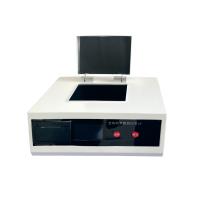
Place the testtube in a wooden camera obscura or Colorimeter.
The specimens were visually compared to a series of standard scale solutions (or Glass Color Standards).
The results are represented by the closest Color to the iron-cobalt Colorimeter solution, which represents the Color of the sample, represented by the number, No. 1 is the shallowest and No. 18 is the deepest.
Although the standard color level method is simple to operate, it is affected by the subjective judgment of the operator and may have certain uncertainties. In addition, this method may not be sensitive enough for Coatings with darker Colors.
2. LOVIBOND Colorimetry
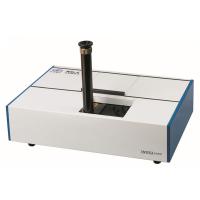
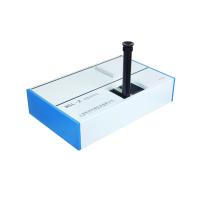
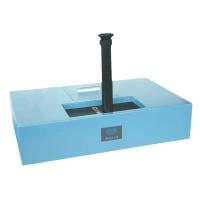
LOVIBOND Colorimetry uses a photoelectric Colorimeter to eliminate the interference of visual results due to different product hue shades and improve the accuracy of the measurement. The operating principle of LOVIBOND Colorimetry is as follows:
Load the sample into the Sample chamber of the LOVIBOND Colorimeter.
Use red, yellow, and blue primary color filters labeled with LOVIBOND chroma units to visually match the specimen.
When the matching color is consistent with the sample Color, the color of the sample is represented by the chroma standard unit value of the three-filter color.
LOVIBOND Colorimetry uses a combination of 72 red, yellow and blue primary color filters to quantitatively represent the Color of the sample with thousands of combined LOVIBOND chromatic values, thereby greatly improving the accuracy and level of Color representation. This method solves the problem that the sample Color and the color scale Color in the standard color scale method are "difficult to determine due to different hue", and at the same time reduces the interference of human subjective factors.
Conclusion
Color determination is a vital task in the Coating industry, which not only determines the Appearance and mass of the product, but also reflects the composition and purity of the Coating. Standard Color Gradation and LOVIBOND Colorimetry are two commonly used methods of Color determination, each with a range of advantages and limitations. With accurate Color determination, Coating manufacturers can ensure that their products meet mass standards and meet market demands, while also effectively monitoring the quality of raw materials and work in progress. Therefore, Color determination is of irreplaceable importance at all stages of Coating production, and is essential to ensure product mass and market competitiveness.