Optical Property Testing plays an important role in the film industry. It covers many performance parameters, such as Appearance, Gloss, distinctness of image, fog shadow, Color, whiteness and lightness. These performance parameters not only directly affect the decorative and aesthetic properties of films, but also are closely related to the mass and function of films. In this article, we will discuss Optical Property Testing of films in detail and its importance in different Applications.
Appearance
Appearance inspection is one of the basic elements of film quality control. It is usually carried out by inspecting the film template under sunlight by naked eye observation. The purpose of Appearance inspection is to look for defects in the film, such as brush marks, particles, blistering, wrinkling, shrinkage, etc. However, it should be noted that Appearance inspection is usually carried out under indoor standard conditions, while film Appearance under actual construction conditions may vary.
Appearance detection methods are mainly visual inspection, by comparing with standard samples to observe whether there are defects on the film surface. Although this method is relatively simple, for high-demand film Appearance detection, more accurate methods and instruments are required to ensure accuracy.
Gloss
Gloss is one of the important Optical Properties of film, which reflects the reflection ability of the film surface. The Gloss of film can be divided into light, semi-light and no (flat) light. Gloss is often measured using a Gloss meter, of which a 60 ° angle Gloss meter is commonly used. However, to improve resolution, 20 ° angle measurement can be used for high Gloss films, while 85 ° angle measurement can be used for low Gloss films.
Photoelectric Gloss meter is a commonly used instrument for measuring Gloss. It projects the ray of light emitted by the Light source onto the measured surface, and then measures the Gloss value through the reflection of the ray of light on the measured surface. The Gloss meter can measure Gloss at different angles, thereby providing more comprehensive information. The measurement result of Gloss is closely related to the reflection ability of the sample. The higher the Gloss, the stronger the reflected light.

Distinctness of image
Distinctness of image is an indicator of the clarity of the reflection image on the film surface, usually expressed by DOI (Distinctness of Image) value. It reflects the decorative performance of the film, including the comprehensive effects of Gloss, smoothness and fullness. Distinctness of image testing is very important for advanced film decoration performance evaluation in the fields of aircraft, automobiles, precision instruments, household appliances, etc.
Freshness Testers usually contain a series of standard distinctness of image digital boards with different DOI values, from 0.1 to 2.0, each reflecting a different level of distinctness of image. Observing the surface under test and reading the closest DOI value can evaluate the distinctness of image of the film. The higher the distinctness of image value, the clearer the image, the better the decorative performance.
Fog shadow
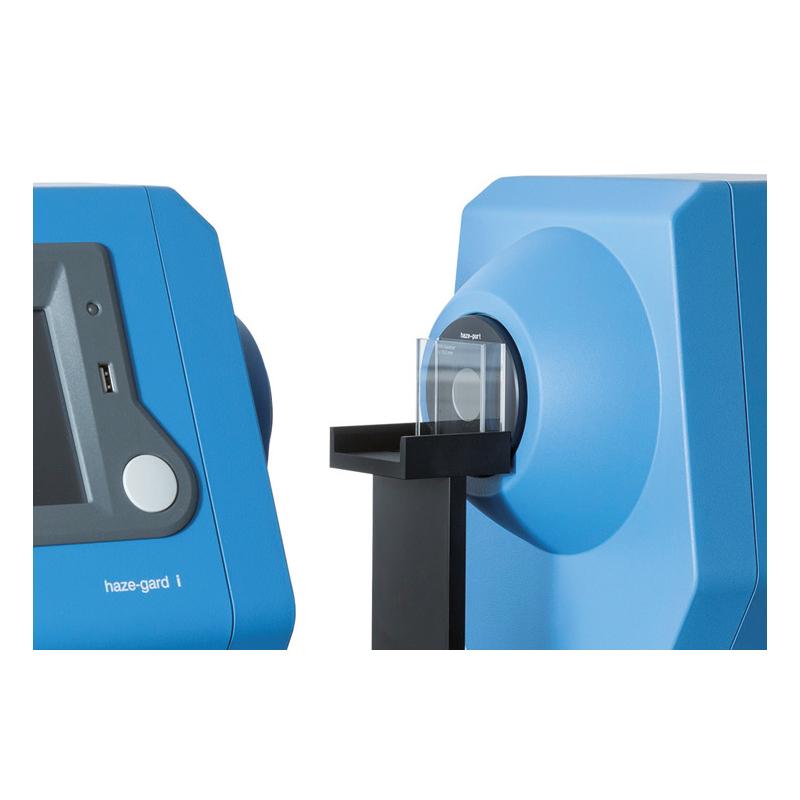
Fog shadow refers to the diffuse reflection phenomenon when the surface of a high Gloss film is irradiated with rays of light. Fog shadow is only produced at high Gloss, and the Gloss of the film must be at a high level, usually measured by the 20 ° method. The measurement range of fog shadow value is usually between 0 and 250, and the fog shadow value of the product should be controlled below 20, otherwise it will seriously affect the Appearance of high Gloss film.
The principle of fog shadow measurement is to use the scattered light on both sides of the 20 ° reflected light on the surface of the paint film for measurement. The specific operation includes calibrating the instrument, placing the test plate on the sample lift table, and measuring the 20 ° Gloss value and fog shadow value of the paint film through the instrument. The control of fog shadow value is essential to ensure the Appearance of high Gloss film.
Color
Color is another important performance parameter of films, which depends on the Light source, film properties, and the eye of the observer. Color detection of films is usually performed by visual Colorimetric, using standard Formula Guides or Color Assessment Cabinets. Color detection requires the specimen to be plated at the same time as the standard, then applied and dried under the same conditions, and finally observed under natural scattered rays of light.
According to the standard, if there is no significant difference between the color of the sample and the standard template, the film Color is considered to meet the technical tolerance range. Color detection can also be performed under artificial sunlight using the Color Assessment Cabinet to meet the needs of the user.

Whiteness & lightness
Whiteness and lightness are two other important performance parameters of film. Whiteness reflects the degree to which the white film is close to the ideal white, while lightness indicates the relative light and dark characteristics of the film surface. The higher the whiteness of the white film, the stronger the hiding power, and the Miscellaneous performance increases accordingly.
Whiteness and lightness can be determined using visual methods or instruments such as Whiteness Meters and photometers. These methods can help assess the white properties of films and the brightness of reflected light.

Optical Property Testing is very important for the film industry. It covers performance parameters such as Appearance, Gloss, distinctness of image, fog shadow, Color, whiteness and lightness. These parameters not only directly affect the decorative and aesthetic properties of the film, but are also closely related to the mass and function of the film. Therefore, in the process of film production and application, it is necessary to accurately detect and control these Optical Properties to ensure that the film meets the required mass standards. The development and application of Optical Property Testing will continue to promote the progress of the film industry, meet the needs of different fields, and improve the mass and performance of products.
