As a key element of surface protection and beautification, film not only needs to have good mechanical properties, but also must resist external factors such as light, heat, and electricity during use. Among them, color retention refers to the ability of a film to maintain its original Color when exposed to rays of light. The detection of color retention is of great significance for various Applications, from automotive painting to architectural decoration, it is necessary to ensure that the film does not fading or change Color under lighting conditions. This article will introduce the importance of color retention and detection methods, especially the instrumental measurement method using the GB/T 9761 method.
In many application scenarios, the Color of the film is often an important part of the product Appearance, and it is also closely related to the brand identity and design concept. Whether it is a car, home furniture or a building, consumers usually expect the Color of the film to last for a long time and will not change due to prolonged lighting. In addition, Color conformity is also critical for quality control in production, especially when mass production, it is necessary to ensure that the Color of each product is consistent.

Detection method
In order to evaluate the color retention of films, two methods are usually used: visual measurement and instrumental measurement. Among them, instrumental measurement, according to the provisions of GB/T 9761, is a more accurate and repeatability method, especially suitable for applications that require quantified data.
The specific detection steps are as follows:
Prepare the test film sample to ensure that its Color meets the product requirements.
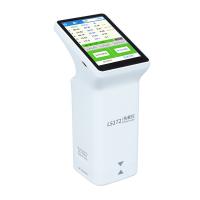
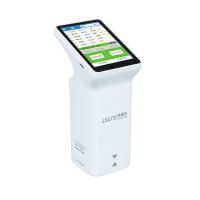
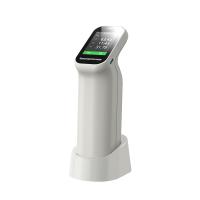
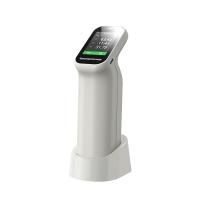
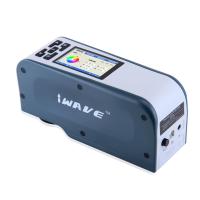
Place the color reader on the template to ensure a stable Light source.
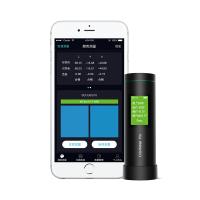
Use the color reader to select the appropriate measurement mode and record the Color value before irradiation.
The film template is exposed to rays of light for a certain period of time to simulate actual use.
Color reader measurement value after irradiation again.
Color retention is calculated by dividing the value of Color after irradiation by the value of Color before irradiation.
According to the calculation results, the color retention of films can be evaluated, and the following criteria are usually used to classify:
Color retention = 1 means that the film completely maintains the primary color and does not change Color.
Color retention < 1 indicates that the Color of the film has changed, and the smaller the value, the more serious the change.
Application
Color retention testing is widely used in various fields. For example, in the automotive industry, the Color conformity of films is crucial for quality control online. In architectural decoration, it is necessary to ensure that the Color of the wall top coating film remains bright for a long time to maintain the decorative effect. In addition, in the furniture manufacturing and electronic product manufacturing industries, color retention testing is also indispensable to ensure the stability and quality of product Appearance.
The color retention of film is one of the key performances to ensure that the product maintains its primary color under the irradiation of rays of light. In order to evaluate and ensure the color retention of film, the instrumental measurement method using GB/T 9761 can provide high repeatability and accurate results. This detection method has a wide range of applications in multiple Applications, helping manufacturers to provide high-quality products that meet consumer demand for Color stability while maintaining brand reputation and market competitiveness. Therefore, the research and testing of color retention is of great significance in the field of Coating detection.