Salt spray test is closely related to salt spray resistance refers to the resistance of paint film to salt spray, and it is an important corrosion performance test method. This paper will deeply discuss the principle and significance of salt spray test and the application of different international standards, and introduce some methods to improve the effect of salt spray test, such as acetic acid salt spray test and copper chloride modified acetic acid salt spray test.
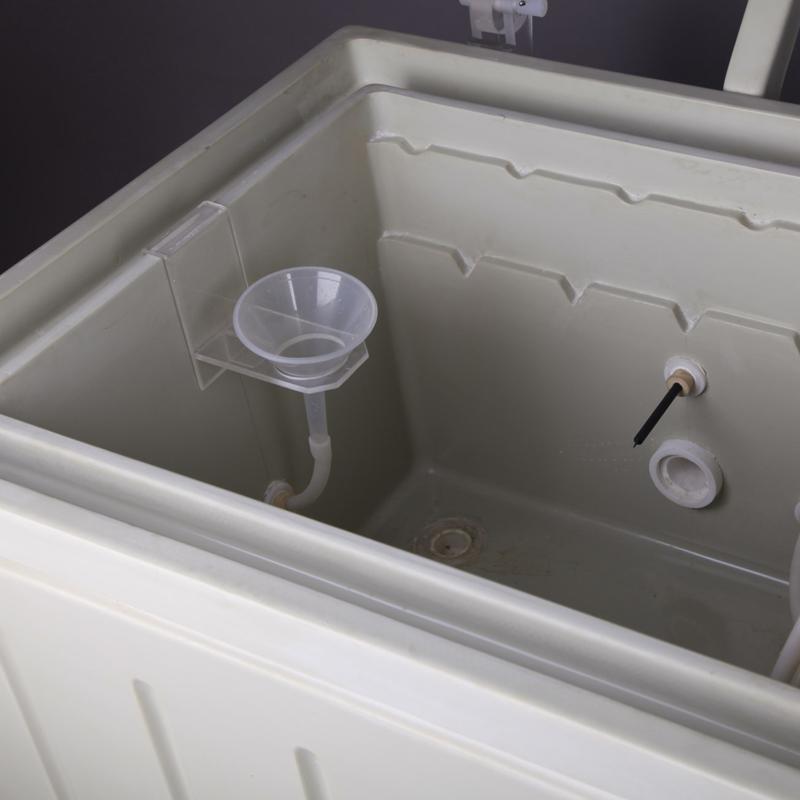
Principle and meaning
Salt spray test is a common method used to test the resistance of coatings, paint films, and metallic materials to salt spray corrosion. Atmospheric salt spray is a dispersion system composed of suspended tiny droplets of chloride formed by the action of airflow from the waves of seawater and tiny droplets scattered when the waves hit the shore. Especially in coastal or offshore areas, the atmosphere is filled with salt spray, which makes metal materials and their protective layers strongly corrosive.
The basic principle of the salt spray test is to simulate the corrosion conditions in the real marine atmosphere. The corrosion process in the natural environment is simulated by spraying salt water with a chloride concentration close to that of natural seawater into a mist and depositing it on the test plate. This test process needs to be carried out under specific temperature, humidity and time conditions. The performance of the coating or paint film and the corrosion resistance of the metal material can be evaluated by observing the damage phenomena of the sample, such as foaming, rust, reduced adhesion, and the spread of corrosion from scratches.
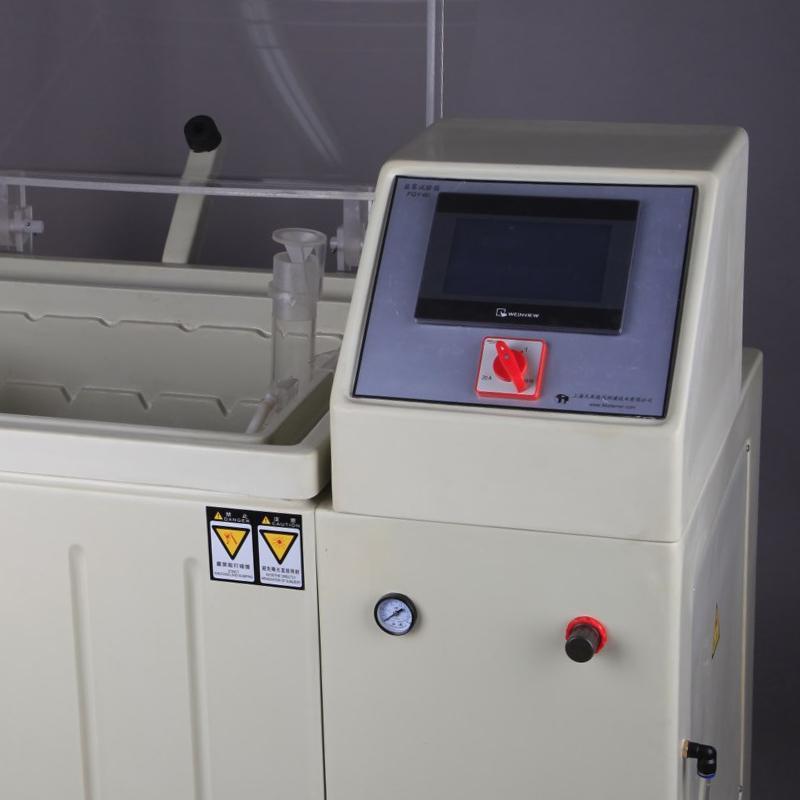
International standards
Internationally, there are many standards for salt spray testing, the most commonly used of which is the international standard ISO 7253. In CHINA, the corresponding standard is GB/T 1771-2007 "Determination of the Resistance to Neutral Salt Spray of Paints and Varnishes". These standards specify the specific operation methods and requirements of the salt spray test, including the concentration of salt water, pH value, test period, temperature and other parameters to ensure the accuracy and comparability of the test.
Methods to improve the effect of salt spray test
To improve the effectiveness of salt spray tests, some international standards and methods employ special techniques and adjustments to accelerate corrosion rates and enhance test reliability and reproducibility. Here are some common methods:
Acetic acid salt spray test: American Standard ASTM G43-75 (80) uses the acetic acid salt spray test method, which is to adjust the pH of pure sodium chloride brine to an acidic range (pH between 3.1 and 3.3). This method is designed to simulate a more aggressive corrosive environment, allowing for faster evaluation of the performance of coatings or paint films.
Copper chloride modified acetic acid salt spray test: In addition to adjusting the salt water to acid, an appropriate amount of CuCl2 ● 2H2O (copper chloride) is also added. This improved method is designed to further accelerate the rate of corrosion to more accurately assess the properties of the material.
The main goal of these methods is to speed up the corrosion process in order to obtain test results faster and to ensure the durability of the coating or paint film in harsh environments. However, it is important to note that different test methods may produce different results, so the actual application environment and needs need to be considered when choosing the appropriate method.
Salt spray test is an important corrosion performance test method used to evaluate the resistance of coatings, paint films as well as metal materials to salt spray corrosion. Different international standards and methods provide different test conditions to meet different needs. In order to improve the effect of the test, some methods use accelerated corrosion techniques, such as acetic acid salt spray test and copper chloride modified acetic acid salt spray test. These methods help to obtain test results faster and provide more accurate corrosion performance assessment, which helps to ensure the reliability and durability of materials in harsh environments. However, when choosing test methods, comprehensive consideration needs to be given according to the specific application environment and needs.
