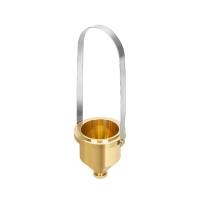
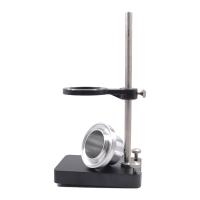
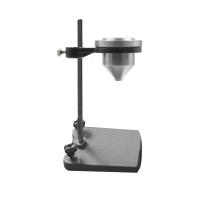
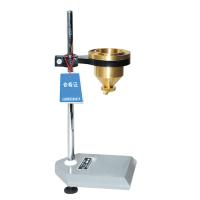
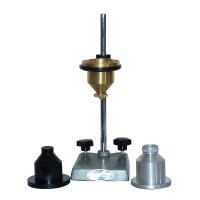
The flowability, consistency, brushing and coating performance of Coatings in construction largely depend on their viscosity. Accurate determination of the viscosity of Coatings plays a vital role in the production, development and construction of Coatings. Coating-4 cup Viscometer is one of the commonly used instruments for measuring Coating viscosity.
1. Introduction to Tu-4 Cup Viscometer
Coating-4 cup Viscometer is based on the determination principle of kinematic viscosity, that is, at a specific temperature, the viscosity of Coating is determined by measuring the time it takes for a certain amount of sample to flow out of a hole of a specified diameter. It is especially suitable for Coating samples with outflow times between 10-150s.
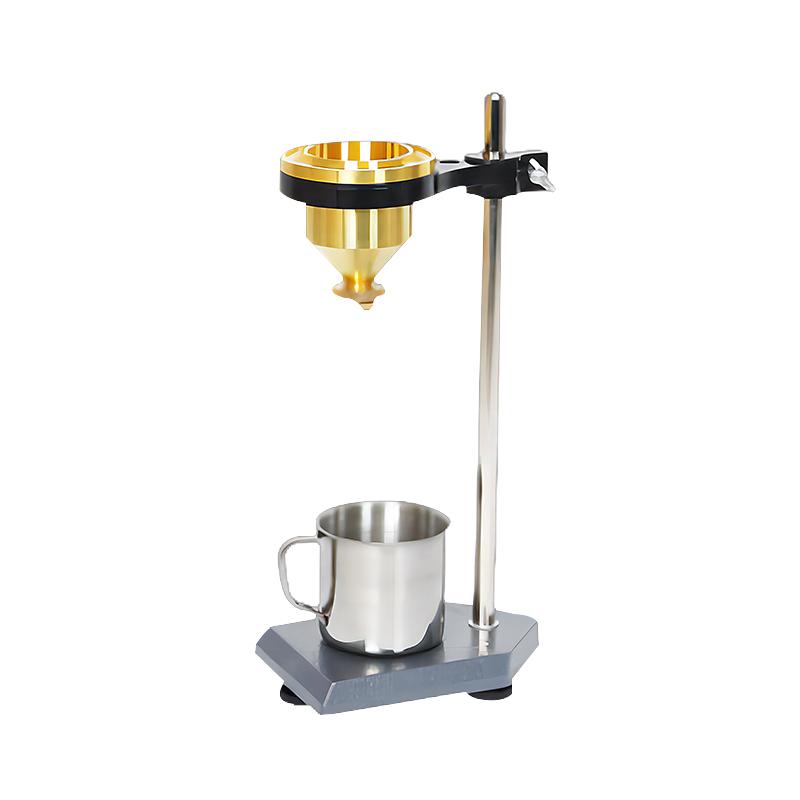
2. Steps for Determining Coating Viscosity
(1) Preparation:
① Preparative test solution: In a beaker of about 150mL, use a tray Balance to accurately weigh 100g of the Coating to be tested. If it needs to be diluted, it should be mixed with the corresponding solvent (such as Xylene) to make a 50% solution, and then stirred with a Glass rod until completely dissolved.
② Viscometer inspection: Make sure that there is no residual material in the 4 cup Viscometer, and adjust its level so that the circular blisters on the Viscometer are located in the center.
③ Keep thermostatic: The temperature of the test should be maintained at 25 +/- 1 ℃, and the temperature of the test solution should also be within this range.
(2) Testing process:
① Slowly inject the test solution into the coating-4 cup Viscometer, while closing its outflow hole with your finger, so that the test solution reaches the top, then scrape it flat with a flat plate, and let the excess test solution flow into the edge groove of the Viscometer.
② Release your finger, let the test solution flow out freely, and use the beaker to receive the flowing liquid. At the same time, open the stopwatch until the test solution completely flows out.
③ Record the outflow time, which is the viscosity of the Coating in seconds.
3. Representation and precautions of viscosity results
• The results of the test are expressed as the arithmetic mean of the measurements of two parallel samples, and the difference between the two measurements cannot exceed 3% of the mean.
• Before using the Tu-4 cup Viscometer, it must be checked to ensure that no test fluid remains inside.
• Operators should pay special attention to self-protection, such as skin contact with liquid, should be washed immediately.
• Coating viscosity is greatly affected by temperature, so ensure that samples and tests are performed in a thermostatic environment of 25 ℃.
4. Flow velocity and standard viscosity of Tu-4 cup
In order to more accurately interpret and understand the readings of the Tu-4 cup Viscometer, you can refer to the Tu-4 cup Flow velocity and standard viscosity comparison table. This comparison table can help users convert the measured Flow velocity into specific viscosity values.
5. Conclusions and references
Tu-4 cup Viscometer is a relatively simple but very practical tool, which is of great value for Coating production and Application. Accurate viscosity determination not only helps Coating research and development and quality control, but also ensures that Coating can achieve ideal performance during construction. In practical applications, relevant standard operating procedures should always be referred to and followed, such as the national standard GB/T 1723-93 "Coating Viscosity Determination Method" and related corporate standards.