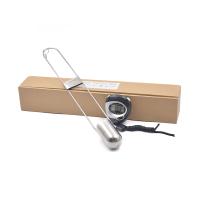
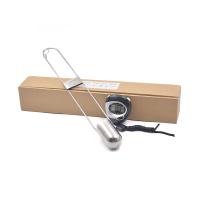
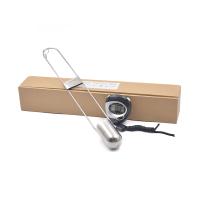
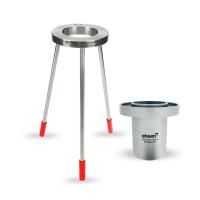
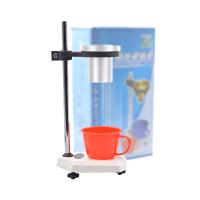
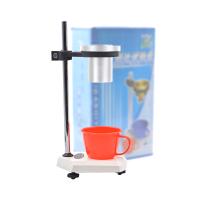
In the coating industry, the measurement of viscosity is not only a key factor in product quality control, but also a technical parameter that cannot be ignored during the coating application process. The accuracy of viscosity measurement directly affects the application performance of the coating, including leveling, coating, and drying time. Among the many viscosity measurement methods, the outFlow Cup method is widely used because of its simplicity and economy.
Basic principles of the outFlow Cup method
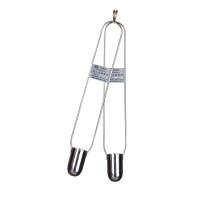
The basic principle of the outFlow Cup method is to use the gravity of the liquid itself to generate flow, and determine the viscosity by measuring the time it takes for a certain amount of liquid to flow out of the Viscosity Cup at a certain temperature. This method is suitable for Newtonian or nearly Newtonian low-viscosity coatings, such as varnishes and paints.

Different types of outFlow Cups
Tu-4 cups:
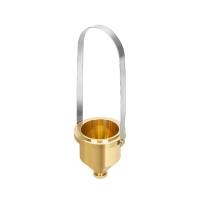
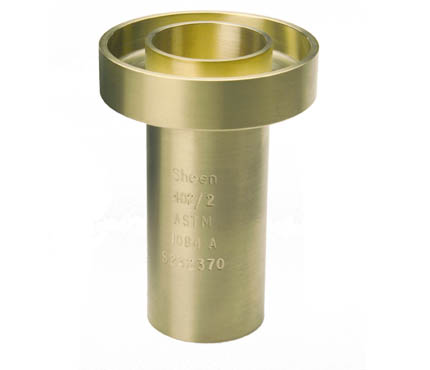
The Tu-4 cup is CHINA's national standard Viscosity Cup, with a simple design and easy operation. It consists of an upper cylindrical and a lower conical container with a capacity of 100 ml and a 4 mm standard leak at the bottom. Despite its widespread use, it is mainly suitable for coatings with kinematic viscosity in the range of 60 to 360 mm²/s.
ISO outFlow Cup:
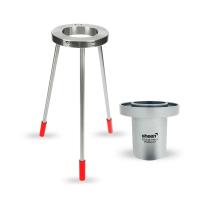
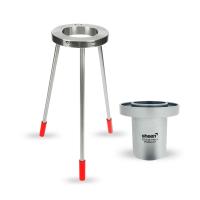
The ISO outFlow Cup is designed according to international standards and comes in versions with multiple hole sizes, making it suitable for a wider range of applications. Its design feature is that the cone angle is 120°, which helps reduce the turbulence generated when the liquid enters the outflow hole, making the liquid flow more stable.
The importance of accuracy
Accurate viscosity measurement is critical to coating quality. Inaccurate viscosity measurements can cause problems during coating application, such as sagging, thin coatings or marks. In addition, different types of outFlow Cups require regular calibration to ensure measurement accuracy.
OutFlow Cup selection and calibration
Selecting the appropriate Flow Cup is key to obtaining accurate results. For example, the Paint-4 cup is suitable for low to medium viscosity paints, while the ISO Flow Cup is suitable for a wider viscosity range. In addition, regular calibration of the outFlow Cup is essential to ensure the accuracy of its viscosity measurement.
As an economical and practical viscosity measurement method, the outFlow Cup method plays an important role in the coating industry. Understanding the different types of Flow Cups and their scope of application, as well as maintaining the accuracy of the Viscosity Cups, are critical to ensuring coating product quality and performance.